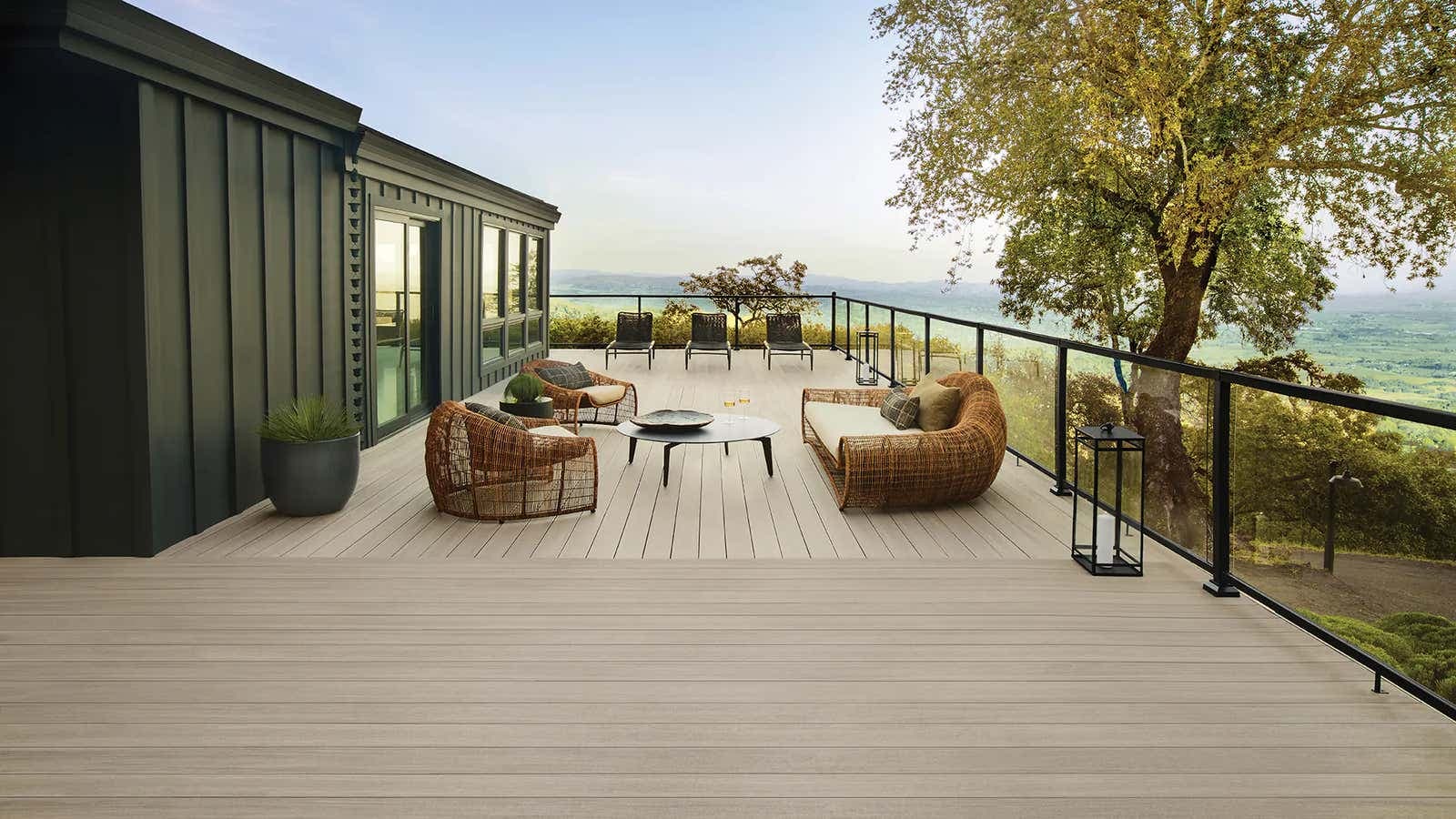
Start with Physical Samples in Your Project Location
The most critical step in choosing composite decking colors and finishes is to evaluate physical samples directly in your project's intended location. Digital images and brochure photos can be misleading due to screen calibration and professional lighting. A small swatch viewed indoors under artificial light will appear very different than a full-size board outdoors under natural sunlight, or even under the shade of an overhang.
Request samples of your preferred colors and profiles. Place them on the ground or against the house where the deck will be built. Observe them at different times of day – morning, noon, and evening – to see how the light changes their appearance. Note how direct sunlight, overcast conditions, and shadows affect the perceived color and texture. This hands-on approach helps you visualize the true impact of the material in its actual setting.
Consider Sun Exposure and Surface Temperature
While composite decking materials are engineered for durability, color choice can influence the surface temperature, especially in areas with intense sun exposure. Darker colors tend to absorb more solar radiation, potentially making the deck surface warmer to the touch. Lighter colors, conversely, reflect more sunlight and may feel cooler.
If your deck will be in full sun for extended periods, particularly in warmer climates, opting for lighter shades or composite lines that offer 'cooler-underfoot' options might enhance comfort. If your deck is primarily shaded, or if you live in a cooler region, a darker color might be perfectly suitable and even desirable for its aesthetic appeal. Some manufacturers like Trex offer options designed to be cooler underfoot, which is a valuable consideration for sunny areas. Always confirm specific product features with current product documentation.
However, surface temperature is not solely determined by color. The specific composition and manufacturing process of the composite material also play a role. It is important to remember that 'cooler-underfoot' is a relative term, and all deck surfaces exposed to direct sunlight will warm up.
Coordinate with Your Home's Exterior and Landscape
Your deck should complement your home's existing exterior and the surrounding landscape, not compete with it. Take cues from your house siding, trim, roof, and even hardscaping like patios or walkways. A deck color that harmonizes with these elements will create a cohesive and inviting outdoor living space.
For homes with warm earth tones (e.g., beige, terracotta, brown siding), consider composite decking in complementary browns, tans, or even certain grays with warm undertones. Homes with cooler palettes (e.g., white, blue, gray siding) might pair well with cool grays, blues, or even some rich dark browns for contrast. The goal is to create a visual flow that feels natural and intentional.
Also, look at your landscaping. Will the deck be surrounded by lush green foliage, or will it be a more minimalist design? Rich, natural wood tones often blend seamlessly with greenery, while modern gray tones can complement contemporary garden designs. Think about the overall 'picture' you are creating.
Understanding Finishes: Grain Patterns and Textures
Beyond color, the finish or texture of composite decking significantly impacts its appearance. Composite boards are designed to emulate natural wood, often featuring embossed grain patterns. These patterns can range from subtle, tight grains to more pronounced, rustic textures.
The grain pattern affects how light reflects off the surface, influencing the perceived depth and realism of the board. A deeper, more textured grain might offer better slip resistance and a more rustic look, while a smoother, finer grain might appear more contemporary. Some boards have a consistent grain pattern, while others, like those aiming to mimic real wood, may have more variation board after board. Evaluate these textures with your samples under various lighting conditions.
Consider how the finish will feel underfoot, especially if your deck is for bare feet. Also, think about cleaning; some textures may be more prone to trapping dirt, though composite decking is generally designed for easy maintenance like a soap-and-water wash.
Worked Example: Selecting Composite Decking for a Patio Expansion
Let's consider a hypothetical project: expanding an existing concrete patio with a 12-foot by 16-foot composite deck. The house has light gray siding with white trim, and the existing patio is a medium gray. The deck will receive full afternoon sun.
Our homeowner initially considered a dark brown composite for a dramatic contrast. However, after placing samples (Trex Havana Gold, TimberTech Pecan, Fiberon Horizon Graphite) on the patio, they observed the dark brown sample (Graphite) became noticeably warm to the touch by mid-afternoon. The Havana Gold, a light golden brown, and Pecan, a medium reddish-brown, remained much cooler.
Considering the light gray siding, a cool-toned gray composite might seem like a natural fit. However, a direct match could make the deck appear flat against the patio. The homeowner decided to introduce a subtle contrast. They revisited samples, comparing a medium gray (e.g., Trex Island Mist) with the warmer Pecan and Havana Gold. The Island Mist provided a sophisticated, cool contrast to the existing patio and siding, without being too stark. The subtle variegation in Island Mist also added visual interest without being overwhelming.
The final decision was Trex Island Mist. It offered a pleasant contrast with the house and patio, maintained a comfortable surface temperature in the afternoon sun, and its subtle, streaked finish provided a natural, modern aesthetic. This choice was made possible by evaluating actual samples in the project's specific conditions.
Long-Term Appearance and Maintenance
One of the benefits of composite decking is its consistent color and grain, board after board, with a focus on low maintenance. Unlike natural wood, which can silver or require yearly oiling, composite decking maintains its manufactured color over time with a simple annual wash. This consistency is a key factor in its appeal.
While fade and stain warranties are often offered, understanding that composite materials are engineered to hold their color helps in the selection process. This means the color you choose today will largely be the color you enjoy for years to come. This predictability allows you to confidently select a color that will complement your home's long-term aesthetic.
Before you order
- Have I viewed physical composite decking samples in my project's location?
- Have I observed the samples at different times of day (morning, noon, evening)?
- How does direct sunlight and shade affect the perceived color of the samples?
- Is my deck in full sun, and should I consider lighter colors or 'cooler-underfoot' options?
- Does the chosen color harmonize with my home's siding, trim, and roof?
- Does the color and finish complement my existing hardscaping and landscaping?
- Have I considered the grain pattern and texture of the boards?
- Am I satisfied with the long-term, consistent appearance of the chosen composite color?
- Do I need to coordinate fascia or trim boards with the main deck color?
Confirm installation details, approved uses and warranty terms in the current instructions for the exact product and profile. Your installer should verify the substrate, structure and applicable project requirements.
Questions to help you decide
Can I mix and match different composite decking colors?
Yes, mixing colors can create interesting patterns or define different zones on your deck. For example, you might use one color for the main deck surface and a contrasting color for a picture-frame border or an inlay. Ensure the profiles and manufacturers are compatible if you plan to combine different lines. Always verify specific product compatibility and installation guidelines.
Do composite decking colors fade over time?
Modern composite decking is engineered for color retention and typically comes with fade and stain warranties. While some minimal, imperceptible change might occur over decades, the colors are designed to remain consistent for many years with basic maintenance. Unlike natural wood, which can significantly change color (e.g., silvering), composite decking maintains its manufactured appearance.
How does the finish (smooth vs. textured) affect the deck's appearance and function?
A smoother finish often lends a more contemporary look and can be easier to clean, but may offer less traction when wet. A textured, embossed finish typically mimics natural wood grain, providing a more traditional aesthetic and potentially better grip. The texture also affects how light reflects off the surface, influencing the perceived depth of the color. Consider both aesthetic preference and practical use when choosing a finish.
Ready to Choose Your Composite Decking Color?
Request a material quote with your project dimensions, exact profile, and ZIP code to confirm current availability and service options. Explore our full range of composite decking options from leading brands like Trex, TimberTech, and Fiberon at [product_url:/decking/composite]. Also consider coordinating with our [related_product_urls:/decking] for a complete outdoor solution.
Request a material quote →