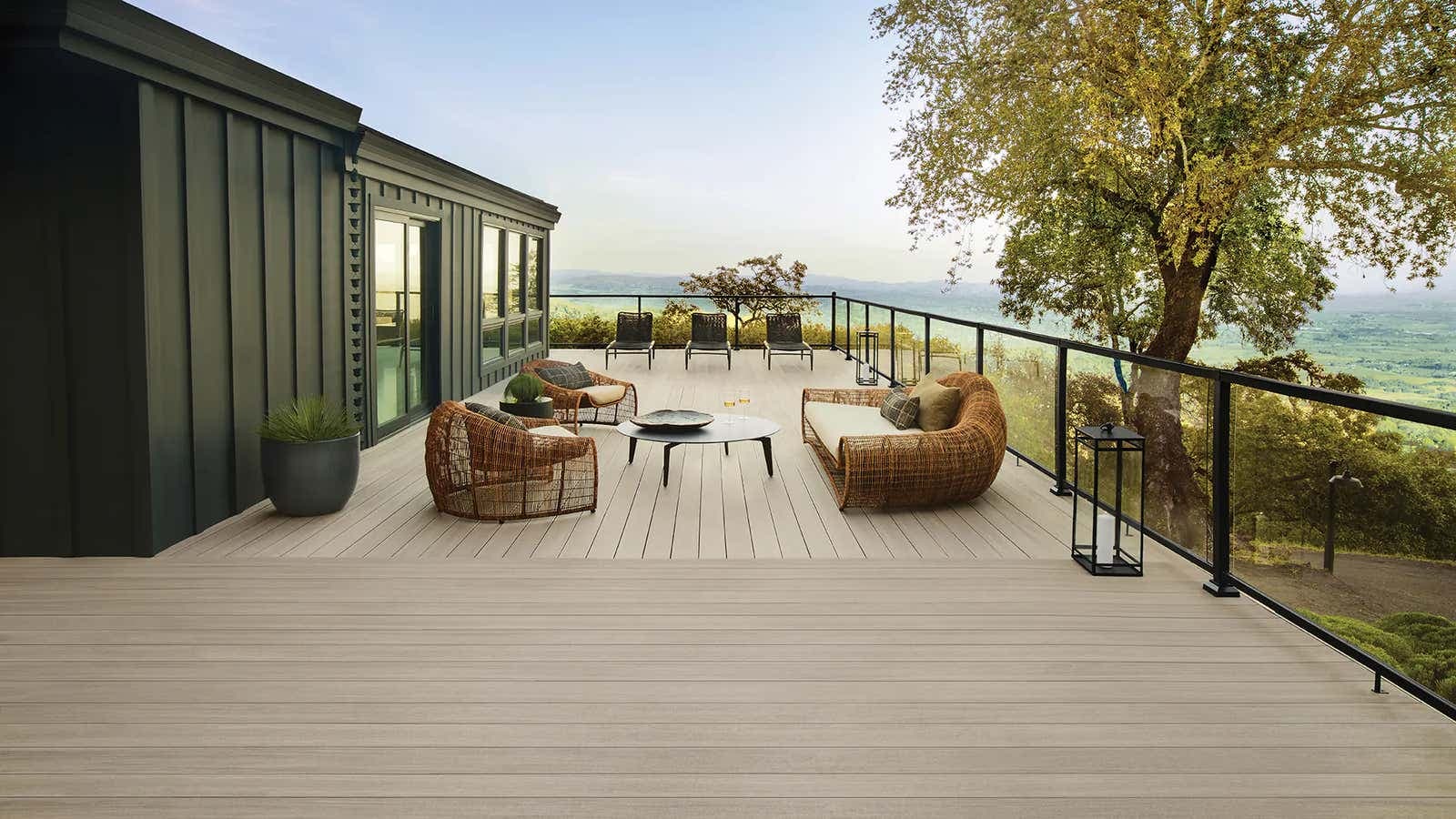
Assess Your Existing Deck Frame and Substructure
The first and most crucial step in any deck renovation is to inspect the existing frame. Composite decking, while durable, relies entirely on a sound and adequately spaced substructure for support. You need to verify that your joists, beams, and posts are in good condition and meet current building codes for your area. Look for signs of rot, insect damage, or excessive deflection.
Check the spacing of your joists. If your existing joists are spaced wider, you may need to add blocking or sister new joists alongside the old ones to provide proper support and prevent sagging or cupping of the new composite boards. This structural assessment is foundational and impacts the entire project.
Evaluate Drainage and Ventilation Needs
Proper drainage and ventilation are vital for the health of both your deck's substructure and the new composite decking. Water pooling on or under the deck can lead to issues for the frame and potentially affect the composite material over time. Ensure that the ground beneath your deck slopes away from your house and that there are no areas where water can collect.
Ventilation is equally important, especially for capped composite boards. Good airflow helps prevent moisture buildup, which can be detrimental to the underlying wood frame. Consider the height of your deck off the ground and whether any skirting or landscaping might impede air circulation. You may need to incorporate vents or ensure sufficient gaps in skirting to allow for adequate airflow beneath the deck surface. Some manufacturers provide specific guidelines for minimum ground clearance and ventilation requirements.
Consider the Weight Difference of Composite Decking
Composite decking can be heavier than traditional wood decking. While this added weight is often distributed across the entire structure, it's a factor to consider, especially if your existing deck frame is older or was built to minimum specifications. A structural engineer or experienced contractor can help assess if your current frame can support the increased load of composite decking, along with expected live loads from furniture, people, and snow.
This is particularly relevant for elevated decks or those with long spans. If the existing frame is borderline, you might need to reinforce joists, add additional posts, or upgrade beams. Factoring this in early can prevent costly surprises later in the renovation.
Choosing Your Composite Decking Profile and Material
Once your substructure is deemed sound, you can turn your attention to the composite decking itself. Lumber Plus offers a range of composite decking from brands like Trex, TimberTech, Fiberon, and Norx. These products come in various profiles, including solid and scalloped (hollow) boards, and different capping technologies.
Solid boards generally offer a more substantial feel and are often preferred for their structural integrity, while scalloped boards can be lighter. Capped composite decking features a protective polymer shell that resists fading, staining, and moisture. The choice depends on your aesthetic preference, budget, and the specific environmental conditions of your deck. "Cooler-underfoot options are available," and "capped shells shrug off humidity," which can be important considerations for many renovation projects.
Review the specific product specifications for the composite decking you are considering. For example, some products specify a particular type of fastener or installation method. "Consistent color and grain, board after board" is a characteristic of composite decking, offering a uniform appearance over time, unlike natural wood which "silvers or stays brown — your call."
Worked Example: Renovating a 10x12 Foot Deck
Let's consider a hypothetical 10-foot by 12-foot existing deck, currently surfaced with aging pressure-treated wood. The homeowner wants to upgrade to composite decking.
A close inspection reveals no rot, but the wider joist spacing is a concern for most composite decking. This reinforcement also slightly increases the load-bearing capacity.
**Step 2: Drainage and Ventilation.** The deck is 18 inches off the ground. The existing skirting is solid lattice. To improve airflow, the homeowner plans to replace sections of the lattice with decorative vented panels to ensure good cross-ventilation, especially since the deck is partially shaded by a large tree.
**Step 3: Material Selection.** The homeowner chooses a capped composite decking product. Given the 10x12 foot dimensions, they'll need approximately 120 square feet of decking. If the chosen boards are 12 feet long and 5.5 inches wide, each board covers 5.5 square feet (12 ft * 5.5 in / 12 in/ft). They would need 120 / 5.5 = 21.8 boards. Rounding up, they'd purchase 22 boards, plus a few extra for cuts and waste.
**Step 4: Fascia and Trim.** They also plan to replace the existing fascia. For a 10x12 deck, the perimeter is 2 (10+12) = 44 linear feet. They would need several 12-foot fascia boards, accounting for cuts and corner details.
Before you order
- Is your existing deck frame structurally sound and free of rot or insect damage?
- Is there adequate drainage beneath the deck, sloping away from your home?
- Is there sufficient ventilation beneath the deck to prevent moisture buildup (consider skirting and ground clearance)?
- Can your existing frame support the potentially heavier weight of composite decking?
- Have you selected a composite decking profile (solid vs. scalloped) and capping technology appropriate for your climate and usage?
- Have you accounted for all necessary trim, fascia, and fasteners compatible with your chosen composite decking?
- Have you reviewed the manufacturer's specific installation guidelines for board spacing and fastening?
Confirm installation details, approved uses and warranty terms in the current instructions for the exact product and profile. Your installer should verify the substrate, structure and applicable project requirements.
Questions to help you decide
Can I install composite decking directly over my old wood decking?
No, it is generally not recommended to install composite decking directly over existing wood decking. This can trap moisture, lead to rot in the underlying wood, and create an uneven surface that compromises the performance and warranty of the new composite boards. The old decking should always be removed to expose the substructure for inspection and proper installation.
How do I know if my deck frame is strong enough for composite decking?
The best way to determine if your deck frame is strong enough is to have it inspected by a qualified contractor or structural engineer. They can assess the condition of the wood, joist spacing, beam sizes, and post connections to ensure it meets local building codes and can safely support the increased weight of composite decking and live loads.
What kind of maintenance can I expect with composite decking after a renovation?
Composite decking requires significantly less maintenance than natural wood. Typically, an annual wash with soap and water is sufficient to keep it clean. Unlike wood, composite decking does not require sanding, staining, or oiling. This low-maintenance aspect is one of the primary benefits of choosing composite for a renovation.
Ready to Plan Your Composite Decking Renovation?
Request a material quote today. Provide your project dimensions, desired composite profile, and project ZIP code to confirm current availability and service options. Explore our full range of composite decking options and complementary products like hardwood decking, Ipe decking, and PVC decking to find the perfect fit for your renovation.
Request a material quote →