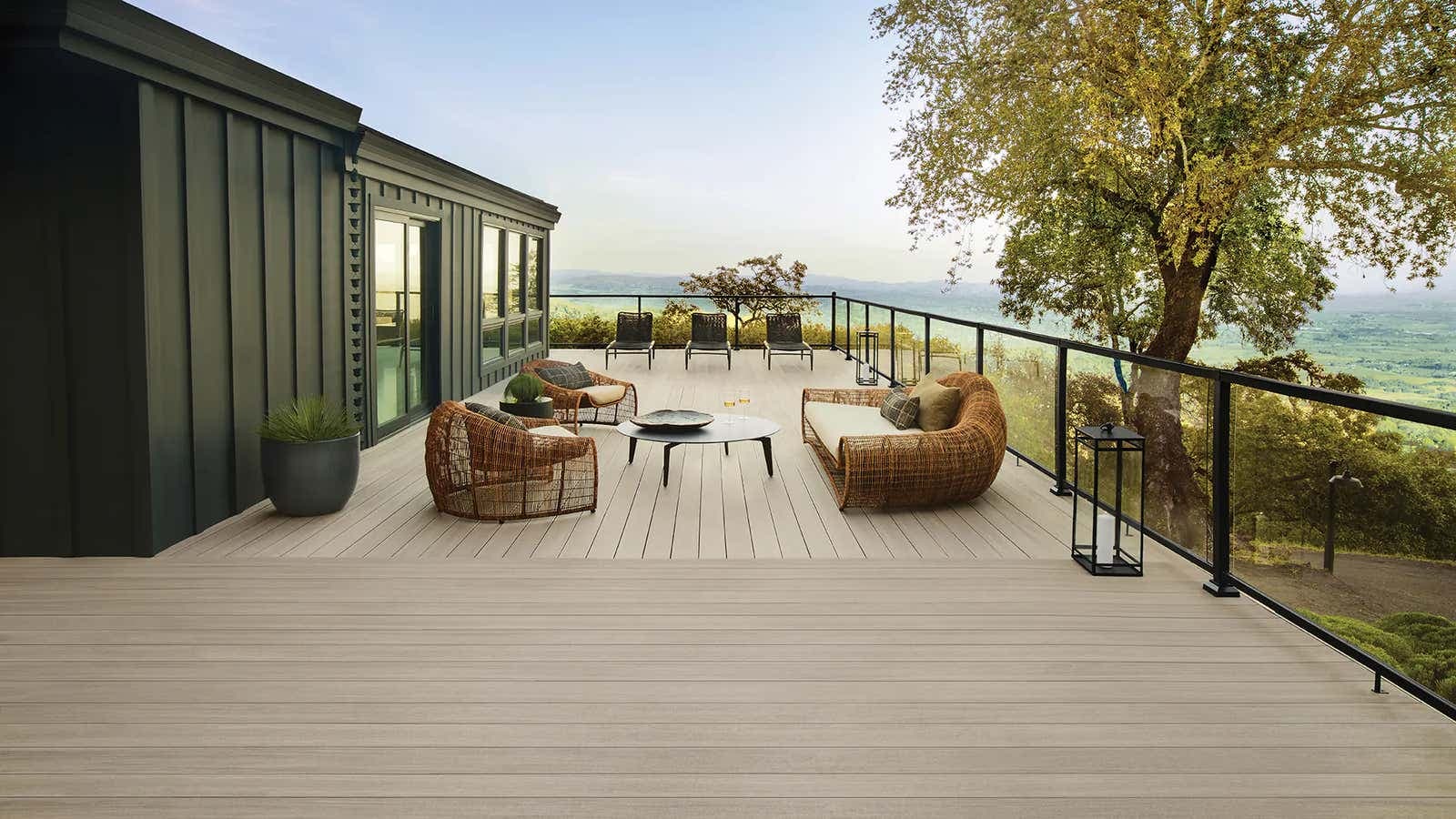
Why Physical Samples Matter for Composite Decking
Online images, despite their quality, can't fully replicate the nuances of a physical product. Factors like screen calibration, ambient light during photography, and compression can alter how a color appears. A physical sample, however, provides an accurate representation of the color and finish.
Composite decking often features subtle texture variations designed to mimic natural wood grain or provide enhanced traction. These textures are difficult to perceive accurately in a photograph. Handling a sample allows you to feel the surface, understand its tactile qualities, and visualize how it will perform underfoot. This is especially important for areas where slip resistance or a specific aesthetic is desired.
Additionally, the composition of composite decking can influence its appearance. Some products incorporate recycled content, which can subtly affect the consistency or visual depth of the material. A sample allows you to inspect these details firsthand. (S1)
Assessing Color and Finish Under Different Lighting
Color is perhaps the most significant aspect to evaluate with physical samples. The same composite decking board can appear dramatically different under various lighting conditions. What looks perfect indoors under artificial light might change significantly outdoors in direct sunlight, shade, or at dusk.
When you receive your samples, take them to the exact location where the deck will be built. Observe them throughout the day: morning, midday, and late afternoon. Pay attention to how direct sunlight interacts with the surface – does it highlight the grain or create an unwanted sheen? How does the color appear in shaded areas? This exercise helps you understand the full spectrum of how your chosen color will present itself.
Consider the surrounding elements. If your deck will be adjacent to a brick house, a stone patio, or a lush garden, place the samples next to these existing finishes. This helps you evaluate color harmony and contrast, ensuring the decking complements its environment rather than clashing with it.
Evaluating Texture, Profile, and Compatibility
Beyond color, the texture and profile of composite decking are crucial. Some composite boards are designed with a pronounced wood grain, while others have a smoother, more contemporary finish. Physical samples allow you to run your hand over the surface, feeling the depth and realism of the texture.
The profile of the decking board refers to its shape and how it's designed to be installed. While samples might only show a cross-section, they can still give you an idea of the board's thickness and edge treatment. If you are considering specific fastening systems, such as hidden fasteners, understanding the board's profile is essential for compatibility.
Some composite decking lines offer 'cooler-underfoot options' or capped shells for increased resistance to humidity. While these features are not always visible on a small sample, the sample can help you confirm the specific product line and then cross-reference its documented attributes. (S1)
Understanding Sample Labels and Documentation
Each physical sample should come with a label or accompanying documentation that clearly identifies the product. This information is critical for ensuring you order the correct material. Key details to look for include:
Manufacturer and Product Line: Such as Trex Transcend or TimberTech AZEK. (S1)
Color Name and Code: Confirm the exact shade you are evaluating.
Board Profile: This might indicate whether it's a grooved board for hidden fasteners or a square-edge board for face fastening.
Dimensions: While a sample is small, the label should specify the full board dimensions if available.
Retain this documentation. It will be vital when you are ready to request a quote or place an order, helping to prevent errors and ensure you receive the exact product you selected.
Worked Example: Selecting Composite Decking for a Patio Renovation
Consider a hypothetical project: renovating an existing 12-foot by 15-foot concrete patio into a low-level composite deck. The house exterior is a light gray stucco with dark gray trim. The homeowner is looking for a decking color that provides a subtle contrast without being too stark.
Initial online research led to three composite decking options: a medium brown with a subtle grain, a lighter gray with a brushed texture, and a dark charcoal with a pronounced wood-like texture. Physical samples of each were requested and received.
Step 1: On-site Evaluation. The homeowner placed all three samples directly on the concrete patio, against the house wall, and near existing planters. They observed the samples at different times of day.
The medium brown sample, which looked appealing online, appeared too warm against the cool gray stucco in direct afternoon sun. The lighter gray sample blended too much with the house color, lacking definition.
The dark charcoal sample, however, provided a pleasant contrast with the light gray stucco and complemented the dark gray trim. Its pronounced texture was more evident in the shade, adding visual interest without being overwhelming.
Step 2: Texture Assessment. The homeowner walked on the samples barefoot and in shoes. The dark charcoal's texture felt comfortable and seemed to offer good grip, an important consideration for a patio that might get wet.
Step 3: Documentation Check. The homeowner confirmed the exact product line and color code for the dark charcoal sample, noting it was a grooved board suitable for hidden fasteners. This information was then used for a quote request.
This process, using physical samples in the actual project environment, allowed the homeowner to confidently select a composite decking option that met their aesthetic and practical requirements, avoiding potential disappointment if they had relied solely on online images.
Before you order
- Obtain physical composite decking samples for all serious contenders.
- Take samples to the exact project location and observe them at different times of day (morning, midday, evening).
- Place samples next to existing exterior finishes (siding, trim, landscaping) to assess color harmony.
- Feel the texture of each sample to understand its tactile qualities and potential slip resistance.
- Review sample labels and documentation to confirm manufacturer, product line, color, and profile.
- Consider how the chosen profile will integrate with your planned fastening system.
- Keep sample documentation for accurate quoting and ordering.
Confirm installation details, approved uses and warranty terms in the current instructions for the exact product and profile. Your installer should verify the substrate, structure and applicable project requirements.
Questions to help you decide
How many samples should I request?
It is generally recommended to request samples of all the composite decking options you are seriously considering, typically 3-5 different styles or colors. This allows for direct comparison and evaluation under various conditions.
Are composite decking samples representative of the final product?
Yes, physical samples are designed to be representative of the final product's color, texture, and finish. However, as with any manufactured product, there can be slight variations between production runs. Samples are the best available tool for accurate assessment before a full purchase.
What should I do with the samples after making a decision?
Keep the sample of your chosen product, along with its documentation, until your order has been delivered and verified. This provides a reference point to ensure the delivered material matches your selection. Other samples can be returned or discarded responsibly.
Ready to Get a Quote for Your Composite Decking Project?
Once you've selected your ideal composite decking using physical samples, request a material quote. Provide your project dimensions, exact profile, and project ZIP code to confirm current availability and service options. Visit our contact page to start your quote.
Request a material quote →