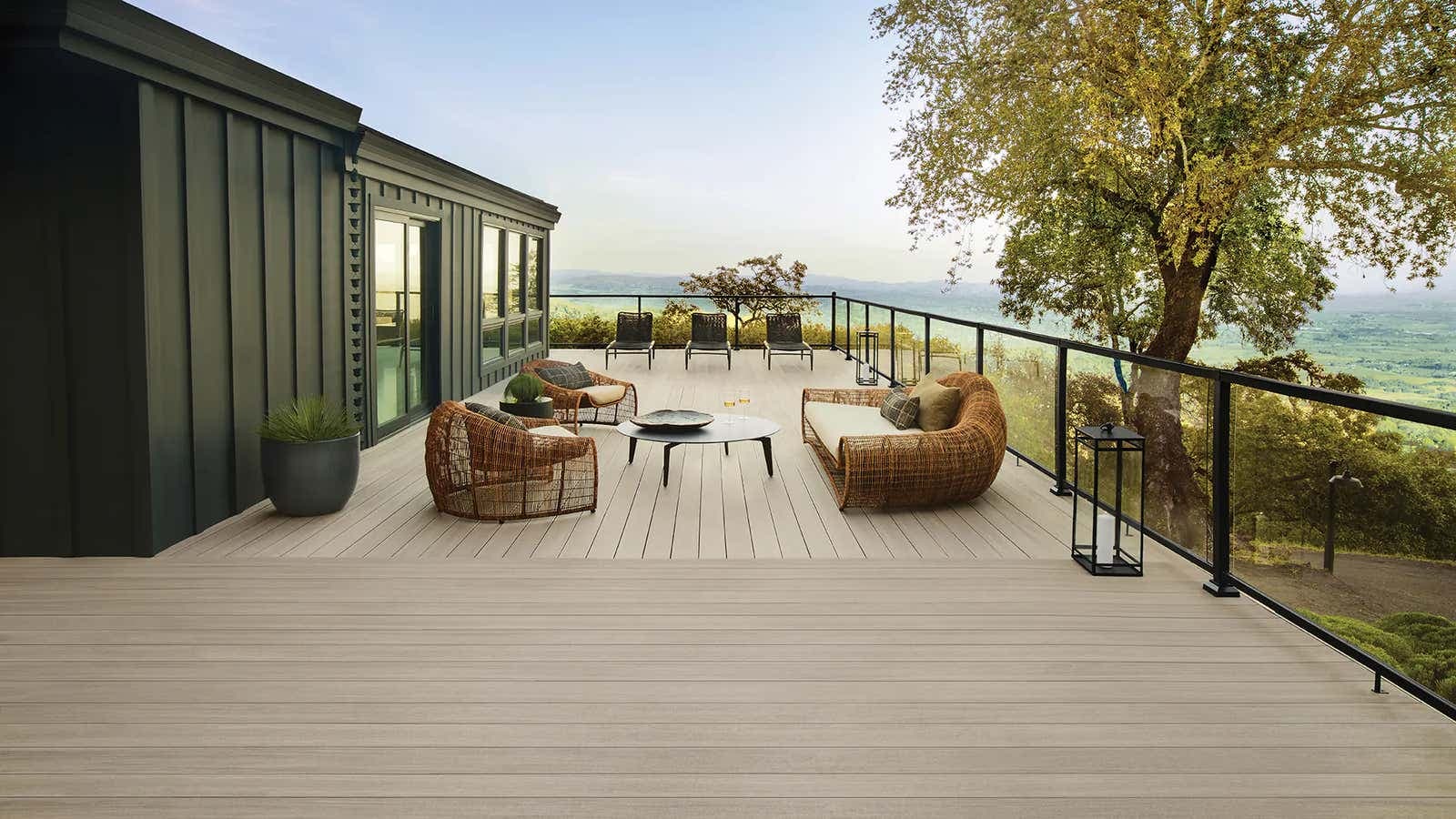
Prioritizing Low Maintenance for Intermittent Use
The primary advantage of composite decking for a vacation home is its low-maintenance profile. Unlike natural wood, composite boards typically do not require annual sanding, staining, or sealing. This is particularly beneficial when you're not on site regularly to perform these tasks.
Manufacturers like Trex, TimberTech, and Fiberon offer composite options designed for durability. These products are engineered to resist fading and staining, often backed by written warranties, which can provide peace of mind when the deck is left unattended for extended periods. A simple soap-and-water wash is generally sufficient for annual cleaning, fitting well with an intermittent usage schedule.
Consider the time you want to spend enjoying your vacation home versus maintaining it. Composite decking aims to shift the balance heavily towards enjoyment, allowing you to arrive and relax without a long list of deck-related chores.
Material Options: Capped vs. Uncapped Composite
Composite decking comes in two main types: capped and uncapped. For a vacation home, capped composite decking is generally the preferred choice due to its enhanced protection.
Capped composite boards feature a durable polymer shell that encapsulates the core. This shell provides superior resistance to moisture, stains, scratches, and fading. This protective layer is especially valuable in environments where the deck might be exposed to varying weather conditions without immediate cleaning or intervention.
Uncapped composite, while still more durable than many wood options, lacks this outer shell, making it potentially more susceptible to surface staining and mold in humid or wet conditions. The consistent color and grain of capped options also mean fewer surprises after periods of non-use.
When reviewing options, look for descriptions that highlight 'capped shells' or similar terminology, indicating this added layer of defense.
Related Product: Learn more about various composite decking options at "/decking/composite".
Durability and Environmental Exposure
Vacation homes are often in locations with specific environmental challenges, such as intense sun, heavy rain, snow, or salt air. Composite decking is engineered to withstand these conditions.
For coastal properties, dense composite boards are designed to remain solid in salt air. For properties exposed to significant sun, cooler-underfoot options are available, which can be a comfort during summer visits. In areas with winter exposure, the material's resistance to moisture and freeze-thaw cycles helps prevent cracking and warping.
The consistent composition of composite boards, often incorporating recycled content, ensures that individual boards maintain their integrity over time, reducing the likelihood of unexpected repairs during your limited time at the property. This resilience is a key factor in reducing long-term maintenance burdens.
Color and Finish Selection: Balancing Aesthetics and Practicality
While aesthetic appeal is always important, for a vacation home, the practical implications of color and finish choices gain prominence. Lighter colors may show dirt less readily, which can be an advantage if the deck isn't cleaned frequently. They also tend to absorb less heat, potentially making the deck more comfortable underfoot in sunny climates.
However, darker colors can offer a sophisticated look and may be preferred for their ability to blend with certain architectural styles or natural surroundings. Manufacturers offer a range of consistent colors and grain patterns, allowing you to achieve a desired look without the variability of natural wood.
Consider how the deck color will appear after a few weeks of dust or pollen accumulation, and choose a shade that will still look presentable until your next visit. The consistent color retention of composite decking means the deck will look much the same as you left it.
Planning for Maintenance Intervals and Cleaning
Even low-maintenance composite decking benefits from occasional cleaning. For a vacation home, plan your cleaning schedule around your visits. An annual wash with soap and water is typically recommended. If you visit multiple times a year, a quick sweep or rinse can keep the deck looking fresh.
For properties in areas prone to heavy pollen, falling leaves, or significant dust, consider a pressure washer on a low setting for efficient cleaning, always following manufacturer guidelines to avoid damage. Avoid harsh chemicals or abrasive cleaners unless specifically approved by the manufacturer.
One of the key benefits is the absence of oiling, sanding, or staining. This eliminates major maintenance tasks, allowing you to focus on enjoying your time away rather than performing deck upkeep. Ensure any cleaning products you use are compatible with composite materials to preserve the warranty and finish.
Hypothetical Project Example: A Lakeside Retreat Deck
Imagine a vacation home by a lake, with an existing 12-foot by 20-foot deck that needs replacement. The owners visit monthly during summer and a few times in the off-season. They want a durable, low-maintenance deck that resists moisture and retains its appearance.
They decide on capped composite decking in a medium gray tone, which will blend with the lake environment and hide minor dust accumulation between visits. The deck will have standard 12-foot and 8-foot boards to minimize seams. For the 12x20 area, they will need 20 boards of 12-foot length and 10 boards of 8-foot length if using 6-inch wide boards and assuming minimal waste. They also consider a picture-frame border using a contrasting darker gray composite for added visual interest and to cleanly finish the edges.
The owners plan to schedule a professional cleaning once a year during their longest summer stay, and they will perform quick sweeps and rinses during other visits. This approach ensures the deck remains inviting and presentable without requiring significant effort from them, allowing them to spend their time enjoying the lake.
Complementary Product: Consider "/decking" for overall decking options.
Before you order
- Assess your typical visit frequency and duration.
- Determine the primary environmental challenges (sun, moisture, salt, snow).
- Prioritize capped composite decking for enhanced durability.
- Select a color and finish that balances aesthetics with practical maintenance.
- Plan for annual cleaning and any interim spot cleaning.
- Consider the availability of local maintenance services if you prefer not to clean it yourself.
- Review manufacturer warranties for fade and stain resistance.
Confirm installation details, approved uses and warranty terms in the current instructions for the exact product and profile. Your installer should verify the substrate, structure and applicable project requirements.
Questions to help you decide
How often does composite decking need to be cleaned at a vacation home?
For optimal appearance and longevity, an annual wash with soap and water is generally recommended. If your vacation home is in an area with high pollen, dust, or humidity, you might consider more frequent rinsing or light cleaning during your visits to keep it looking fresh. The key benefit is that composite decking does not require the intensive annual maintenance of wood, such as sanding or staining.
Is composite decking resistant to mold and mildew in humid vacation home locations?
Capped composite decking, with its protective polymer shell, offers good resistance to mold and mildew compared to uncapped options or natural wood. The non-porous surface of the cap makes it difficult for mold and mildew to take hold. However, in extremely humid environments, any surface can develop some growth if not cleaned. Regular cleaning and ensuring proper ventilation beneath the deck can help mitigate this. Products like Trex, TimberTech, and Fiberon are designed with these challenges in mind.
Can composite decking withstand harsh winters at a vacation home without cracking?
Yes, composite decking is engineered to perform well in various climates, including those with harsh winters. Its composition makes it resistant to moisture absorption, which helps prevent the cracking, warping, and splintering that can occur in natural wood due to freeze-thaw cycles. Ensure that proper installation guidelines, including recommended gapping for thermal expansion and contraction, are followed to maximize its performance in cold weather.
Request a Quote for Your Vacation Home Decking Project
Ready to plan your low-maintenance vacation home deck? Request a material quote today. Provide your project dimensions, desired composite profile, and project ZIP code to confirm current availability and service options. Our team can assist you in selecting the ideal composite decking for your specific needs.
Request a material quote →