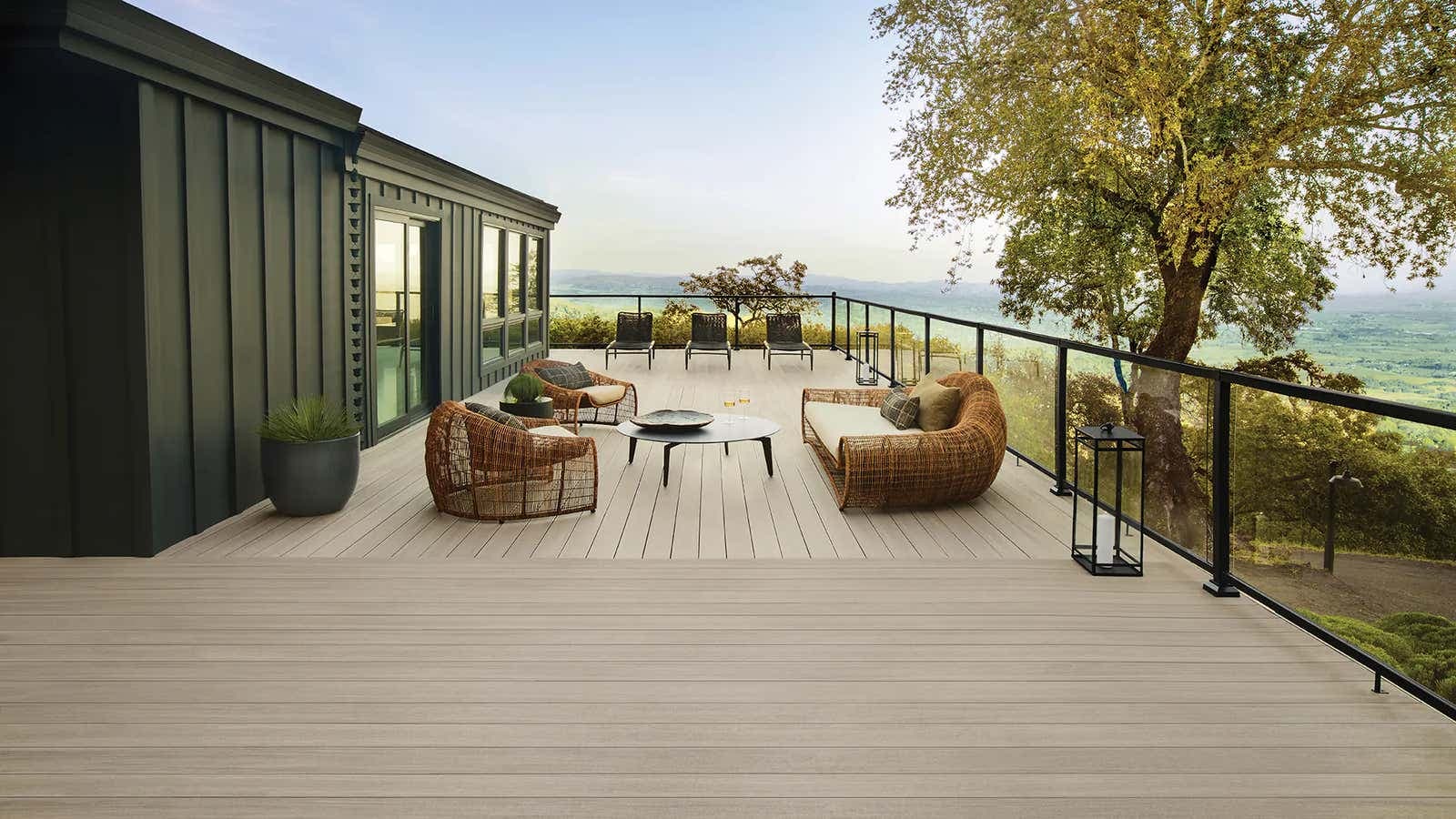
Understanding Board Dimensions and Profiles
Composite decking boards are available in various dimensions and profiles, each designed for specific applications. Standard board dimensions typically refer to the nominal length, width, and thickness. It's important to note that actual dimensions can sometimes vary slightly from nominal, so always check the manufacturer's specific product data.
Profiles describe the shape of the board, particularly the edges and underside. Common profiles include solid, scalloped, or hollow. Solid boards offer a traditional feel and can be face-fastened, while scalloped or hollow profiles may reduce weight and material cost. Edge profiles also vary, from square edge boards for face fastening to grooved edge boards designed for hidden fastener systems. Confirming the correct profile for your fastening method is critical.
For example, a project requiring a clean, seamless look might specify grooved-edge boards compatible with a hidden clip system. Conversely, a deck where boards are visible from underneath, such as a second-story deck, might benefit from solid boards with a finished underside.
Material Composition and Performance Characteristics
Composite decking is engineered from a blend of wood fibers and plastic, offering a balance of durability and low maintenance. The exact composition can vary between manufacturers and product lines. For instance, some products, like certain Trex lines, incorporate up to 95% recycled content, utilizing reclaimed sawdust and plastic film.
These materials are designed to resist common outdoor challenges. Many composite decking products feature a capped shell, which is an outer layer engineered to resist fading and staining. This cap is a key feature for long-term appearance retention. While composite decking generally requires annual washing with soap and water, it does not typically need oiling, sanding, or staining.
For projects in areas with high humidity or salt air exposure, considering capped shells can be beneficial. Some manufacturers also offer options designed to be cooler underfoot, which can be a consideration for decks in direct sun exposure.
Approved Uses and Limitations
Each composite decking product line is designed and tested for specific applications. It is crucial to verify that the product you select is approved for your intended use. For instance, not all composite decking is suitable for structural applications, and most composite boards are designed as a non-structural walking surface.
Check the manufacturer's guidelines for appropriate joist spacing, especially for different board thicknesses and profiles. Using a product outside its approved parameters can compromise performance and may affect any applicable warranties. Also, consider the specific environment of your project; for example, if the deck will be exposed to significant winter weather or heavy foot traffic, ensure the chosen product is rated for such conditions.
Always refer to the manufacturer's installation instructions for details on required ventilation, spacing between boards, and fastening methods. These instructions are essential for proper installation and long-term performance.
Evaluating Appearance and Finish Options
Composite decking offers a range of aesthetic choices, including various colors and grain patterns. Unlike natural wood, composite boards provide consistent color and grain from board to board, offering a uniform appearance across the deck. This consistency can be a significant advantage for those seeking a predictable look.
Finishes can range from smooth to textured, some designed to mimic the appearance of wood grain. The specific finish can impact both the visual appeal and the tactile experience of the deck surface. When choosing, consider how the finish will complement your home's exterior and landscaping. It's always recommended to review physical samples to accurately assess color and texture.
Many lines are designed to resist fading, with manufacturers often providing written fade and stain resistance information.
Worked Example: Selecting Composite Decking for a 12x16 Foot Deck
Let's consider a hypothetical project: a 12-foot by 16-foot elevated deck. The homeowner wants a low-maintenance surface with a hidden fastener system and a consistent, modern look. The deck will be approximately 2 feet off the ground, requiring good ventilation.
The homeowner prefers a grooved-edge profile for hidden fasteners. Let's assume a standard board size of 1 inch thick by 5.5 inches wide, available in 16-foot lengths.
2. **Coverage Calculation:** The deck area is 12 ft x 16 ft = 192 square feet. Each 16-foot board (16 ft * (5.5 in / 12 in/ft)) covers approximately 7.33 square feet. To cover 192 sq ft, you would need 192 / 7.33 = 26.19 boards. Rounding up, you would purchase 27 boards to account for cuts and waste. This calculation is for coverage only; actual order quantity should include waste factor and any specific layout requirements.
3. **Fascia and Trim:** For the perimeter, fascia boards will be needed. The perimeter is 2 * (12 ft + 16 ft) = 56 linear feet. If fascia boards come in 12-foot lengths, you'd need 56 / 12 = 4.67, so 5 fascia boards. These are often solid-edge profiles.
The product specification will detail the specific clips and screws needed, and the estimated quantity per square foot.
5. **Ventilation:** For an elevated deck, ensuring proper airflow beneath the deck is crucial for composite decking. The chosen product's installation guide will provide minimum ventilation requirements, which must be factored into the deck frame design.
Before you order
- Confirm board dimensions (length, width, thickness) and ensure they match your project plans.
- Verify the board profile (solid, scalloped, grooved, square edge) is compatible with your chosen fastening method.
- Check the material composition and any specific performance features (e.g., capped shell, recycled content, fade/stain resistance).
- Review the manufacturer's approved uses and limitations for the product, including suitable joist spacing.
- Evaluate the available colors and finishes, ideally with physical samples, to ensure they meet your aesthetic preferences.
- Identify any specific accessories required, such as compatible hidden fasteners, fascia boards, or stair components.
- Understand the recommended maintenance requirements for the chosen product line.
- Confirm any specific installation requirements, such as ventilation or board spacing, from the manufacturer's guide.
Confirm installation details, approved uses and warranty terms in the current instructions for the exact product and profile. Your installer should verify the substrate, structure and applicable project requirements.
Questions to help you decide
What is the difference between solid and grooved-edge composite decking?
Solid-edge composite decking boards have finished edges on all sides and are typically used for face fastening (screwing directly through the board) or for perimeter boards and stairs. Grooved-edge boards have a channel or groove along the sides, designed to accommodate hidden fastener clips that secure the boards to the joists from the sides, creating a cleaner, screw-free surface appearance.
Do all composite decking products have the same fade and stain resistance?
No, fade and stain resistance can vary significantly between different composite decking manufacturers and even between product lines from the same manufacturer. Many premium composite decking products feature a durable, capped shell designed to enhance resistance to fading and staining. Always review the specific product's specifications and any written information provided by the manufacturer regarding fade and stain warranties.
How do I calculate the quantity of composite decking I need?
To estimate the quantity, first calculate the total square footage of your deck. Then, determine the square footage covered by a single board (board width in feet x board length in feet). Divide your total deck area by the coverage of one board to get an initial board count. Always add an allowance for cuts and waste, typically 5-10%, and consider specific board lengths to minimize seams and optimize cuts. Don't forget to account for fascia, trim, and any stair components separately. It's always best to work with your supplier or contractor to finalize exact quantities.
Ready to Plan Your Composite Decking Project?
Request a material quote with your project dimensions, desired profile, and ZIP code. We can help you confirm current availability and service options for your area.
Request a material quote →