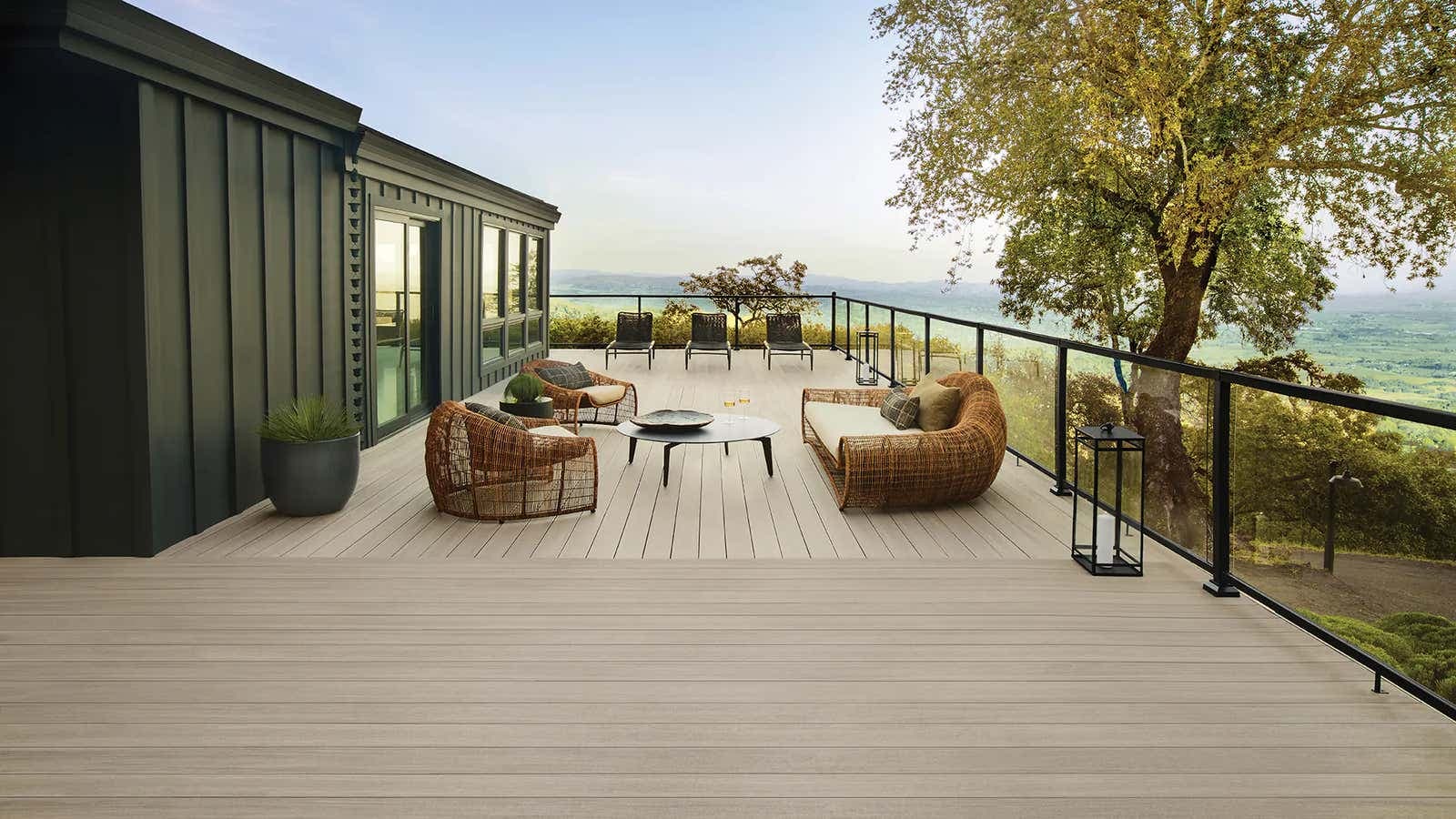
Understanding Commercial Suitability
Before selecting any decking material for a restaurant patio, it is essential to confirm its suitability for commercial applications. While many composite decking products are popular for residential use, not all are designed or approved for the higher demands of public spaces. Commercial applications typically involve greater foot traffic, more frequent cleaning, and stricter safety and durability requirements.
When reviewing product specifications, look for clear indications from manufacturers like Trex, TimberTech, and Fiberon regarding commercial use. This may include specific product lines designated for commercial projects or performance data that supports their use in high-traffic environments. Confirming this early can prevent issues with warranties or local building code compliance down the line. It is also important to consider the potential for spills of food, beverages, and cleaning agents, and how the material will resist staining and wear over time.
The overall structural design of a commercial patio also requires professional engineering review to ensure it meets load-bearing requirements for tables, chairs, planters, and the movement of numerous patrons. The decking material itself is a surface finish, and its installation must be compatible with the underlying structural system.
Planning Seating Layout and Traffic Flow
The layout of a restaurant patio is crucial for both guest comfort and operational efficiency. Composite decking offers a consistent, uniform surface that can accommodate various seating arrangements. When planning, consider how tables and chairs will be positioned and moved, as this will impact wear patterns on the deck surface. A well-designed layout should also account for clear pathways for staff and customers, ensuring smooth traffic flow and accessibility.
For a hypothetical 20-foot by 30-foot patio, you might aim for a layout that includes a mix of two-top, four-top, and communal tables. If each table setting requires approximately 60 square feet for seating and circulation, a 600 square foot patio could accommodate around 10-12 such settings. This density requires a robust decking surface that can endure constant chair scraping and foot traffic. Consider board orientation; running boards parallel to the main traffic flow can sometimes visually extend the space but may show wear more readily in high-traffic lanes. A diagonal pattern can add visual interest and potentially distribute wear more evenly.
Accessibility is another key planning element. Ensure pathways meet local accessibility standards, with adequate width and minimal transitions. Composite decking's consistent surface can contribute to creating an accessible outdoor dining area.
Maintenance Regimen for Commercial Patios
One of the primary advantages of composite decking for commercial applications is its relatively low maintenance compared to natural wood. Manufacturers generally recommend a simple soap-and-water wash for routine cleaning. This is particularly beneficial for restaurants, where daily or weekly cleaning of spills and general grime is often necessary. Unlike wood, composite decking does not require sanding, staining, or sealing, which reduces ongoing labor and material costs.
However, "low maintenance" does not mean "no maintenance." Regular cleaning is still vital to prevent the buildup of dirt, grease, and food debris that can lead to staining or slippery surfaces. Review the manufacturer's specific cleaning guidelines for approved products and methods. For instance, some composite materials may be more resistant to certain types of stains than others. Prompt cleanup of spills is always recommended to minimize potential issues.
Consider the use of pressure washers for cleaning. While some composites can withstand low-pressure washing, always follow the manufacturer's instructions regarding pressure settings and nozzle types to avoid damaging the deck surface. Consistent, gentle cleaning will help maintain the patio's appearance and extend its service life.
Refer to product documentation for specific instructions. For example, some products specify an annual wash, while others tolerate more frequent cleaning.
Specifying Material and Profiles
When specifying composite decking for a restaurant patio, attention to detail is crucial. Commercial projects often benefit from specific board profiles designed for durability and ease of installation. Standard grooved boards are commonly used with hidden fastening systems, which provide a smooth, fastener-free surface, reducing trip hazards and enhancing aesthetics. Solid or scalloped profiles are available, with solid boards generally offering a more substantial feel and potentially greater durability for very high-traffic areas.
Color and finish selection should align with the restaurant's branding and the desired ambiance. Composite decking is available in a wide range of colors and wood-grain patterns. Lighter colors may feel cooler underfoot in direct sun, which can be a consideration for guest comfort. Darker colors may absorb more heat but can offer a rich, sophisticated look. Requesting physical samples is advisable to assess colors and textures under actual lighting conditions and against other building materials.
When ordering, specify the exact collection, color, profile, and quantity needed. Also, confirm the project ZIP code for accurate quoting and delivery planning. Manufacturers like Trex, TimberTech, and Fiberon offer various lines, each with distinct characteristics regarding appearance, durability, and cost. Matching fascia and trim boards are also important for a finished look around the perimeter and for stair risers, if applicable. These details contribute to both the aesthetic appeal and the longevity of the patio.
Consider the specific board lengths available to minimize waste and reduce the number of seams. Longer boards can create a more continuous look, but handling and installation may require more effort.
Evaluating Trade-offs and Long-Term Value
While composite decking offers significant advantages for restaurant patios, it's important to understand the trade-offs. The initial investment for composite decking can be higher than for some natural wood options. However, this higher upfront cost is often offset by lower long-term maintenance expenses. With no need for regular staining or sealing, the operational costs associated with labor and materials for upkeep are substantially reduced over the life of the deck.
Another consideration is the appearance over time. While composite decking is designed for fade and stain resistance, some degree of weathering or subtle color change can occur. Review manufacturer warranties closely, as they often detail fade and stain performance over many years. Consistent color and grain are characteristic of composite boards, offering a uniform look that some commercial establishments prefer for brand consistency.
For high-traffic commercial settings, the durability of the capped shell on composite boards is a key factor. This protective layer helps shrug off humidity and resist scratches and scuffs from chairs and foot traffic. Comparing the warranty details for fade and stain resistance across different manufacturers (e.g., Trex, TimberTech, Fiberon) can provide insight into anticipated long-term performance.
Ultimately, the decision should weigh the initial purchase against the anticipated maintenance savings, durability in a commercial setting, and the desired aesthetic for the restaurant's brand and customer experience.
Before you order
- Confirm manufacturer approval for commercial use.
- Review local building codes and accessibility requirements.
- Plan seating layout and traffic flow for efficiency and safety.
- Establish a realistic maintenance schedule and cleaning protocols.
- Select board profiles and finishes that meet aesthetic and durability needs.
- Obtain physical samples to evaluate color and texture.
- Verify warranty specifics for fade and stain resistance in commercial settings.
- Account for all necessary trim, fascia, and fastening components.
- Consult with a structural engineer for load-bearing requirements.
Confirm installation details, approved uses and warranty terms in the current instructions for the exact product and profile. Your installer should verify the substrate, structure and applicable project requirements.
Questions to help you decide
Can composite decking be used in all climates for restaurant patios?
Composite decking is engineered to perform well in a variety of climates, including those with significant temperature fluctuations, humidity, and sun exposure. Many products offer cooler-underfoot options and are designed to resist moisture and salt air. However, it's always important to review the specific product's performance data and manufacturer recommendations for extreme conditions in your region. Proper ventilation beneath the deck is also crucial in all climates to ensure longevity.
How do I calculate the quantity of composite decking needed for a commercial patio?
To calculate the quantity, first measure the total square footage of your patio area. Then, factor in board dimensions (length and width) and account for waste due to cuts and potential layout patterns (e.g., diagonal layouts typically require more waste). It's generally recommended to add 5-10% to your total square footage for cuts and unexpected needs. For a precise estimate, create a detailed deck plan showing board placement. For example, an 8-foot by 5-foot section needing 24-inch wide tiles would require 12 tiles (2 tiles across the 5-foot width and 6 tiles along the 8-foot length, assuming a standard 24-inch tile length results in 2.5 tiles for the 5-foot width, requiring 3 tiles purchased for that dimension). Always round up to full boards or modules. The actual purchase quantity will be based on full board lengths available, so consult with your supplier for an optimized material list.
Are there specific fasteners recommended for commercial composite decking installations?
For commercial applications, hidden fastening systems are often preferred as they provide a smooth, trip-hazard-free surface, which is a significant safety advantage in public spaces. These systems typically involve clips that attach to the grooved edges of the boards, securing them to the substructure without visible screws on the deck surface. Some projects may also utilize face-fastening with color-matched screws, especially for perimeter boards or specific design elements. Always use fasteners explicitly approved or recommended by the composite decking manufacturer to ensure compatibility and maintain warranty validity.
Ready to Plan Your Restaurant Patio?
Request a material quote for composite decking with your project dimensions, exact profile, and ZIP code. Confirm current availability and service options to get started on your commercial patio project.
Request a material quote →