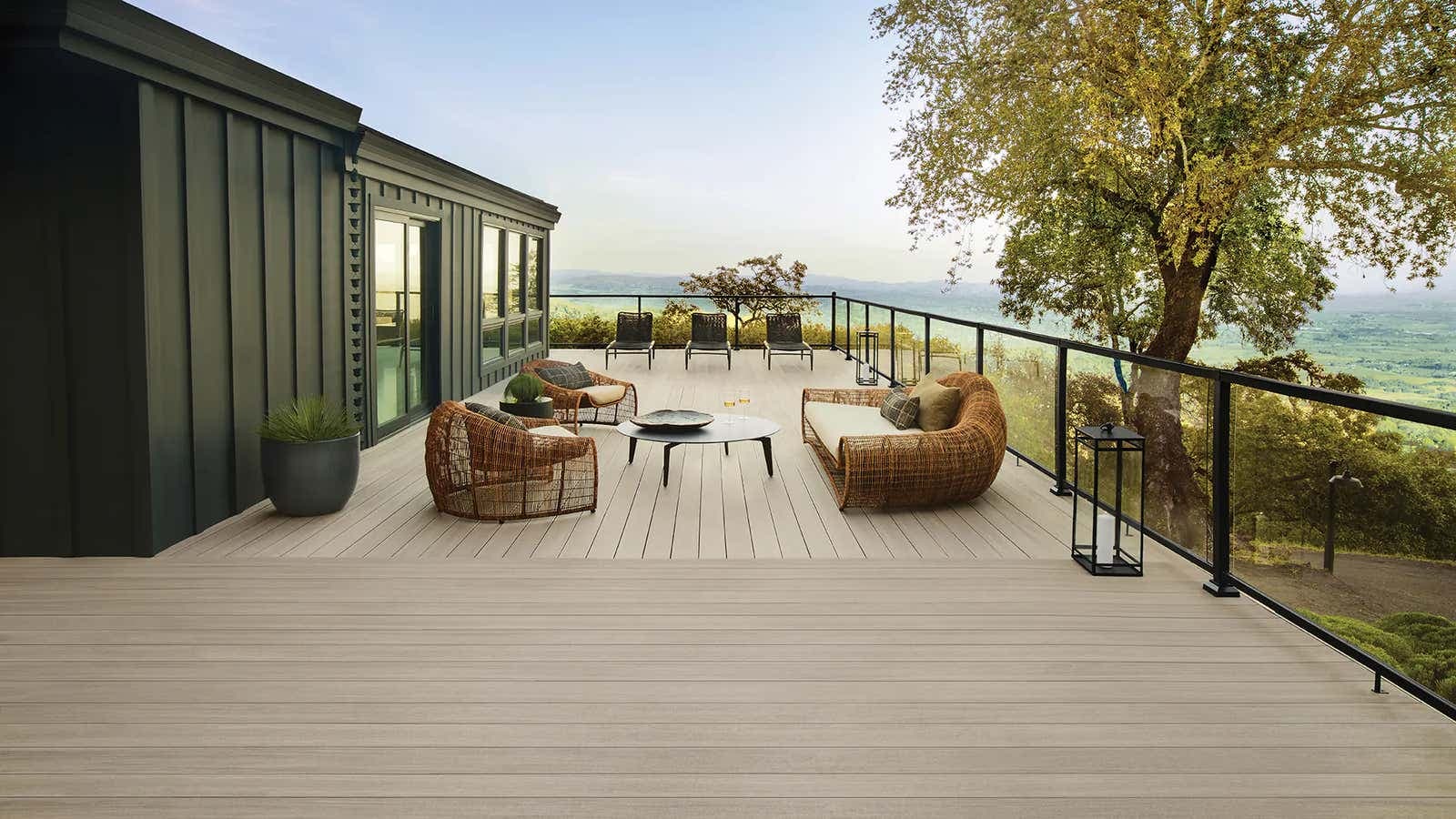
Why Identifying Your Existing Decking is Crucial
A successful repair hinges on finding a replacement board that closely matches your existing deck. Without proper identification, you risk mismatched colors, differing board profiles, or incompatible fastening systems. These discrepancies can detract from your deck's appearance and potentially compromise its structural integrity or longevity.
Even subtle differences in board dimensions or fastening grooves can make installation difficult or impossible without significant modification. Furthermore, different composite materials can react differently to weather and wear over time, leading to further aesthetic inconsistencies if not chosen carefully.
Step 1: Gather Information from Original Documentation
The most straightforward way to identify your composite decking is to consult any original project documentation. Look for purchase orders, invoices, or installation guides from when the deck was built. These documents typically specify the manufacturer (such as Trex, TimberTech, or Fiberon), the product line or collection, the specific color, and the board profile (e.g., grooved for hidden fasteners, solid edge for face fastening).
If you worked with a contractor, they might have records of the materials used. Even a warranty certificate can provide crucial details about the decking product. This information is invaluable for narrowing down your search for replacement boards.
Step 2: Examine the Existing Decking for Clues
If original documentation is unavailable, a close examination of your existing deck boards can reveal important clues. Look for any identifying marks on the underside or ends of the boards. Some manufacturers emboss their brand, product line, or even a production code. These marks can be subtle, so inspect a few different boards.
Pay attention to the board's profile: is it solid, or does it have a grooved edge for hidden fasteners? Measure the exact width and thickness. Note the texture and grain pattern—is it a deep, embossed wood grain, or a smoother finish? Observe the color variation and how the color appears on the top versus the sides of the board. These details help in matching aesthetics and compatibility.
Step 3: Account for Batch Differences and Aging
Even with the correct manufacturer, line, and color, new composite boards may not be an exact match for older, weathered ones. Composite decking can experience some color shift over time due to UV exposure and environmental factors, even with fade-resistant warranties. This is a normal process.
Manufacturers also periodically update their product lines, colors, or formulations. A 'Sandstone' color from five years ago might have a slightly different hue or texture than a current 'Sandstone' offering, even from the same brand. When selecting replacement boards, consider that a perfect color match might be challenging. Sometimes, a slight difference is acceptable, especially if the repair is in a less conspicuous area. If multiple boards are being replaced, you might consider replacing boards in a less visible area and moving older, better-matched boards to the repair location.
Step 4: Consult with a Supplier and Compare Samples
Once you have gathered as much information as possible, contact a Lumber Plus representative. Provide them with all the details you've collected: manufacturer, product line, color, profile, and dimensions. They can help you identify potential matches and check current availability.
Request physical samples of any potential replacement boards. Comparing these samples directly against your existing deck boards in natural light is crucial. This will help you assess the color, texture, and profile match. Remember to consider how the new board will age and blend with the existing deck over time. Bring a small, clean offcut of your existing board if possible, or take clear, well-lit photos.
Hypothetical Repair Example: Replacing a Damaged Board
Imagine you have a 12-foot by 16-foot composite deck with a single damaged board near the grill. You have no original paperwork. You inspect the underside of an adjacent board and find a faint 'Trex Enhance' logo and the board measures 5.5 inches wide by 0.94 inches thick, with a grooved edge profile. The color appears to be a light gray-brown.
You contact Lumber Plus with this information. They identify 'Trex Enhance Naturals' in 'Foggy Wharf' as a likely candidate. You request a sample of the 'Foggy Wharf' board. Upon comparison, you notice the new sample is slightly lighter than your existing weathered board. However, the profile and dimensions are identical. You decide to proceed, understanding the new board will likely darken slightly with exposure and blend better over time. You will need one 16-foot board for this repair, assuming no reusable offcuts from other projects. If the repair needed to be in a prominent location, you might consider replacing two adjacent boards to create a more intentional visual break, or sourcing a slightly aged board if available through specialized channels.
Before you order
- Do you have original purchase records or installation guides for your composite decking?
- Have you checked the underside and ends of existing boards for manufacturer marks or product codes?
- What are the exact width and thickness of your existing deck boards?
- Is your existing board profile solid or grooved? If grooved, what is the groove dimension?
- What is the current color and grain pattern of your deck boards?
- Have you considered the effects of aging and weathering on your existing deck's appearance?
- Are you prepared for a slight color variation between new and old boards?
- Have you obtained physical samples of potential replacement boards for comparison?
- What length of replacement board(s) do you need, accounting for cuts and potential waste?
Confirm installation details, approved uses and warranty terms in the current instructions for the exact product and profile. Your installer should verify the substrate, structure and applicable project requirements.
Questions to help you decide
Can I mix different brands of composite decking for repairs?
Mixing different brands of composite decking for repairs is generally not recommended. Even if colors appear similar, different manufacturers often use unique profiles, fastening systems, and material compositions. These differences can lead to installation challenges, aesthetic mismatches, and potential issues with long-term performance and warranty coverage.
How do I account for color fading on my existing deck?
Color fading is a natural process for outdoor materials. When selecting replacement boards, be aware that a new board, even of the same product and color, may initially appear brighter or slightly different. Over time, the new board will weather and typically blend more closely with the existing deck. Some manufacturers offer cooler-underfoot options with enhanced fade resistance, but some degree of change is expected.
What if I can't find an exact match for my old decking?
If an exact match is impossible due to discontinued lines or significant aging, you have a few options. You could choose the closest available match and accept a slight aesthetic difference. Alternatively, consider replacing boards in a less conspicuous area and moving older, better-matched boards to the damaged spot. For larger areas or highly visible repairs, you might explore replacing a full section of the deck with a new, complementary product, such as a different color or a contrasting border using a product like Ipe hardwood decking or PVC decking.
Request a Quote for Composite Decking Replacement Boards
Provide your project dimensions, the exact profile, and your ZIP code to request a material quote. Our team can help confirm current availability and service options for your composite decking repair needs. Visit our composite decking product page to explore options: /decking/composite
Request a material quote →