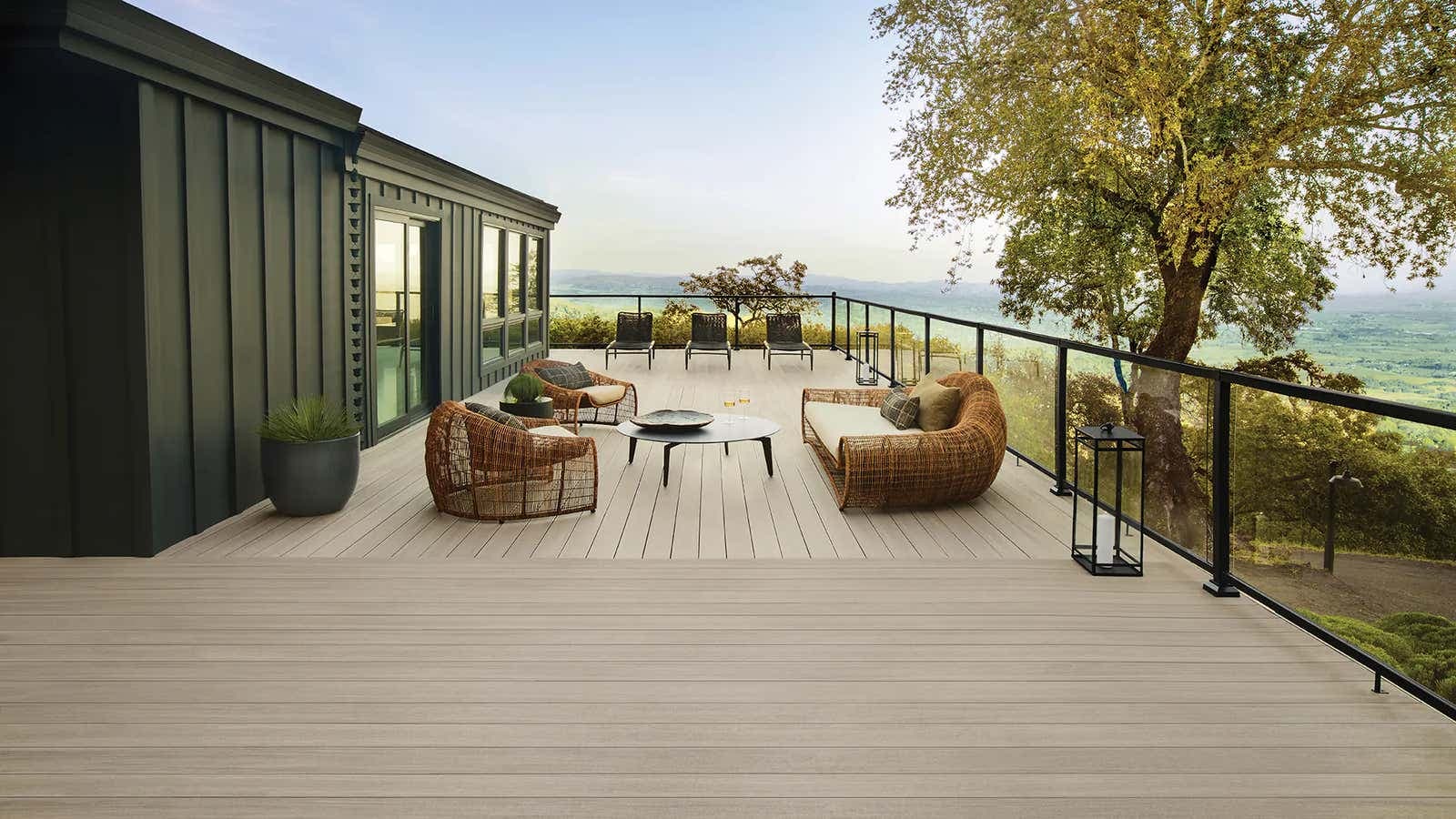
Understanding Composite Decking for Wet Environments
Composite decking is engineered from a blend of wood fibers and plastic, often with a protective cap or shell. This composition is designed to offer resistance to moisture absorption, a critical factor for pool surrounds where water exposure is constant. Unlike traditional wood, composite materials are less prone to rot, splintering, or insect damage when wet.
Many composite decking options feature a capped shell, which further enhances their resistance to moisture and staining. This outer layer acts as a barrier, helping to repel water and simplify cleaning. When evaluating composite for a pool area, consider options that explicitly mention enhanced moisture resistance or a durable cap.
While composite decking is generally robust in wet conditions, it's important to remember that no material is entirely impervious. Proper installation, including adequate spacing between boards for drainage and ventilation, remains essential to prevent standing water and ensure the longevity of the deck.
Surface Characteristics and Foot Traffic
For a pool surround, the feel and stability underfoot are important. Composite decking offers a consistent surface without splinters, which can be a significant advantage for bare feet. The texture and finish of the boards can also influence how they perform when wet.
Always exercise caution around wet pool areas.
The consistency of composite decking means you generally won't encounter the variations in grain or knots found in natural wood, providing a uniform walking surface. This can contribute to a safer environment around the pool, reducing potential trip hazards from uneven surfaces.
Cleaning and Maintenance in a Pool Setting
One of the primary advantages of composite decking for a pool surround is its relatively low maintenance requirements. Most composite products can be cleaned with a simple soap-and-water wash, which is ideal for removing pool chemicals, sunscreen residues, and general dirt.
Unlike natural wood, composite decking does not require sanding, staining, or sealing to maintain its appearance or structural integrity in wet conditions. This can save considerable time and effort over the life of the deck.
It's important to follow the manufacturer's specific cleaning guidelines for your chosen composite product. While general cleaning is straightforward, certain chemicals, especially those used for pool maintenance, might react differently with various composite formulations. Always test cleaning solutions in an inconspicuous area first.
Edge Finishes and Trim for a Polished Look
The edges of your pool deck are highly visible and subject to frequent contact. Composite decking offers various options for finishing these areas, including fascia boards and trim pieces that match or complement the main deck boards. These components help create a clean, finished appearance.
Fascia boards are typically used to cover the exposed rim joists of the deck, providing a neat perimeter. For pool surrounds, these can also help create a visual separation between the pool coping and the decking surface.
When planning your pool surround, consider how the edge profiles will integrate with the pool coping and any surrounding landscaping. A well-chosen edge treatment can enhance both the aesthetics and the safety of the transition areas.
Planning for Drainage and Ventilation
Effective drainage is crucial for any pool deck, even with moisture-resistant composite materials. Proper deck design should incorporate a slight slope away from the pool to direct water runoff. This prevents standing water, which can lead to slippery surfaces and potential issues over time.
Adequate ventilation beneath the deck is also important. This allows air to circulate and helps dry out any moisture that might accumulate. Ensure that the deck substructure allows for sufficient airflow, especially in areas prone to high humidity.
The spacing between composite deck boards is also a factor in drainage. Manufacturer specifications will provide the recommended gap for your chosen product. Adhering to these guidelines ensures water can pass through the deck surface efficiently.
Worked Example: Designing a Rectangular Pool Surround
Let's consider a hypothetical rectangular pool measuring 15 feet by 30 feet, with a plan to add a 6-foot wide composite deck surround on all four sides. This creates an overall deck area of (15 + 2*6) x (30 + 2*6) feet, which is 27 feet by 42 feet. The total area covered by the deck and pool combined is 27 feet * 42 feet = 1134 square feet. The pool area is 15 feet * 30 feet = 450 square feet. Therefore, the deck area needed is 1134 - 450 = 684 square feet.
If we select composite decking boards that are 12 feet long and 5.5 inches wide (actual coverage), a single board covers 12 feet * (5.5/12) feet = 5.5 square feet. To cover 684 square feet, you would need approximately 684 / 5.5 = 124.36 boards. Since boards are sold in full lengths, you would purchase 125 boards. This calculation assumes a simple linear lay, with minimal waste and no complex cuts. For practical purposes, always factor in an additional 10-15% for cuts, waste, and future repairs, bringing the purchase quantity closer to 138-143 boards.
For the fascia, if the deck height is 1 foot (12 inches) and the perimeter is (27 + 42) * 2 = 138 linear feet, you would use fascia boards that are typically 12 feet long and 11.25 inches wide. You would need 138 / 12 = 11.5 boards, so 12 fascia boards. This example highlights the need to calculate both the main deck surface and the finishing components separately.
Before you order
- Verify composite decking product suitability for constant moisture exposure and pool chemicals.
- Evaluate surface texture and finish for comfort and traction in wet conditions.
- Confirm cleaning and maintenance requirements for the chosen composite decking.
- Select appropriate fascia and trim options for a finished edge around the pool.
- Plan for proper drainage and ventilation beneath the deck surface.
- Calculate main deck board quantity, accounting for waste and cuts.
- Calculate fascia and trim linear footage for the deck perimeter.
Confirm installation details, approved uses and warranty terms in the current instructions for the exact product and profile. Your installer should verify the substrate, structure and applicable project requirements.
Questions to help you decide
Can composite decking be installed directly on concrete around a pool?
While composite decking can be installed over a concrete slab, it typically requires a substructure (sleepers or joists) to ensure proper drainage and ventilation. Direct contact with concrete without airflow can trap moisture and potentially lead to issues. Consult the manufacturer's installation guide for specific requirements regarding sub-surface preparation and ventilation.
Does composite decking get hot in the sun around a pool?
All decking materials, including composite, can absorb heat from the sun. Lighter colors generally reflect more sunlight and tend to feel cooler than darker colors. Some composite decking lines offer 'cooler-underfoot' options, which are designed to mitigate heat absorption. It's advisable to consider lighter shades for pool surrounds, especially in areas with intense sun exposure, and to test samples if possible.
How do I clean pool chemical spills on composite decking?
For most composite decking, minor pool chemical spills should be cleaned promptly with a solution of mild soap and water. Avoid harsh abrasive cleaners or strong solvents, as these can damage the deck surface or its protective cap. Always refer to the specific cleaning instructions provided by the composite decking manufacturer for the best results and to ensure compatibility with your product.
Ready to Plan Your Composite Pool Deck?
Request a material quote with your project dimensions, desired profile, and ZIP code to confirm current availability and service options for composite decking. We can help you select the right products for your pool surround.
Request a material quote →