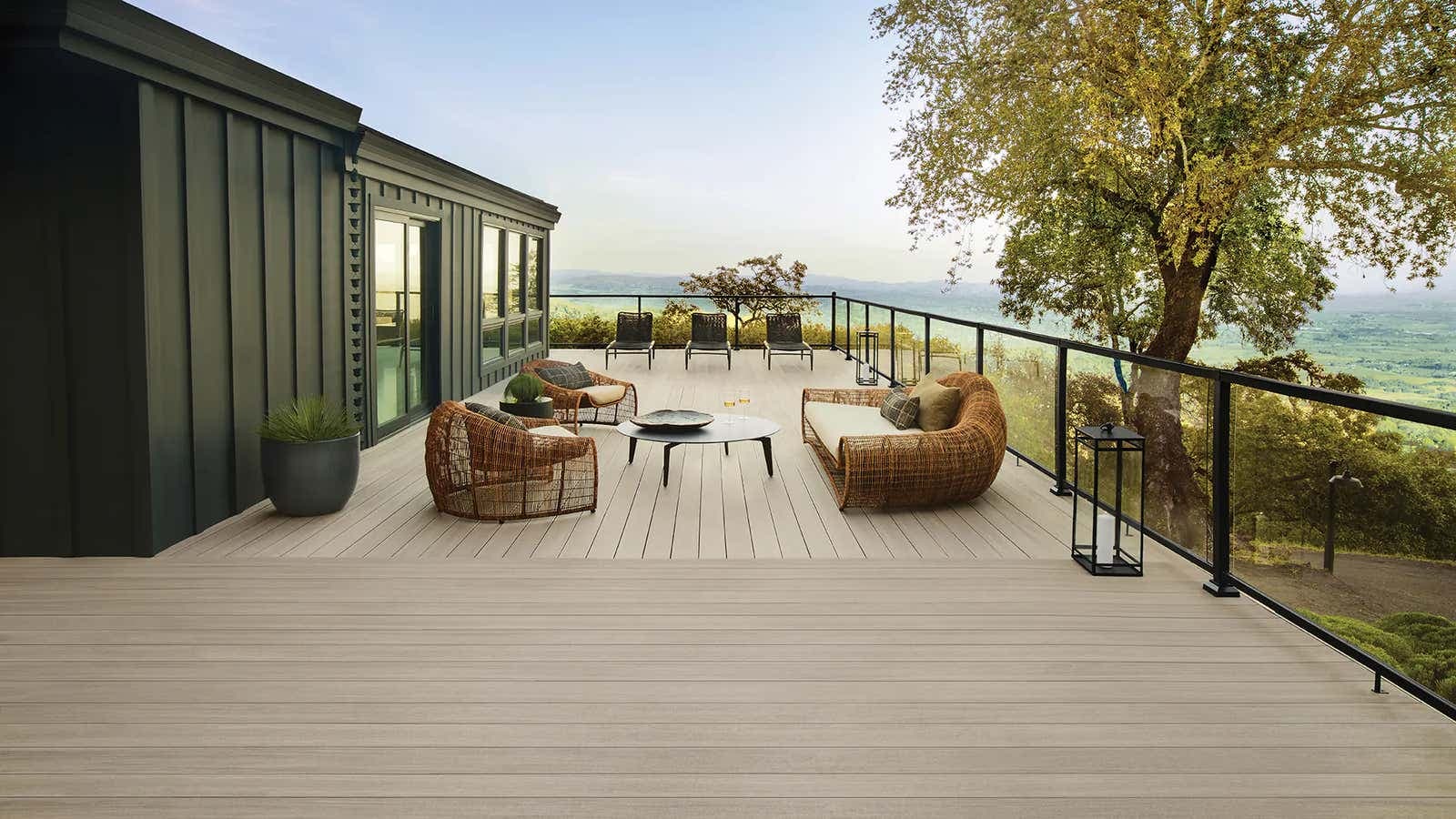
Visual Consistency and Brand Identity
One of the primary advantages of composite decking for hospitality is its consistent appearance. Unlike natural wood, which can vary significantly in grain and color from board to board, composite decking is manufactured to uniform specifications. This consistency is crucial for maintaining a cohesive brand identity across a large resort, a chain of hotels, or even different outdoor zones within a single property.
For example, a boutique hotel aiming for a specific modern aesthetic might choose a solid, muted gray composite board to complement its contemporary architecture. A family resort, on the other hand, might opt for a warmer, multi-tonal brown composite that mimics tropical hardwood, creating a relaxed, inviting atmosphere around its pool area. The predictable nature of composite decking allows designers to specify exact colors and profiles, knowing the installed product will closely match their vision. This also simplifies future repairs or expansions, as new boards will integrate seamlessly with existing ones.
Many composite decking lines offer a range of colors and textures, including those designed to emulate various wood species. This allows for design flexibility while still delivering the performance benefits of composite materials. When selecting, consider how the decking's color and finish will interact with other elements of the outdoor space, such as furniture, landscaping, and building facades.
Durability and Guest Experience
Hospitality decks endure significantly more wear and tear than residential ones. High foot traffic, spills from food and beverages, and exposure to pool chemicals or cleaning agents are common. Composite decking is engineered for resilience in these conditions. Its capped shell construction, available in many lines, is designed to shrug off humidity and resist staining, which is vital for maintaining a clean and attractive surface for guests.
The uniform surface of composite boards also contributes to a safer and more comfortable guest experience. Unlike some natural wood, composite decking is less prone to splintering, reducing the risk of injuries to bare feet. Additionally, some composite options are designed to be cooler underfoot, an important consideration for pool surrounds or sun-exposed dining patios where guests might be barefoot or wearing light footwear.
When evaluating options, consider the anticipated traffic levels and specific activities for the area. A high-traffic walkway leading to a hotel entrance will require a more robust surface than a secluded seating area. Discuss specific product lines with your supplier to understand their suitability for commercial-level use and the manufacturer's guidance on heavy-duty applications.
Maintenance and Operational Efficiency
One of the most significant benefits of composite decking for hospitality is its low maintenance profile. Unlike natural wood, which often requires regular sanding, staining, or oiling, composite decking typically only needs an annual wash with soap and water. This significantly reduces the labor and material costs associated with deck upkeep, a critical factor for commercial operations managing multiple properties or large outdoor areas.
The reduced maintenance translates directly into operational efficiency. Hotel staff can dedicate less time to deck care and more to guest services. Furthermore, the absence of strong chemical treatments or prolonged drying times means the outdoor space can be returned to service quickly, minimizing disruption to guest activities and potential revenue loss.
While composite decking is low maintenance, it is not maintenance-free. Regular cleaning helps prevent the buildup of dirt, pollen, and mildew, which can affect its appearance. For specific cleaning instructions and product compatibility, always refer to the manufacturer's guidelines for your chosen composite decking line. This ensures the longevity of the material and helps preserve any fade and stain warranties.
Product Selection: Trex, TimberTech, Fiberon, and Norx
Lumber Plus offers a range of composite decking from reputable manufacturers, including Trex, TimberTech, Fiberon, and Norx. Each brand provides different lines, colors, and profiles, allowing for tailored solutions to meet specific hospitality project requirements.
For example, Trex is known for its high recycled content, utilizing up to 95% recycled sawdust and plastic film. TimberTech often highlights options designed for enhanced durability and cool-underfoot properties. Fiberon offers a variety of aesthetic choices and performance levels, while Norx provides additional composite solutions.
When making a selection, consider the specific performance characteristics, aesthetic options, and any available warranties. It is advisable to review samples and consult with a Lumber Plus representative to confirm the current lines, colors, and profiles that best suit your project's needs and budget. Compatibility with specific fastening systems (hidden vs. face-fastened) and sub-structure requirements should also be confirmed.
Worked Example: A Resort Pool Deck Renovation
Consider a hypothetical resort looking to renovate an existing 20-foot by 40-foot pool deck. The resort wants to replace an aging concrete surface with a low-maintenance, aesthetically pleasing, and durable composite deck. They require a material that is comfortable for bare feet, resists pool chemicals, and maintains a consistent look.
The project team selects a capped composite decking board, measuring 1 inch thick by 5.5 inches wide, available in 16-foot lengths. This profile is chosen for its enhanced stain resistance and cooler-underfoot technology. The design calls for boards to run parallel to the 40-foot side of the deck, minimizing cuts.
To cover the 20-foot width, approximately 44 boards (20 feet / 5.5 inches per board * 12 inches/foot = 43.6 boards) would be needed. For the 40-foot length, each board will need to be cut from a 16-foot length, resulting in two 16-foot pieces per 40-foot run, plus an 8-foot section. This means each 40-foot run requires three 16-foot boards (two full, one cut to 8 feet with 8 feet offcut). Therefore, for each 40-foot run, 3 boards are needed. Total boards: 44 boards (width) * 3 boards (length equivalent) = 132 boards. This calculation does not account for waste from edge cuts or specific layout details, which would increase the total. Always consult detailed layout plans for precise quantities.
Before you order
- Identify the specific use case: pool deck, dining patio, walkway, rooftop lounge?
- Determine required aesthetic: color palette, texture, desired wood emulation.
- Evaluate durability needs: anticipated foot traffic, exposure to spills/chemicals.
- Consider maintenance capabilities: staff availability, cleaning product compatibility.
- Review manufacturer specifications: capped vs. uncapped, cool-underfoot options.
- Confirm warranty details: fade and stain coverage for commercial use.
- Assess existing sub-structure: compatibility with composite decking requirements.
- Plan for edge finishes and fascia boards to complete the look.
- Obtain samples to evaluate in the actual environment under different lighting conditions.
- Confirm current availability of chosen lines, colors, and profiles.
Confirm installation details, approved uses and warranty terms in the current instructions for the exact product and profile. Your installer should verify the substrate, structure and applicable project requirements.
Questions to help you decide
Can composite decking be used around pools in hospitality settings?
Yes, many composite decking lines are suitable for pool surrounds. Look for options with capped shells designed to resist moisture, fading from UV exposure, and staining from pool chemicals. Some manufacturers also offer 'cooler-underfoot' technology, which can enhance guest comfort on hot days. Always verify the specific product's suitability with the manufacturer's guidelines for wet environments.
How does composite decking compare to hardwood decking for hospitality?
Composite decking offers consistent color and grain, requiring minimal maintenance (typically soap-and-water wash) and often comes with fade and stain warranties. Hardwood decking, like Ipe, provides natural grain and exceptional density, suitable for marine environments, but typically requires annual oiling to maintain color or will silver gracefully over time. The choice depends on the desired aesthetic, maintenance budget, and specific performance needs for the hospitality space.
What kind of maintenance is required for composite decking in a commercial setting?
Composite decking for hospitality typically requires annual cleaning with soap and water to remove dirt, pollen, and environmental debris. This helps maintain its appearance and prevents buildup. Unlike natural wood, it does not require sanding, staining, or sealing. Always follow the specific cleaning recommendations provided by the decking manufacturer to ensure longevity and warranty compliance.
Request a Quote for Your Hospitality Decking Project
Planning a new or renovated outdoor space for your hotel, resort, or restaurant? Contact us with your project dimensions, desired composite profile, and ZIP code to receive a material quote. We can also confirm current availability and service options for your location.
Request a material quote →