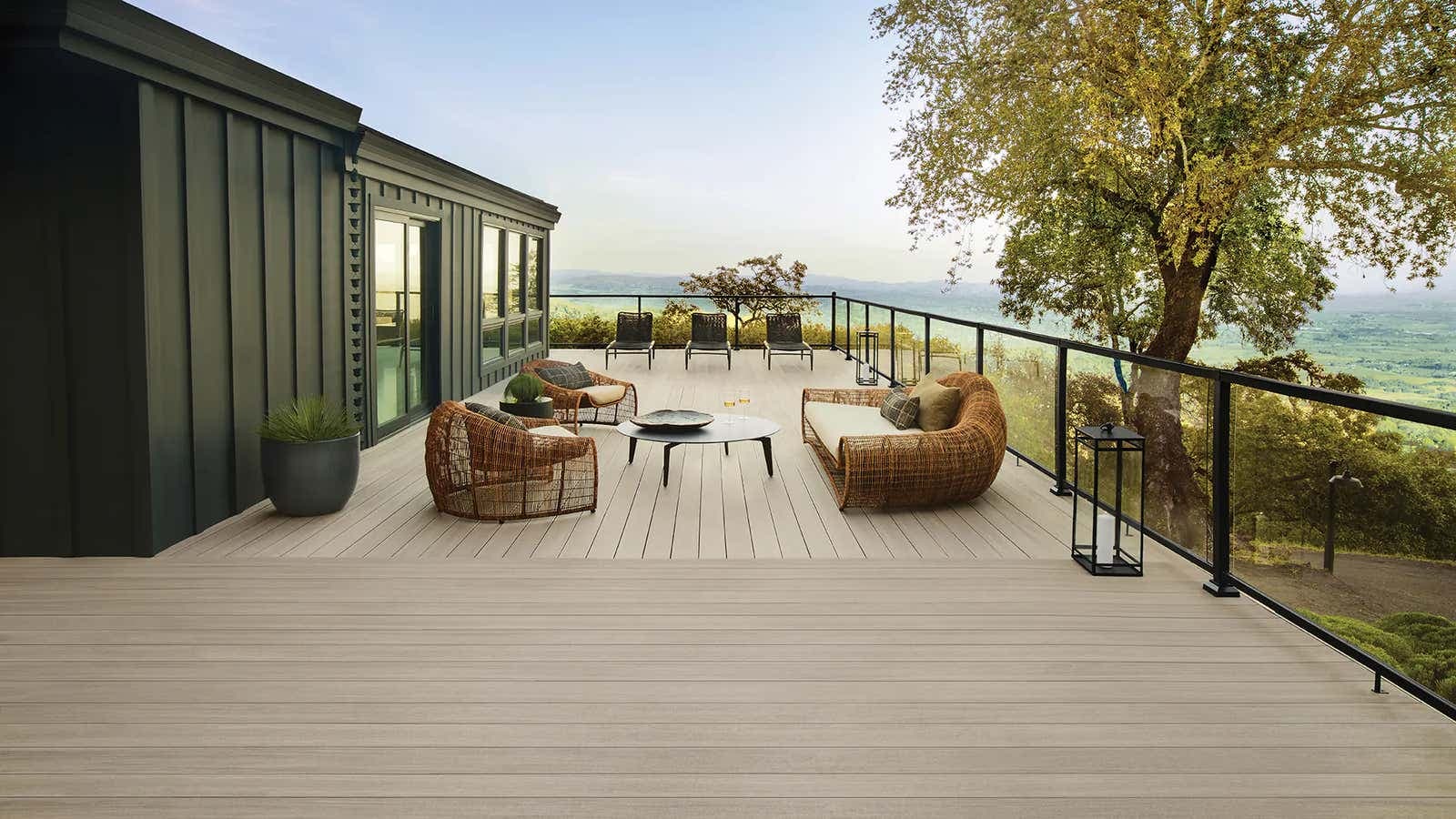
Understanding Factory Finishes and Capped vs. Uncapped Boards
Composite decking primarily comes in two forms: capped and uncapped. The finish appearance starts with this fundamental distinction.
Capped composite boards feature a durable polymer shell that encapsulates all sides, or at least three sides, of the core. This cap is engineered to resist fading, staining, and moisture absorption, providing a consistent color and texture from the factory. The cap is where the visual design — including wood grain patterns and varied color streaks — is applied. This design is consistent board after board, minimizing natural variation.
Uncapped composite boards, while less common today, consist of a uniform blend of wood fibers and plastic throughout their entire profile. These boards do not have the protective polymer shell. Their finish is the exposed composite material itself, which can be more susceptible to weathering, fading, and staining over time, similar to natural wood, though without the need for traditional sanding or staining. Brands like Trex offer capped options that feature up to 95% recycled content, incorporating sawdust and plastic film, which are then protected by the cap.
The choice between capped and uncapped will significantly impact the initial appearance and how that appearance evolves. Capped boards are designed to maintain a consistent look, while uncapped boards may show more natural-looking changes over time.
Color Consistency and Weathering
One of the key advantages of composite decking, particularly capped varieties, is its consistent color and grain from board to board. This consistency eliminates the surprises sometimes encountered with natural wood, where each board can have unique grain patterns and color variations.
Capped composite decking is designed to maintain its color over time, often backed by fade and stain warranties. While some minimal, initial weathering or lightening can occur as the surface settles, significant color shifts are generally not expected. The polymer cap acts as a barrier, protecting the core material from UV radiation and environmental elements that typically cause fading in uncapped composites or natural wood.
For uncapped composites, or older generations of composite decking, some degree of weathering and color change is a natural process. These boards may lighten or dull over time as the wood fibers on the surface are exposed to the elements. This can result in a more subdued, weathered look that some homeowners prefer for its natural aesthetic.
Texture and Grain Patterns
Composite decking manufacturers invest heavily in creating realistic textures and grain patterns to mimic the look and feel of natural wood. These textures are embossed onto the surface of capped boards during the manufacturing process.
You can find a range of textures, from smooth, contemporary finishes to deeply embossed wood grains that replicate specific wood species. Some products even incorporate multi-tonal streaking to further enhance the natural wood appearance, creating subtle variations in color across the board.
When evaluating texture, consider both the visual appeal and practical aspects. A more pronounced grain can offer better traction when wet, while a smoother finish might be easier to clean. The choice depends on your aesthetic preference and functional requirements for the deck area.
Maintenance and Finish Preservation
A significant appeal of composite decking is its low maintenance requirement compared to natural wood. Most composite decking, especially capped products, requires only a simple soap-and-water wash to maintain its appearance. This means no oiling, sanding, or staining is ever needed.
For specific products, an annual wash is recommended to remove dirt, pollen, and debris that can accumulate and potentially affect the surface appearance over time. While some older or uncapped composites might benefit from an optional yearly oil to help hold their color, this is generally not applicable to modern capped composite decking.
Always refer to the manufacturer's specific cleaning and care instructions for your chosen product to ensure you are using compatible cleaning agents and methods. Using abrasive cleaners or harsh chemicals not approved by the manufacturer could potentially damage the surface cap and alter the finish appearance.
Considering Environmental Factors
The environment where your deck is installed will influence its long-term appearance. While composite decking is designed to be durable, factors like sun exposure, humidity, and proximity to salt air can have an impact.
For decks in direct sunlight, capped composites are engineered to resist UV degradation and maintain color stability. However, some darker colors may absorb more heat, leading to a warmer surface underfoot. Manufacturers like Trex, TimberTech, and Fiberon offer options designed to be cooler underfoot, which can be a consideration in hot climates.
In humid or coastal environments, the capped shell of composite decking is designed to shrug off humidity and resist salt air. This makes it a suitable choice for marine-grade applications where natural wood might require more intensive maintenance to prevent rot and decay. The density of certain composite boards allows them to remain solid in such conditions.
Worked Example: Selecting Finish for a New Deck
Let's consider a hypothetical project: a 12-foot by 20-foot backyard deck for a family in a region with significant sun exposure. The homeowners desire a low-maintenance deck that retains a consistent, modern gray appearance without the need for annual staining.
Based on these requirements, a capped composite decking product with a light to medium gray finish would be a strong candidate. The capping provides the necessary fade and stain resistance, ensuring the desired color consistency over time. A lighter gray shade could also contribute to a cooler surface underfoot compared to a darker color, which is beneficial in a sunny location.
The homeowners would review samples of various capped gray composite boards, paying close attention to the embossed grain pattern. They might choose a subtle, wire-brushed texture for a contemporary feel that also offers adequate grip. They would confirm that the chosen product includes a fade and stain warranty to protect their investment in the desired finish. This decision prioritizes the factory-engineered appearance and its long-term stability over the natural weathering characteristics of uncapped or wood products.
Before you order
- Do you prefer a consistent, factory-engineered color and texture, or are you open to natural weathering and color changes?
- Is a specific wood grain replication important, or do you prefer a smoother, more contemporary finish?
- What level of UV exposure will your deck receive, and how important is fade resistance?
- Are you willing to perform annual cleaning, or do you desire minimal intervention?
- Is a cooler-underfoot option a priority for your climate?
- Have you reviewed physical samples of the composite decking in different lighting conditions?
- Does the product offer a fade and stain warranty that meets your expectations?
Confirm installation details, approved uses and warranty terms in the current instructions for the exact product and profile. Your installer should verify the substrate, structure and applicable project requirements.
Questions to help you decide
Can I paint or stain my composite decking if I want to change its appearance?
Generally, composite decking is not designed to be painted or stained. The factory finish, especially on capped boards, is intended to be the permanent surface. Painting or staining can void warranties and may not adhere properly or wear unevenly. It's best to choose a composite decking product with a finish you are satisfied with from the outset.
Will composite decking fade over time?
Modern capped composite decking is engineered with UV inhibitors in its polymer cap to resist fading, often backed by fade warranties. While some minimal initial lightening may occur as the surface stabilizes, significant fading is not expected. Older or uncapped composite products may show more noticeable color changes over time due to sun exposure.
How do I clean my composite deck to maintain its finish?
Most composite decking requires simple maintenance. An annual wash with soap and water is typically sufficient to remove dirt, pollen, and debris. Always follow the manufacturer's specific cleaning recommendations for your product to ensure the longevity of its finish and to avoid using incompatible cleaning agents.
Request a Material Quote for Your Composite Decking Project
Ready to select the perfect composite decking finish for your project? Contact us with your project dimensions, desired profile, and ZIP code to request a material quote. Our team can help confirm current availability and service options for top brands like Trex, TimberTech, and Fiberon. Explore our range of composite decking options and find the ideal aesthetic for your outdoor space.
Request a material quote →