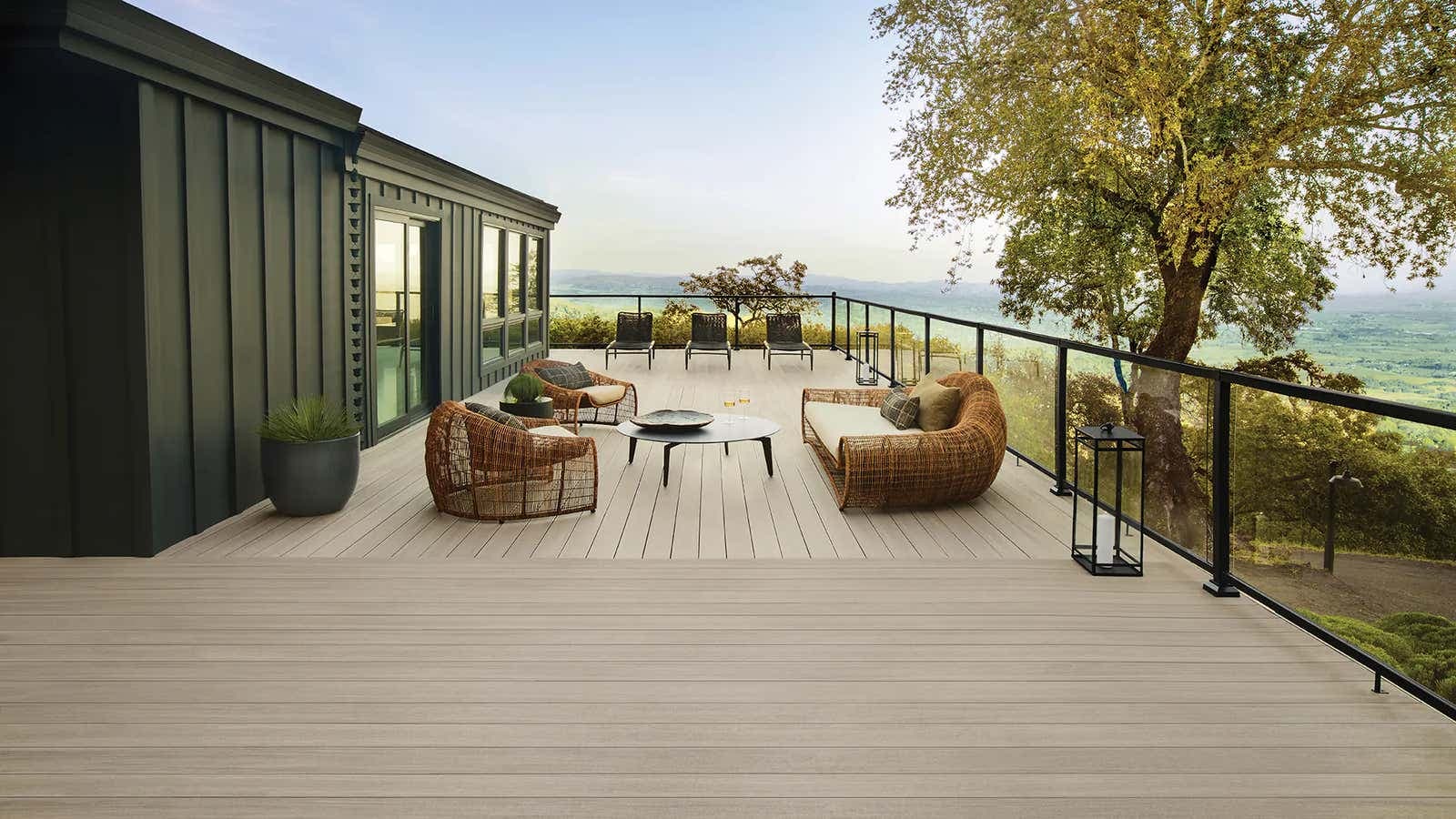
Understanding the Constraints of Compact Outdoor Spaces
Compact outdoor spaces in Chicago often come with unique constraints: limited access for material delivery, specific load-bearing requirements for elevated structures like balconies, and the need to optimize every inch for functionality. Unlike expansive backyards, smaller areas demand materials that are efficient to install, require minimal long-term maintenance, and contribute positively to the overall visual appeal without overwhelming the space.
Choosing composite decking for such areas means prioritizing profiles that fit well, considering fastening systems that minimize visual clutter, and selecting colors that enhance the sense of space. The goal is to create an inviting outdoor room, not just a surface.
Composite Decking Collections for Urban Projects
Leading manufacturers like Trex, TimberTech, and Fiberon offer diverse composite decking collections, each with distinct features that can be advantageous for compact Chicago projects.
Trex decking, for example, often features up to 95% recycled content, making it an environmentally conscious choice. Its diverse lines offer various aesthetics, from multi-tonal wood grains to solid colors. TimberTech provides options that emphasize realistic wood looks, often with advanced capping for enhanced durability. Fiberon also offers a range of styles with different surface textures and color variations, engineered for fade and stain resistance.
When selecting a collection, consider the board profile (solid vs. scalloped), the available lengths, and the specific fastening systems compatible with each. Some collections offer narrower board widths, which can sometimes make a small space feel larger or allow for more intricate patterns without excessive cutting and waste.
Maximizing Usable Space with Decking Layouts
In a compact outdoor space, the decking layout is crucial. A diagonal layout, for instance, can sometimes create an illusion of greater depth or width. However, this approach typically requires more material due to increased waste from angled cuts. For very small areas, a straight-board layout, carefully planned to minimize seams and optimize board lengths, is often more practical.
Consider using a picture-frame border to define the space. This design element can add a finished look and help contain furniture arrangements. For elevated balconies, ensure the decking system integrates seamlessly with railings and any existing structures, maintaining required clearances for drainage and ventilation.
Installation Considerations for Limited Access
Project sites in Chicago with compact outdoor spaces, such as high-rise balconies or enclosed patios, often present challenges for material delivery and installation. Long decking boards may be difficult to maneuver through hallways, elevators, or narrow gates. Plan for shorter board lengths where possible, or confirm that longer boards can be safely lifted and transported to the installation area.
The installation method itself should be considered. Hidden fastening systems provide a clean, fastener-free surface, which can be aesthetically pleasing in a small space. However, ensure the chosen system is compatible with the specific composite decking profile and allows for adequate board spacing as per manufacturer guidelines, which is critical for drainage and thermal expansion.
Worked Example: A Chicago Balcony Deck
Imagine a rectangular balcony in Chicago, measuring 10 feet long by 4 feet wide. The goal is to install composite decking on an existing, structurally sound subframe. We'll assume a standard composite board width of 5.5 inches and a nominal length of 12 feet.
For a straight-board layout running the 10-foot length: Each 12-foot board can yield one 10-foot piece and one 2-foot offcut. Since the balcony is 4 feet (48 inches) wide, and each board is 5.5 inches wide, you would need 48 / 5.5 = approximately 8.7 boards across the width. This means you would purchase 9 full boards. The offcuts could potentially be used for a small trim or picture frame, but for the primary surface, 9 boards would cover the 10x4 foot area, ensuring minimal waste and simplifying the cut plan. Always verify exact dimensions and calculate for waste factor.
If a picture frame border is desired, the internal decking area would be slightly reduced, and additional boards would be needed for the border itself. For a 5.5-inch border, the inner deck would become roughly 9 feet 1 inch by 3 feet 1 inch, requiring separate calculations for both the border and the infill.
Before you order
- Measure project dimensions accurately, including any irregular shapes or existing obstructions.
- Verify existing subframe condition and load-bearing capacity for elevated structures.
- Research composite decking collections for aesthetics, board profiles, and available lengths.
- Consider the impact of board width and layout (straight vs. diagonal) on space perception.
- Plan for material delivery and jobsite access, especially for long boards in urban settings.
- Select a compatible fastening system and confirm manufacturer-specified board spacing.
- Account for any required ventilation or drainage gaps, particularly on concrete balconies.
- Factor in fascia, trim, or stair components if applicable to the project.
- Obtain a material quote with exact dimensions, chosen profile, and project ZIP code.
Confirm installation details, approved uses and warranty terms in the current instructions for the exact product and profile. Your installer should verify the substrate, structure and applicable project requirements.
This is a planning guide for projects in Chicago, IL. Ask our team to confirm availability, delivery to your ZIP code and which branch can support your order.
Questions to help you decide
What are the best composite decking options for a small balcony?
For small balconies, consider composite decking collections that offer a range of colors and textures to complement your building's exterior. Look for boards that are durable and low-maintenance, as these areas can be exposed to Chicago's weather. Collections from Trex, TimberTech, and Fiberon provide various styles and features like fade and stain resistance, which are beneficial for consistent appearance over time. Check for cooler-underfoot options if your balcony receives significant sun exposure.
How does composite decking compare to hardwood for compact spaces?
Composite decking offers consistent color and grain, board after board, with no surprises, unlike hardwood which has natural variations. It typically requires only a soap-and-water wash for maintenance, with no oiling, sanding, or staining ever needed. Hardwood, while offering natural beauty, often requires annual maintenance to preserve its color and integrity. For compact spaces where access for maintenance can be challenging, composite's lower upkeep can be a significant advantage. Additionally, many composite options incorporate high recycled content.
Do I need special fasteners for composite decking in a compact space?
The type of fastener depends on the specific composite decking product and manufacturer. Many composite boards are designed for hidden fastening systems, which create a clean, fastener-free surface. This can be particularly appealing in compact spaces where visual clutter should be minimized. Always refer to the manufacturer's installation guide for the exact fastening system recommended for your chosen composite decking profile to ensure proper installation and maintain any applicable warranties. Ensure adequate board spacing is maintained for drainage and thermal expansion.
Ready to Plan Your Chicago Composite Decking Project?
Request a material quote today. Provide your project dimensions, desired composite decking profile, and project ZIP code to confirm current availability and service options. Explore our full range of decking options: composite decking, hardwood decking, Ipe hardwood decking, and PVC decking.
Request a material quote →