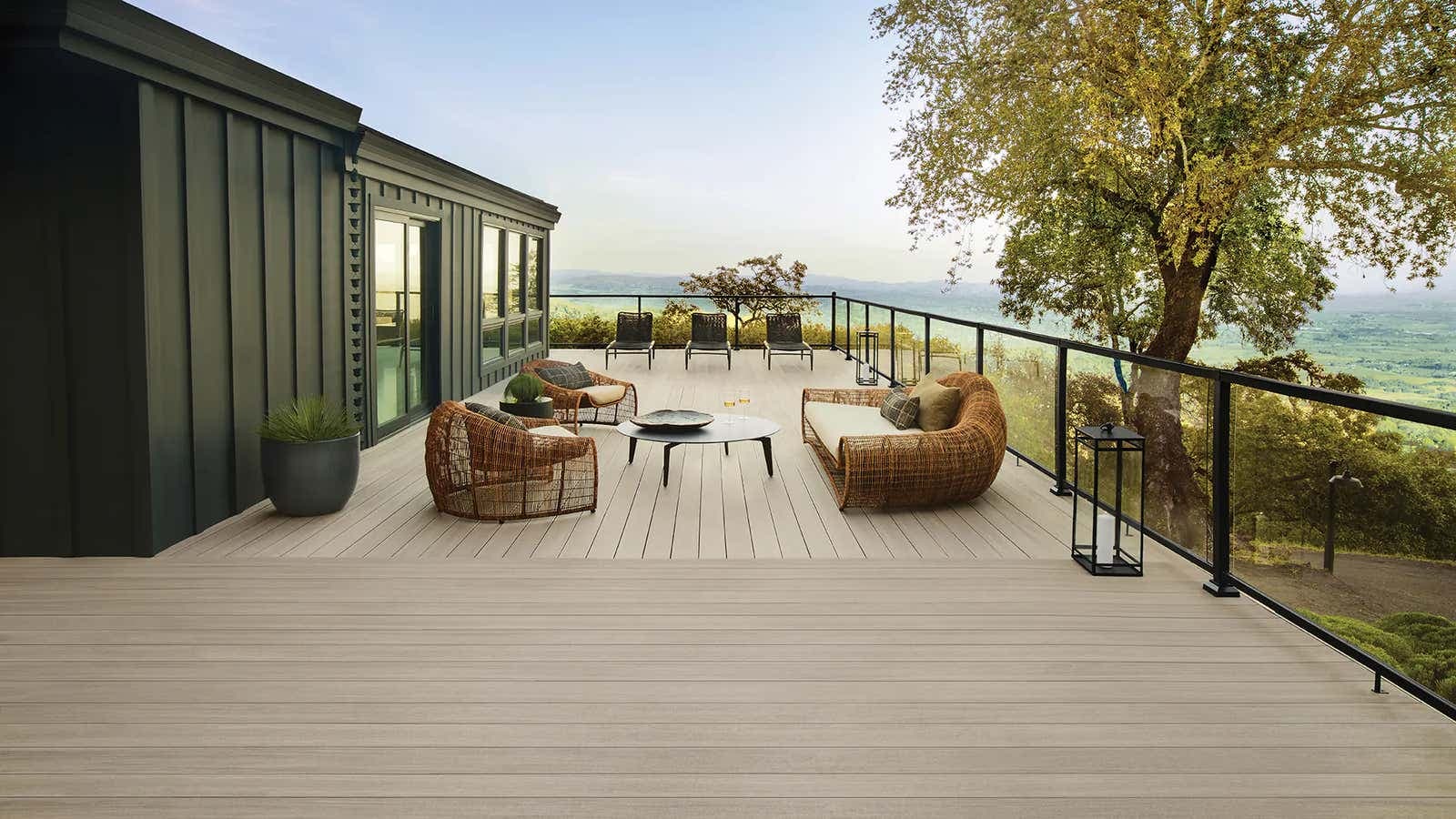
Understanding Coastal Exposure for Decking Materials
Coastal environments are defined by elevated levels of airborne salt, higher humidity, and often intense UV radiation. Salt particles can settle on surfaces, potentially accelerating corrosion of metal components and contributing to the degradation of some materials over time. High humidity can lead to moisture absorption issues in less stable materials, while strong sunlight can cause fading or surface temperature increases.
Composite decking, typically made from a blend of wood fibers and plastic, is engineered to resist many of these environmental stressors. Its capped shell designs are particularly relevant for coastal use, as they are designed to shrug off humidity and resist staining from environmental factors.
Evaluating Composite Decking for Salt Air Resistance
One of the key advantages of many composite decking products in coastal settings is their inherent resistance to moisture and, by extension, salt penetration. The plastic component in composite decking helps create a barrier against water absorption, which can be critical in humid, salty air. This resistance helps prevent issues like rot, splintering, and insect infestation that can plague traditional wood decks in such conditions.
While composite decking is generally robust, it is important to check manufacturer specifications for resistance to environmental factors, especially if the product is explicitly marketed for marine or coastal applications. Some products offer cooler-underfoot options, which might be a consideration for sunny coastal decks where bare feet are common. The consistent color and grain of composite boards also mean fewer surprises in appearance compared to natural wood, which can weather unpredictably in harsh conditions.
Hardware and Fastener Compatibility in Coastal Zones
The most vulnerable components of a coastal deck are often the metal fasteners and structural hardware. Salt air is highly corrosive to many common metals, including galvanized steel.
Even with composite decking, which does not require staining or sealing, the choice of fasteners is paramount. Hidden fastening systems are popular for their clean appearance and can offer some protection to the fastener head, but the material itself must be corrosion-resistant. Always confirm with the decking manufacturer or hardware supplier that the chosen fasteners are rated for severe outdoor or coastal exposure. Using incompatible hardware can lead to premature failure, compromising the deck's safety and lifespan.
Warranty Considerations for Coastal Environments
When purchasing composite decking for a coastal home, carefully review the manufacturer's warranty. Some warranties may have specific exclusions or limitations for properties located within a certain distance of saltwater, or for damage caused by excessive salt exposure. While many composite products offer fade and stain warranties, it is crucial to understand if these apply fully in a coastal context.
Look for language that addresses environmental factors relevant to coastal areas. If there is any ambiguity, contact the manufacturer directly for clarification before making a purchase. This due diligence can prevent misunderstandings should an issue arise.
Planning Your Coastal Composite Deck Project: A Worked Example
Consider a hypothetical coastal deck project: a 12-foot by 16-foot elevated deck for a home situated 500 feet from the ocean. The homeowner desires a low-maintenance surface that will resist salt spray and maintain its appearance over time.
For a 12x16 foot deck, running boards parallel to the 16-foot dimension would require 16-foot boards. The 12-foot width translates to 12 feet * 12 inches/foot = 144 inches. Number of boards needed: 144 inches / 5.625 inches/board = 25.6 boards. Rounding up, 26 boards of 16-foot length would be purchased. If running parallel to the 12-foot dimension, 12-foot boards would be used, and 16 feet (192 inches) / 5.625 inches/board = 34.13 boards, rounded up to 35 boards of 12-foot length. The 16-foot boards would likely be more efficient in this layout.
Regular galvanized fasteners are not suitable. The sub-structure (joists, beams) should also be designed with appropriate materials for coastal exposure, such as pressure-treated lumber rated for ground contact or marine use, or non-corrosive alternatives. A ventilation plan for the under-deck space is also crucial to prevent moisture buildup, even with composite decking.
Complementary Materials for Coastal Decks
Beyond the decking boards, consider other materials that will be exposed to the coastal environment. Railings, for example, should also be chosen for their resistance to salt corrosion. Options include composite railing systems, aluminum railings with marine-grade powder coatings, or certain types of PVC railings. Wood railings would require diligent maintenance and appropriate finishes.
For structural components like joists and beams, pressure-treated lumber is common. Ensure it has the correct treatment level for the intended exposure, particularly if close to the ground or subject to significant moisture. Alternatives like fiberglass or specific treated steel can also be considered for maximum longevity in severe coastal conditions. Always verify that all components are compatible with each other and the chosen fastening system.
Before you order
- Verify composite decking product is suitable for coastal exposure (check manufacturer documentation).
- Confirm warranty terms for coastal applications, noting any exclusions related to proximity to saltwater.
- Plan for adequate under-deck ventilation to prevent moisture buildup.
- Select railing systems and structural materials that are also rated for coastal environments.
- Obtain current material quotes based on exact dimensions, profiles, and your project ZIP code.
- Confirm current availability and service options for all selected materials.
Confirm installation details, approved uses and warranty terms in the current instructions for the exact product and profile. Your installer should verify the substrate, structure and applicable project requirements.
Questions to help you decide
Is composite decking truly maintenance-free in a coastal climate?
While composite decking requires significantly less maintenance than natural wood, it is not entirely maintenance-free. It typically needs an annual wash with soap and water to remove dirt, salt residue, and mildew. Unlike wood, it does not require sanding, staining, or oiling. However, consistent cleaning is important to maintain its appearance and prevent buildup, especially in salty environments.
Can I use standard deck screws with composite decking near the ocean?
No, standard deck screws are generally not recommended for coastal installations. Salt air is highly corrosive to typical galvanized or coated screws. Always confirm the fastener's suitability with the decking manufacturer or hardware supplier.
What should I look for in a composite decking warranty for a coastal home?
When reviewing a warranty for a coastal home, pay close attention to any clauses regarding environmental exposure or proximity to saltwater. Look for explicit statements that the warranty covers properties in coastal zones. Ensure the fade and stain warranties apply fully, and clarify any potential exclusions related to salt damage or severe weather. A strong warranty provides assurance regarding the product's performance over time.
Ready to Plan Your Coastal Composite Deck?
For a material quote tailored to your project, please provide your project dimensions, desired composite decking profile, and project ZIP code. We can also confirm current availability and service options for your area.
Request a material quote →