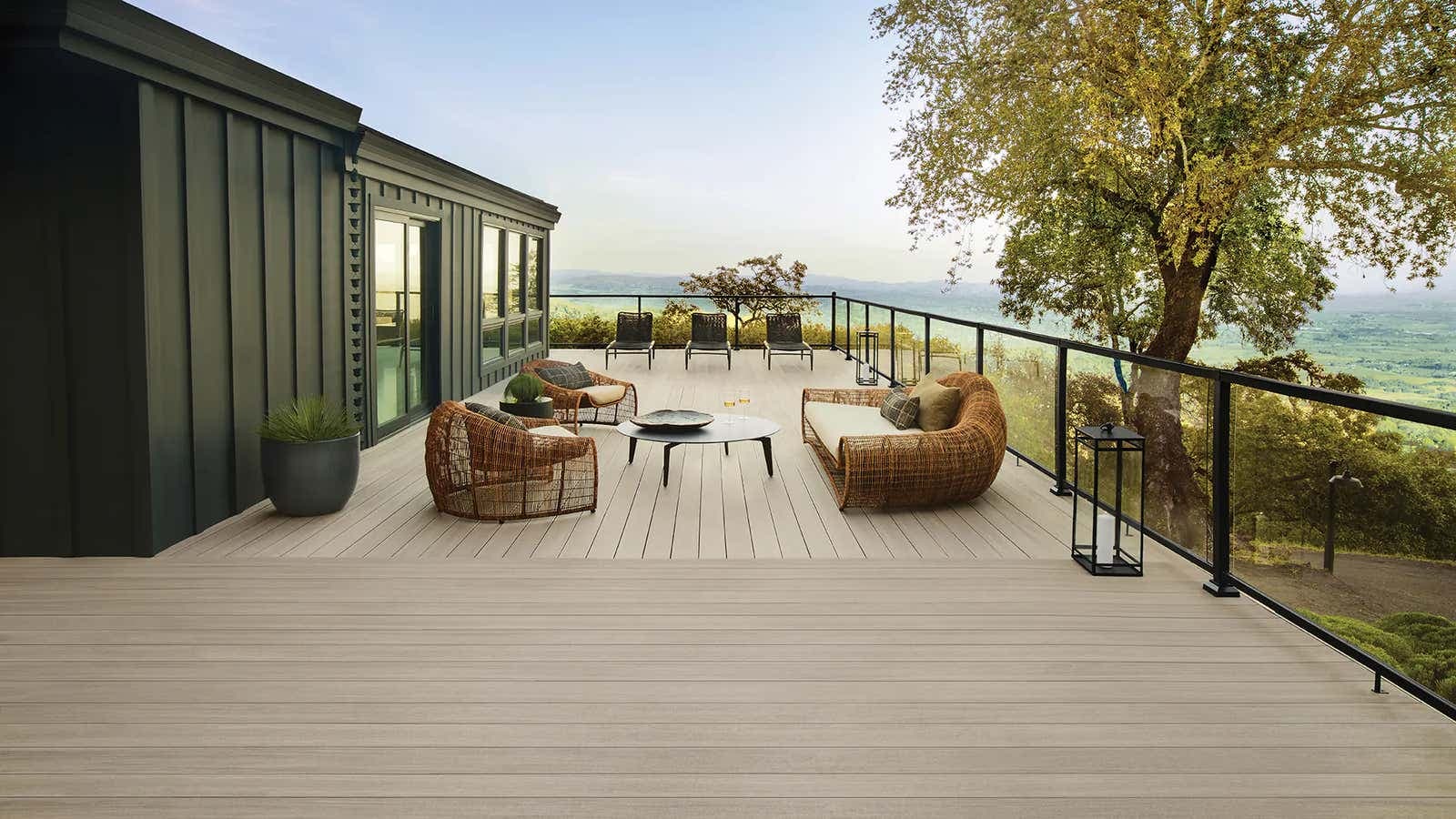
Standard Composite Decking Board Widths
Composite decking is typically available in a few common widths, each offering a distinct look. The most prevalent widths are often around 5.5 inches (sometimes referred to as 1x6 nominal) and 3.5 inches (1x4 nominal). Some manufacturers may also offer wider or narrower specialty profiles, or even multi-width systems designed to be installed together. These dimensions are crucial for planning your layout and calculating material needs.
For example, brands like Trex, TimberTech, and Fiberon, which offer a range of composite decking products, generally adhere to these standard widths, allowing for consistent project planning. Always confirm the exact dimensions of the specific product line you are considering, as slight variations can occur between manufacturers and product series.
Visual Impact: Wide vs. Narrow Boards
The width of your chosen decking boards plays a major role in the visual perception of your deck. Wider boards tend to create a more contemporary, streamlined appearance, making a deck feel more expansive and less busy. This can be particularly effective on larger decks or in modern architectural settings where clean lines are prioritized. Fewer seams across the deck surface can contribute to this sense of openness.
Conversely, narrower boards introduce more lines and a finer visual texture. This can be appealing for smaller spaces, or when you want to achieve a more traditional, intricate, or detailed look. The increased number of board lines can add visual interest and help define different zones within a larger deck area. They can also be more forgiving for slight irregularities in the subframe, as shorter spans between lines might make minor imperfections less noticeable.
Planning for Layouts: Straight, Diagonal, and Picture Frames
Your chosen board width will interact differently with various layout patterns. For a straight layout, running parallel to the house, wider boards can emphasize length or width. For a diagonal layout, wider boards can reduce the number of angled cuts required, potentially simplifying installation and reducing waste, though the visual effect of many diagonal lines can be quite striking with narrower boards.
Picture-frame borders, which outline the main decking area, also benefit from careful width selection. A wider border board can create a strong, defined edge, while a narrower one might offer a more subtle frame. When combining different board widths for a custom look, ensure all components are compatible and maintain consistent spacing.
Material Quantity and Waste Minimization: A Worked Example
The board width directly impacts the number of boards required and potential waste. Let's consider a hypothetical deck measuring 10 feet wide by 12 feet long, where boards will run parallel to the 10-foot width.
Option 1: Using 5.5-inch wide boards. The total width to cover is 12 feet, or 144 inches. Each board is 5.5 inches wide. To cover 144 inches, you would need 144 / 5.75 = 25.04 boards. Since you cannot purchase a fraction of a board, you would need 26 boards. If boards are typically sold in 12-foot lengths (matching our 12-foot deck length), you would purchase 26 boards at 12 feet each.
Option 2: Using 3.5-inch wide boards. To cover 144 inches, you would need 144 / 3.75 = 38.4 boards. This rounds up to 39 boards. Again, if boards are 12 feet long, you would purchase 39 boards at 12 feet each.
This example demonstrates that narrower boards require a greater quantity to cover the same area, which can influence both material cost and installation time. Always account for cuts and potential waste by adding a percentage (typically 5-10%) to your initial calculations, especially for complex layouts.
Compatibility with Fasteners and Accessories
Ensure your chosen board width is compatible with the intended fastening system. Hidden fastener systems are often designed for specific board profiles and widths. While many systems are versatile, always verify that the clips, screws, and other components are suitable for the exact dimensions of your selected composite decking. Face fastening, using screws driven through the top of the board, offers more flexibility regarding board width but requires careful placement for a clean appearance.
Additionally, consider how board width integrates with other decking accessories like fascia boards, stair treads, and railing systems. Maintaining a consistent aesthetic across all components contributes to a polished final product. For example, a wide fascia board can complement wider deck boards, while a narrower one might suit finer details.
Before you order
- What is the overall size and shape of your deck?
- What visual aesthetic are you aiming for (modern, traditional, expansive, intricate)?
- Are you planning a straight, diagonal, or multi-directional board layout?
- Will you incorporate a picture-frame border, and how should board widths interact?
- Have you checked the exact available widths for your preferred composite decking brand and line?
- Are your chosen board widths compatible with your intended fastening system?
- Have you calculated the material quantities for each width option, including waste factor?
- How will the chosen board width integrate with other deck components like fascia and stairs?
Confirm installation details, approved uses and warranty terms in the current instructions for the exact product and profile. Your installer should verify the substrate, structure and applicable project requirements.
Questions to help you decide
Can I mix different board widths on one deck?
Mixing board widths can create unique patterns and visual interest, but it requires careful planning to ensure compatibility and a cohesive design. Some manufacturers offer multi-width decking systems specifically designed for this purpose. If mixing widths from different product lines or brands, always confirm that their profiles, colors, and installation requirements are compatible.
Does board width affect the strength or structural integrity of the deck?
The board width itself does not directly affect the structural integrity of the deck frame. The structural support is provided by the joists and beams underneath, which must be spaced according to local building codes and the manufacturer's recommendations for the specific decking product. However, wider boards may sometimes require slightly different joist spacing or fastening patterns, so always refer to the manufacturer's installation guide.
Are wider composite boards more expensive per square foot?
The cost per square foot can vary. While wider boards mean fewer individual boards to purchase, the manufacturing process or material composition might lead to different pricing structures. It's essential to compare the price per linear foot or square foot for the specific widths you are considering from the same product line and manufacturer to get an accurate cost comparison for your project.
Ready to Plan Your Decking Project?
Request a material quote with your project dimensions, exact composite decking profile, and ZIP code. We can help confirm current availability and service options for your area. Explore our full range of composite decking options from Trex, TimberTech, and Fiberon to find the perfect fit for your outdoor space.
Request a material quote →