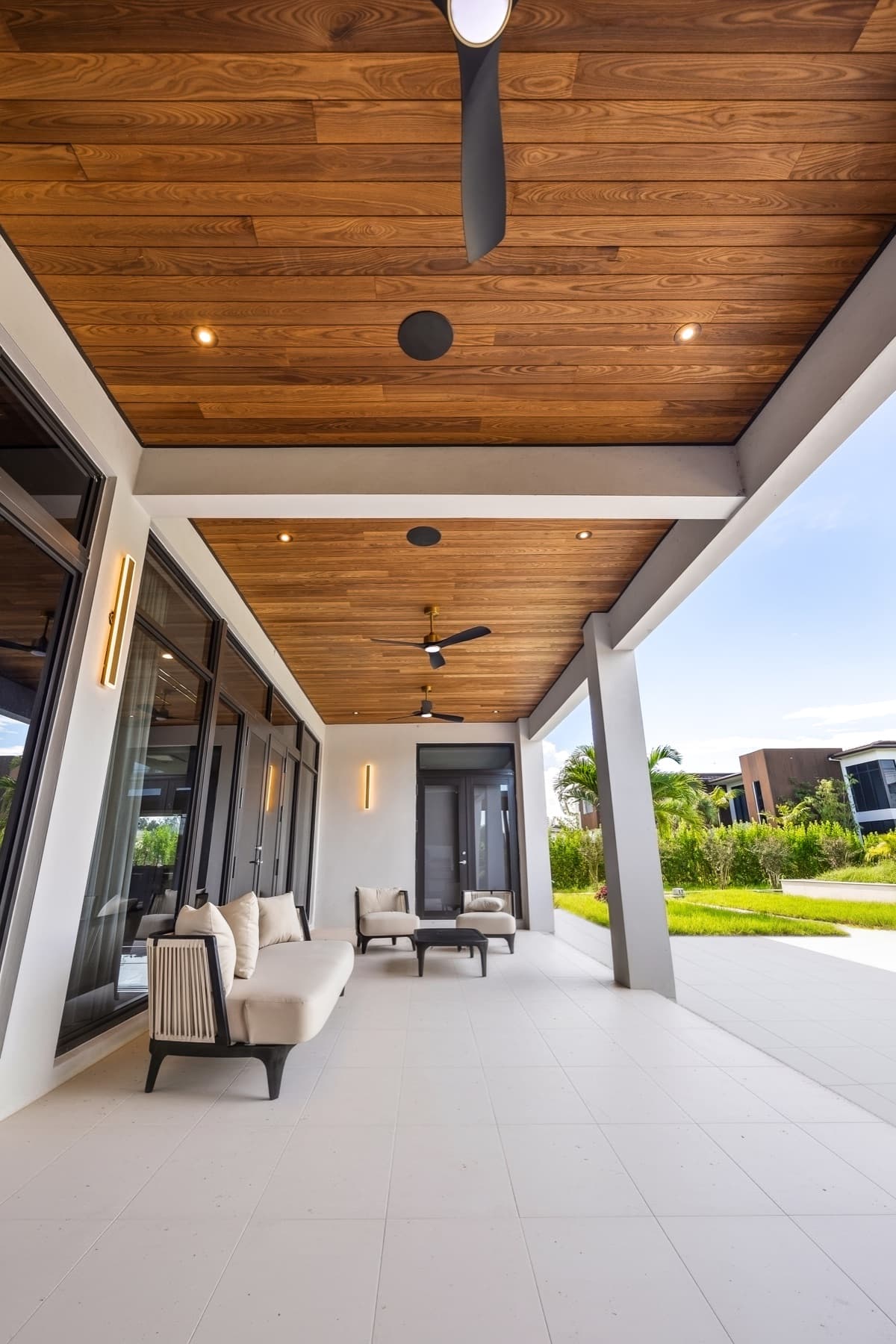
Considering the Phoenix Porch Environment
Phoenix's climate presents unique challenges and opportunities for porch design. Intense sun, high temperatures, and occasional dust call for materials that can withstand these conditions without extensive maintenance. The ceiling and soffit areas are shaded, but still exposed to ambient heat and reflected light. Material selection should prioritize stability and resistance to warping or fading under these stresses.
Beyond durability, the porch ceiling influences the perceived temperature and light levels. Lighter finishes can reflect light and make the space feel cooler and more open, while darker tones might create a cozier, more intimate atmosphere. Ventilation is also critical for roof health, so any soffit material must allow for adequate airflow while protecting the attic space from pests and weather.
Wood Options for a Natural Aesthetic
Wood offers a classic and natural aesthetic that can complement various architectural styles. For porch ceilings and soffits, certain wood types are better suited due to their stability and appearance. Thermally modified wood is a popular choice for outdoor applications, including porch ceilings and soffits, as the modification process enhances its dimensional stability and resistance to environmental factors. Scandinavian thermally modified wood, for instance, offers a Nordic character, while thermally modified Ash provides a clean grain for contemporary designs. Thermally modified Ayous is another option that can be installed for ceilings.
Other wood species like Ipe, Cumaru, Garapa, Angelim, Jatoba, and Tigerwood are known for their natural durability and varied appearances. These hardwoods can provide deep brown or golden tones, offering a rich look that can match other exterior elements like decking. Maximo Accoya, an acetylated wood, also offers enhanced stability and is suitable for ceiling and soffit applications, providing an alternative to thermally modified options. When selecting wood, consider its natural color, grain pattern, and how it will age in the Phoenix sun.
Composite and Alternative Materials
For those seeking a low-maintenance option, composite ceiling and soffit materials can be a practical alternative to natural wood. Products like Norx composite offer the appearance of wood with engineered durability. These materials are designed to resist fading, warping, and insect damage, often requiring less upkeep than some wood species.
Norx composite is available in various finishes, such as Oxford Gray, which can provide a contemporary look. When considering composite materials, evaluate their finish, texture, and how they integrate with the overall design of your home. They can be a suitable choice for a consistent, long-lasting finish without the need for regular staining or sealing.
Integrating Lighting and Ventilation
The porch ceiling is an ideal location for integrated lighting to enhance usability and ambiance. Recessed lighting, surface-mounted fixtures, or even ceiling fans with lights can be incorporated. Plan the placement of electrical boxes and wiring before installation to ensure a clean finish. The chosen ceiling material should be compatible with cutting for light fixtures and offer sufficient support.
Soffit ventilation is critical for maintaining a healthy roof structure by allowing air to circulate in the attic. When selecting soffit materials, ensure they either come pre-perforated for ventilation or can be easily vented. Proper ventilation helps to prevent heat buildup and moisture issues. Coordinate with your roof design to ensure that the chosen soffit material does not impede the necessary airflow.
Worked Example: A 10x12 Foot Porch Ceiling
Consider a hypothetical Phoenix porch measuring 10 feet wide by 12 feet long, for a total area of 120 square feet. The homeowner desires a natural wood look with enhanced durability and plans for two recessed light fixtures and a ceiling fan in the center. They are considering thermally modified Ash for its clean grain and stability.
Thermally modified Ash is often available in various board widths and lengths. For this example, let's assume boards are available in 5-inch nominal width (approximately 4.5 inches actual coverage) and 12-foot lengths. To cover the 10-foot width, you would need 10 feet * 12 inches/foot / 4.5 inches/board = 26.67 boards. Rounding up, you would need 27 boards to cover the width. Since the porch is 12 feet long, and the boards are 12 feet long, no end cuts are needed for length. Therefore, 27 boards, each 12 feet long, would be purchased.
For the light fixtures and fan, careful measurements would be taken to mark their locations on the boards before or during installation. The specific installation method for the Ash boards would depend on the framing, but typically involves fastening to furring strips or directly to joists. This example assumes a straightforward installation without complex angles or multiple transitions.
Before you order
- Evaluate the specific sun exposure and heat levels on your porch.
- Determine your desired aesthetic: natural wood, painted wood, or composite.
- Consider the level of maintenance you are willing to commit to.
- Plan for integrated lighting and ceiling fan placement.
- Ensure adequate soffit ventilation is maintained or incorporated.
- Verify compatibility of chosen materials with existing framing and fasteners.
- Obtain samples to assess color, texture, and finish in your specific lighting conditions.
- Confirm local building codes or homeowner association requirements for porch materials.
Confirm installation details, approved uses and warranty terms in the current instructions for the exact product and profile. Your installer should verify the substrate, structure and applicable project requirements.
This is a planning guide for projects in Phoenix, AZ. Ask our team to confirm availability, delivery to your ZIP code and which branch can support your order.
Questions to help you decide
How do I maintain a wood porch ceiling in Phoenix?
Maintenance for wood porch ceilings in Phoenix depends on the wood type and finish. Thermally modified wood and naturally durable hardwoods generally require less intensive maintenance than conventional woods. An initial sealant or stain can protect against UV and moisture, and periodic cleaning with a mild soap and water solution is usually sufficient. Reapplication of sealants may be needed over time, depending on exposure and product specifications. Untreated woods will naturally weather and grey.
Can composite materials be painted?
Most composite ceiling and soffit materials, like Norx, are designed with a durable, pre-finished surface that does not require painting. Attempting to paint these surfaces might void a manufacturer's finish warranty and may not adhere properly. If you desire a specific color not available in a pre-finished composite, it's best to consult the manufacturer's guidelines for painting compatibility.
What is the difference between ceiling boards and soffit boards?
Often, the same product can serve as both a porch ceiling board and a soffit board. The term 'soffit' specifically refers to the underside of an architectural element, such as the overhang of a roof. Therefore, a porch ceiling is essentially a type of soffit. The key difference in application often lies in ventilation requirements; soffit areas that are part of the roof's ventilation system may need to be perforated or designed to allow airflow, whereas a fully enclosed porch ceiling might not have the same ventilation needs.
Plan Your Phoenix Porch Project
Ready to choose the ideal ceiling and soffit materials for your Phoenix porch? Request a material quote with your project dimensions, desired profile, and ZIP code. We can confirm current availability and service options for your area.
Request a material quote →