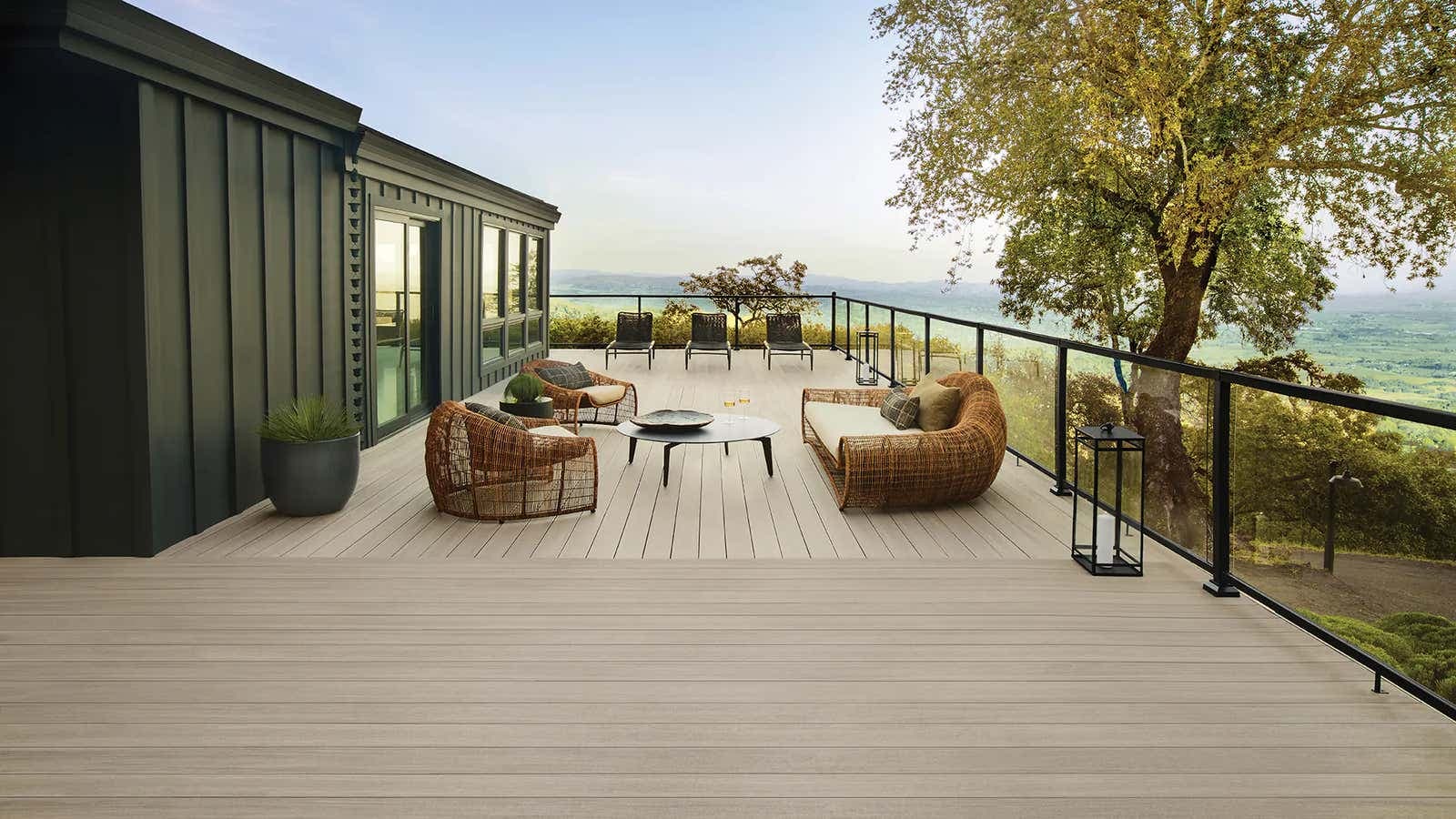
Evaluating Collections for Compact Spaces
When dealing with compact outdoor spaces, the physical dimensions and profiles of composite decking boards become particularly important. Slimmer board profiles can sometimes create the illusion of a larger area, while certain capped composite options may offer enhanced resistance to fading and staining, a key consideration for sun-exposed areas in Phoenix.
Consider collections from manufacturers like Trex, TimberTech, and Fiberon, which offer a range of profiles and colors. For compact spaces, look for boards that balance aesthetic appeal with practical dimensions. The consistent color and grain of composite boards ensure a uniform look, which can be beneficial in small areas where visual clutter is undesirable. Some collections also feature cooler-underfoot options, which can significantly improve comfort in the Phoenix heat.
The density and composition of the boards should also be reviewed. Some composite options are designed with up to 95% recycled content, often combining sawdust and plastic film, offering a sustainable choice. This composition can also contribute to the board's stability and resistance to humidity, which, while not as prevalent as heat in Phoenix, is still a factor to consider for long-term durability.
Maximizing Usable Space
In a compact outdoor area, every inch counts. Consider how the decking layout can enhance the perception and actual utility of the space. Running boards diagonally can sometimes make a small area feel larger, while a picture-frame border can define the space and add a polished finish. The choice of board width can also influence the visual scale; narrower boards might create a more intricate pattern, while wider boards offer a more streamlined appearance.
When planning, think about how the deck will integrate with other elements like planters, seating, or small water features. For example, a built-in bench along one edge can save space compared to freestanding furniture. Ensure that any fixed elements allow for adequate ventilation beneath the deck, especially important in a hot climate like Phoenix. Proper ventilation helps prevent moisture buildup and aids in keeping the deck surface cooler.
Planning for Phoenix Sun Exposure
Phoenix's intense sun exposure is a critical factor for any outdoor material. Composite decking with advanced capped shells is often recommended as it is designed to shrug off humidity and offers enhanced resistance to fading and staining. This helps maintain the deck's appearance over time, even under constant UV radiation.
While composite decking is known for its fade and stain warranties, understanding how different colors and finishes react to direct sunlight is important. Lighter colors tend to absorb less heat, potentially making the deck surface cooler underfoot. However, darker colors can create a striking aesthetic. It's a balance between thermal comfort and desired visual impact.
Consider the orientation of your compact space relative to the sun throughout the day. If the area receives full, unobstructed sun for many hours, prioritizing collections known for their heat-mitigating properties and robust fade resistance is advisable.
Logistics and Project Access
Compact outdoor spaces often come with limited access, which can impact the delivery and installation process. Before ordering, consider how decking boards will be transported to the project site. Will they need to be carried through narrow gates, up stairs, or through a home? Longer boards might be more efficient for installation but could be cumbersome to maneuver in tight areas.
Confirm the availability of specific lines and colors with your supplier, as well as their delivery timing. Discuss any potential access challenges with them to ensure a smooth delivery. Planning for on-site storage is also crucial; composite decking should be stored flat and protected from direct sunlight and moisture prior to installation, which can be a challenge in a small yard or balcony setting.
Worked Example: A 10' x 8' Phoenix Patio
Imagine you're designing a 10-foot by 8-foot patio in a Phoenix backyard, adjacent to a small casita. This space gets direct afternoon sun. You've decided on a composite decking collection that offers a 12-foot board length and a standard 5.5-inch board width, with a capped surface for fade resistance.
To cover the 80 square feet, you'll need to calculate the number of boards. A 10-foot run will require 22 boards (10 feet / 5.5 inches per board = 21.8, rounded up to 22 boards). Each board is 12 feet long. So, you would need 22 boards x 12 feet/board = 264 linear feet of decking. Since the patio is 8 feet deep, each 12-foot board can be cut into one 8-foot piece and one 4-foot piece. The 4-foot offcuts may be reusable for smaller sections or future repairs, depending on the layout. For this project, you would purchase 22 boards.
Given the afternoon sun, a lighter color from the chosen collection would be a practical choice to help keep the surface cooler. For access, if your gate is only 3 feet wide, the 12-foot boards will need careful maneuvering. You'd also plan for shade during installation, potentially using temporary canopies, and ensure proper under-deck ventilation to dissipate heat.
Before you order
- Confirm board profile and dimensions are suitable for compact space aesthetics.
- Evaluate capped composite options for fade and stain resistance against Phoenix sun.
- Consider lighter colors for cooler-underfoot performance in direct sunlight.
- Plan board layout (diagonal, picture frame) to maximize visual space.
- Assess on-site access for delivery and storage of decking materials.
- Verify proper ventilation beneath the deck for heat dissipation.
- Review manufacturer's specific installation guidelines for board spacing and fastening.
- Request a material quote with exact dimensions, preferred profile, and project ZIP.
Confirm installation details, approved uses and warranty terms in the current instructions for the exact product and profile. Your installer should verify the substrate, structure and applicable project requirements.
This is a planning guide for projects in Phoenix, AZ. Ask our team to confirm availability, delivery to your ZIP code and which branch can support your order.
Questions to help you decide
What are the best composite decking colors for Phoenix's hot climate?
Lighter colors generally absorb less heat than darker shades, potentially making the deck surface cooler underfoot. However, many capped composite collections are designed with advanced heat-mitigating properties, allowing for a wider range of color choices based on aesthetic preference. Always consider the specific product's performance data and warranty regarding fade resistance in high-UV environments.
Do I need a special substructure for composite decking in a compact space?
The substructure requirements for composite decking are generally consistent regardless of space size. It must be structurally sound, level, and built to local code. For compact spaces, ensure that the joist spacing aligns with the composite decking manufacturer's recommendations. Proper ventilation beneath the deck is especially important in Phoenix to prevent heat buildup and moisture issues, so design the substructure to allow for adequate airflow.
How do I maintain composite decking in a Phoenix climate?
Composite decking is known for its low maintenance. Typically, an annual wash with soap and water is sufficient to keep it clean. Unlike wood, composite decking does not require oiling, sanding, or staining. For Phoenix, regularly clearing debris and ensuring good airflow beneath the deck will help prevent heat accumulation and maintain the deck's appearance. Always refer to the specific manufacturer's cleaning guidelines for your chosen collection.
Ready to Plan Your Phoenix Composite Decking Project?
Request a material quote for your compact outdoor space. Provide your project dimensions, desired composite decking profile, and ZIP code to get started. Our team can help you confirm current availability and service options for your Phoenix location.
Request a material quote →