Evaluating Your Existing Deck Frame
Before selecting your hardwood, a critical first step for any renovation is to assess the condition and capacity of your existing deck frame. Hardwood decking, particularly dense species like Ipe and Cumaru, is heavier than many common decking materials. Your current joists, beams, and footings must be strong enough to support the increased weight.
Inspect all structural components for signs of rot, insect damage, or excessive deflection. Pay close attention to connections, ledger boards, and any areas exposed to moisture. If the frame shows significant wear or does not meet current building codes for live and dead loads, it may require reinforcement or complete replacement. Consult with a qualified structural engineer or experienced contractor to ensure the frame can safely accommodate hardwood decking. This pre-assessment helps avoid costly issues down the line and ensures the safety and stability of your renovated deck.
Choosing Hardwood Species for Phoenix's Climate
Phoenix's intense sun exposure and temperature fluctuations demand decking materials that can withstand harsh conditions without significant warping or degradation. Tropical hardwoods like Ipe and Cumaru are well-suited for such environments due to their natural density and resistance properties.
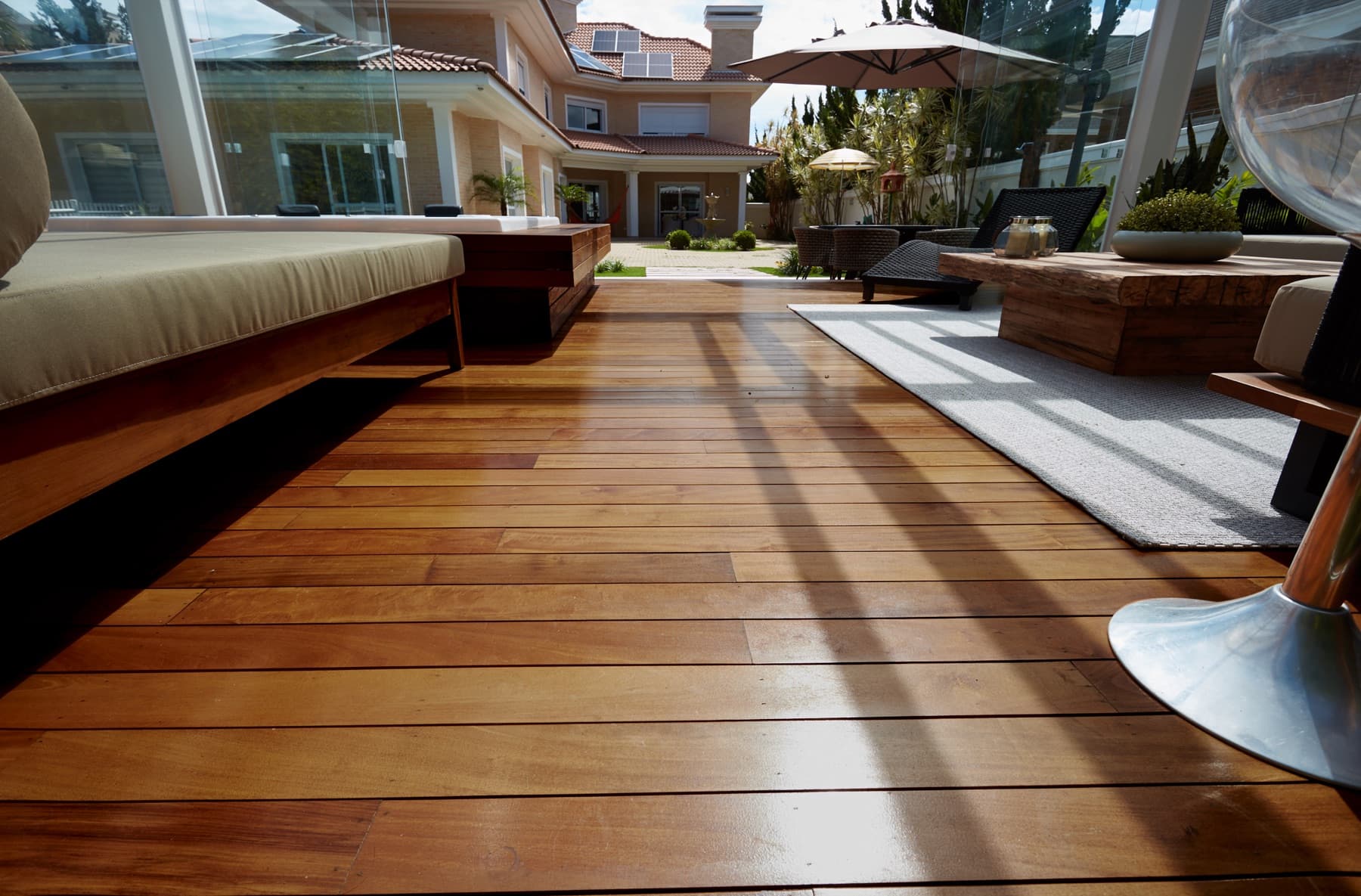
Ipe, also known as Brazilian Walnut, is recognized for its exceptional durability and minimal movement post-installation. It exhibits natural resistance to weather changes, mold, and termites. Its color ranges from reddish-brown to olive-brown. Both species will weather to a silvery-gray patina if left untreated, or can maintain their original color with regular application of a UV-blocking sealer.
Consider the aesthetic you desire for your renovated deck. Ipe offers a bold grain and rich, deep tones, while Cumaru presents a slightly warmer, more varied palette. Both provide a luxurious appearance that can enhance any outdoor living space in Phoenix.
Decking Profiles and Fastening Methods
Hardwood decking is available in various profiles, including standard square-edge boards and grooved profiles designed for hidden fastening systems. For renovation projects, the choice of profile can impact both aesthetics and installation complexity.
Square-edge boards are typically face-fastened, meaning screws are driven through the top surface of the board into the joists below. This method is secure but visible. Grooved boards work with hidden fastener clips that fit into the grooves along the board edges, creating a smooth, fastener-free surface. This method offers a cleaner look but requires precise alignment and may add to installation time.
When selecting a fastening method, consider the specific hardwood species, manufacturer recommendations, and your desired finished appearance. Adequate spacing between boards is crucial for proper drainage and ventilation, especially in the Phoenix climate, to prevent moisture buildup and allow for natural expansion and contraction of the wood.
Calculating Material Quantities: A Hypothetical Example
Accurately calculating the required decking material is essential for any renovation. Let's consider a hypothetical deck renovation in Phoenix with an existing frame measuring 12 feet by 16 feet. You decide to use Ipe decking boards, available in 5.5-inch nominal width (actual width approximately 5.25 inches) and random lengths from 8 to 20 feet.
First, calculate the total deck area: 12 feet * 16 feet = 192 square feet. Next, account for waste due to cuts, end matching, and potential board defects. A common waste factor for decking is 10-15%. For this example, we'll use 12% waste.
Required square footage including waste: 192 sq ft * 1.12 = 215.04 square feet. To convert this to linear feet, we need to know the coverage of a single board. If using 5.25-inch actual width boards, each linear foot covers 5.25 inches / 12 inches/foot = 0.4375 square feet. Therefore, 1 square foot requires 1 / 0.4375 = 2.286 linear feet.
Total linear feet needed: 215.04 sq ft * 2.286 linear feet/sq ft = 491.5 linear feet. When ordering, you would round up to the nearest full board lengths to reach or exceed this quantity, considering the available random lengths. For instance, if you primarily use 16-foot boards, you would need approximately 31 boards (491.5 / 16 = 30.7). Always order slightly more than your calculation to account for unforeseen cuts or minor errors. Remember to also calculate for any fascia, stair treads, or other trim pieces separately.
Maintenance Considerations for Hardwood in Phoenix
While hardwoods like Ipe and Cumaru are known for their durability, proper maintenance is key to preserving their appearance and extending their lifespan in the Phoenix climate. The intense sun can cause untreated wood to silver over time. If you prefer to retain the original reddish-brown or olive-brown tones, an annual application of a UV-blocking oil or sealer is recommended.
Beyond color retention, general maintenance involves a yearly cleaning to remove dirt, dust, and any organic debris. This helps prevent mildew growth, which, while less common in arid Phoenix, can still occur in shaded or consistently damp areas. Regular cleaning also helps maintain the wood's integrity and prevents surface accumulation that could lead to staining.
It is important to use cleaning products that are compatible with hardwood decking and follow manufacturer instructions. Avoid harsh chemicals or pressure washing at high settings, as these can damage the wood fibers. With consistent, appropriate care, your hardwood deck can remain a beautiful and functional outdoor space for decades.
Before you order
- Assess existing deck frame for structural integrity and load-bearing capacity.
- Verify local building codes for deck renovations and material requirements.
- Choose hardwood species (e.g., Ipe, Cumaru) based on durability, aesthetic, and climate suitability.
- Select decking profile (square edge vs. grooved) and compatible fastening system.
- Calculate precise material quantities, including waste factor for cuts and trim.
- Plan for maintenance: decide on color retention (sealing) or natural silvering.
- Confirm ventilation and drainage strategy for the deck surface.
- Consider professional installation due to hardwood density and specialized tools.
- Request a material quote with exact dimensions, profile, and ZIP code.
Confirm installation details, approved uses and warranty terms in the current instructions for the exact product and profile. Your installer should verify the substrate, structure and applicable project requirements.
This is a planning guide for projects in Phoenix, AZ. Ask our team to confirm availability, delivery to your ZIP code and which branch can support your order.
Questions to help you decide
How long does hardwood decking last in Phoenix?
With proper care, species like Ipe can last up to 75 years, and Cumaru over 25 years. Their natural density and resistance to rot, insects, and weather changes contribute to their longevity, even in the extreme Phoenix climate.
Will hardwood decking get too hot in the Phoenix sun?
Like all outdoor surfaces, hardwood decking will absorb heat from the sun. Darker woods may feel hotter to the touch than lighter ones. However, hardwood generally dissipates heat better than some synthetic materials. Proper ventilation beneath the deck can also help manage surface temperatures.
Can I install hardwood decking myself?
While it is possible for experienced DIYers, installing dense hardwoods like Ipe and Cumaru requires specialized tools and techniques. Professional installation is often recommended to ensure proper fastening, spacing, and a high-quality finish, especially for renovation projects where integration with existing structures is key.
Ready to Transform Your Phoenix Deck?
Request a material quote today! Provide your project dimensions, desired hardwood profile, and ZIP code to confirm current availability and service options for your renovation.
Request a material quote →