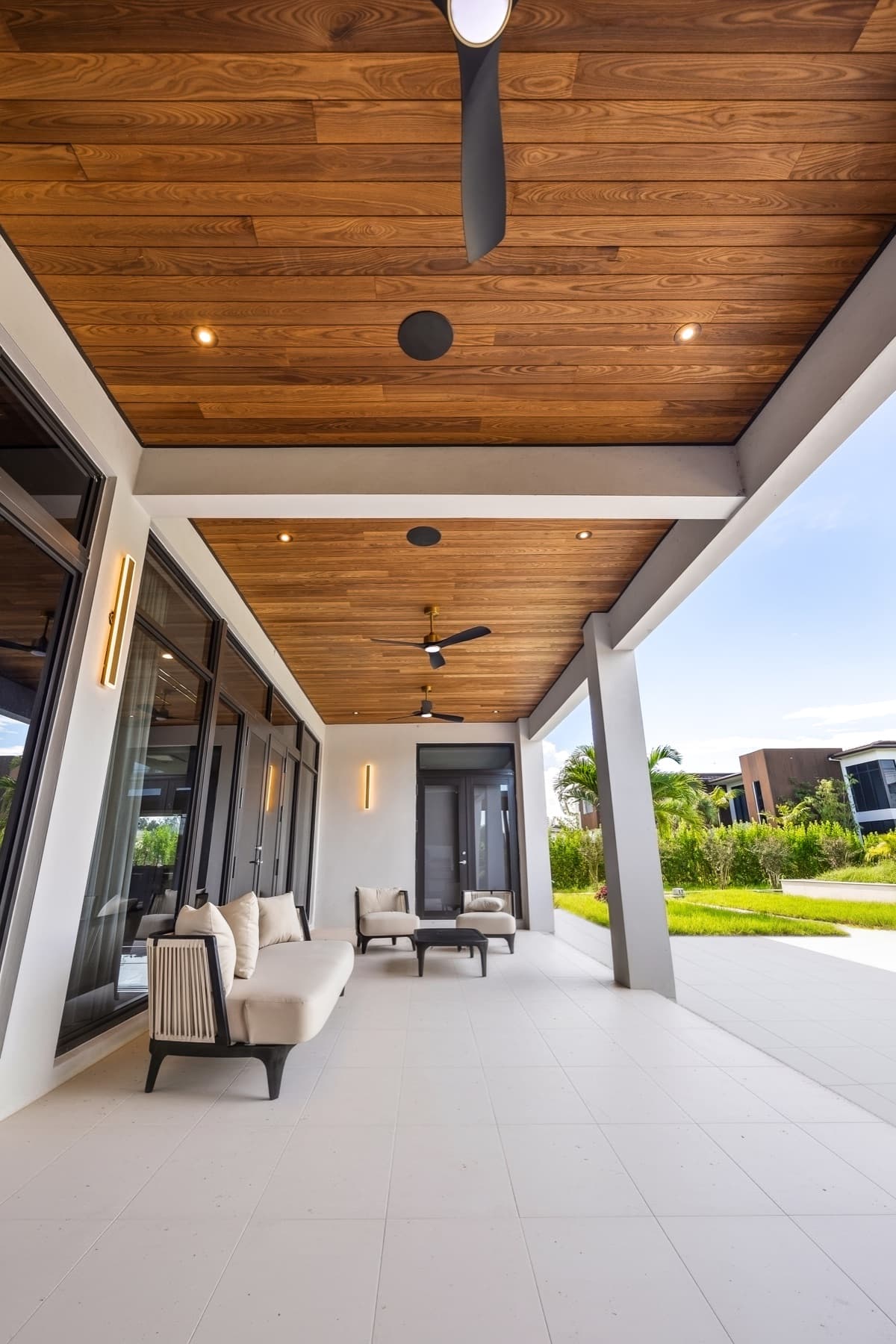
Understanding Charleston's Climate Impact on Porch Ceilings
Charleston's coastal environment presents unique challenges for exterior building materials. High humidity levels can lead to moisture absorption in certain woods, potentially causing warping or mildew. Salt air can accelerate corrosion of fasteners and degrade finishes. Therefore, materials known for their dimensional stability and resistance to moisture and decay are often preferred for porch ceilings and soffits in this region.
When planning, consider the degree of exposure your porch ceiling will experience. A fully enclosed porch will have different requirements than a more open, exposed structure. Ventilation within the soffit system is also critical for roof health, and the ceiling material should not impede this airflow.
Wood Options: Thermally Modified and Hardwoods
For those seeking the natural beauty of wood, thermally modified wood and certain hardwoods offer enhanced performance for porch ceilings and soffits. Thermally modified wood, such as Ayous or Ash, undergoes a heat treatment process that alters its cellular structure, increasing its stability and resistance to moisture, decay, and insect activity. This makes it a suitable choice for humid environments.
Brazilian hardwoods like Ipe, Cumaru, Garapa, and Angelim are naturally dense and known for their inherent resistance to rot, insects, and decay. Their rich colors and distinctive grain patterns can create a striking porch ceiling. While these woods are durable, proper installation and finishing are key to maintaining their appearance over time. Maximo Accoya is another acetylated wood option that offers enhanced durability and stability.
These wood options are available in various profiles, including tongue-and-groove, which provides a clean, continuous look for porch ceilings. The choice of profile can influence the visual scale of the porch and how light reflects off the surface. For example, a narrower board can create a more intricate pattern, while wider boards might offer a more expansive feel.
Explore our selection of <a href="/thermally-modified-wood">thermally modified wood</a> for porch applications.
Also consider <a href="/ceiling-and-soffit">hardwood ceiling and soffit boards</a> for their natural durability.
Composite Options: NORX for Durability
For a low-maintenance alternative, composite materials like those from the NORX collection provide a consistent finish and enhanced durability. NORX composite ceiling and soffit boards are engineered to resist moisture, rot, and insects, making them a practical choice for coastal climates.
These materials often come in pre-finished colors, eliminating the need for painting or staining and reducing long-term maintenance. NORX offers various profiles and colors, allowing for design flexibility to complement different architectural styles in Charleston. The consistent dimensions of composite boards can also simplify installation.
See the <a href="/brands/versatex">Versatex</a> brand for additional options in durable cellular PVC trim and sheet products, which can complement composite ceiling installations.
Planning for Porch Proportions and Lighting
The dimensions of your porch – its width, depth, and ceiling height – should influence your material and profile choices. For smaller porches, lighter-colored materials or narrower board profiles can make the space feel more open. Larger porches might benefit from darker tones or wider boards to create a sense of grandeur.
Integrating lighting is a crucial aspect of porch ceiling design. Recessed lighting, surface-mounted fixtures, or even ceiling fans with lights need to be planned in conjunction with the ceiling material. Ensure that the chosen material is compatible with the proposed lighting fixtures and that any necessary structural supports or wiring chases are accounted for during the framing stage. The installation of lighting should not compromise the integrity of the ceiling material or its ability to handle moisture.
Soffit Ventilation and Roof Strategy
A porch ceiling often includes a soffit, which plays a vital role in roof ventilation. Proper soffit ventilation helps to regulate attic temperatures and prevent moisture buildup, which is particularly important in Charleston's humid climate. When selecting ceiling and soffit materials, ensure that the chosen system allows for adequate airflow if your roof system relies on soffit vents.
Some porch ceiling materials are designed with integrated ventilation features, while others may require separate vented soffit panels. Always consult local building codes and your roof's design specifications to ensure that your porch ceiling and soffit contribute positively to the overall roof ventilation strategy. Impeding airflow can lead to issues such as ice dams in colder climates (less common in Charleston but still a concern for attic health) and accelerated shingle degradation.
Before you order
- Consider Charleston's climate: high humidity, salt air, and warm temperatures.
- Evaluate material durability: resistance to moisture, rot, and insects.
- Choose between natural wood (thermally modified, hardwoods) or low-maintenance composite.
- Select a profile (e.g., tongue-and-groove) that complements porch proportions.
- Plan for integrated lighting and ensure material compatibility.
- Confirm soffit ventilation aligns with roof strategy and local building codes.
- Account for long-term maintenance requirements of the chosen material.
- Obtain samples to assess color, texture, and finish in natural light.
Confirm installation details, approved uses and warranty terms in the current instructions for the exact product and profile. Your installer should verify the substrate, structure and applicable project requirements.
This is a planning guide for projects in Charleston, SC. Ask our team to confirm availability, delivery to your ZIP code and which branch can support your order.
Questions to help you decide
What are the best wood options for porch ceilings in Charleston's climate?
Thermally modified woods like Ayous and Ash, as well as dense Brazilian hardwoods such as Ipe, Cumaru, Garapa, and Angelim, are good choices. These woods offer enhanced stability and natural resistance to moisture and decay, making them suitable for humid coastal environments.
How does humidity affect porch ceiling materials in Charleston?
High humidity can cause certain wood materials to absorb moisture, leading to warping, cracking, or the growth of mildew. Materials with enhanced dimensional stability and moisture resistance, such as thermally modified wood or composites, are preferred to mitigate these effects.
Do I need to consider ventilation for my porch ceiling?
Yes, especially if your roof system relies on soffit ventilation. The porch ceiling and soffit should be designed to allow for adequate airflow to prevent moisture buildup and regulate attic temperatures. Always check local building codes and consult with a professional to ensure proper ventilation.
Ready to Select Your Porch Ceiling and Soffit Materials?
Request a material quote with your project dimensions, desired profile, and ZIP code to confirm current availability and service options for your Charleston, SC home. Our team can help you identify the best materials for your specific project needs.
Request a material quote →