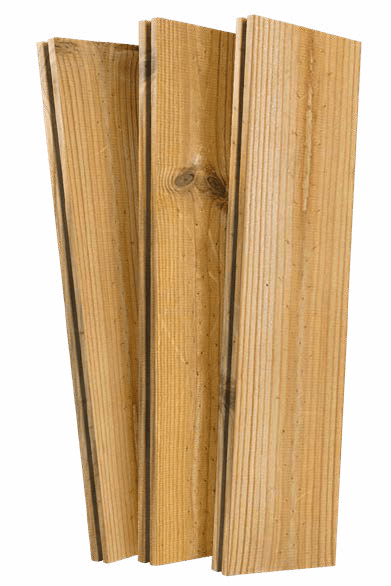
Why Exact Identification Matters for Bulletwood Decking Repairs
Bulletwood is a general term that encompasses several species of dense tropical hardwoods, each with unique characteristics. Even within the same species, different milling profiles or production batches can result in subtle variations. These differences become apparent when new boards are placed alongside aged ones. Mismatched boards can detract from the deck's appearance and, in some cases, affect installation compatibility if profiles or dimensions are not exact.
Accurate identification helps ensure that replacement boards will fit correctly, minimizing installation challenges. It also contributes to a more uniform final appearance, as the new wood will eventually weather to a similar tone as the existing deck, provided the initial material is a close match.
Step 1: Determine the Bulletwood Species
The term "Bulletwood" can refer to several different species of high-density tropical hardwoods. While all share general characteristics of durability, their specific colors, grain patterns, and density can vary. If you have original project documentation, such as invoices or specification sheets, these are the best sources for confirming the exact species. Look for botanical names or specific trade names used at the time of purchase.
Without documentation, examine the existing boards closely. Note the dominant color tones (e.g., reddish-brown, dark brown, golden-brown), the grain pattern (e.g., fine, interlocked, straight), and any distinctive markings. While this can be challenging for an untrained eye, photographs of the existing deck, especially close-ups of the end grain and face grain, can be helpful when consulting with a material supplier.
Step 2: Identify the Board Profile and Dimensions
Decking boards come in various profiles, which refer to their cross-sectional shape. Common profiles include standard square-edge, tongue-and-groove, or specific profiles designed for hidden fastening systems. The dimensions – thickness and width – are also critical.
Measure the thickness and width of your existing boards precisely. If possible, remove an end board or inspect an exposed edge to determine the profile. Note if the boards are grooved for hidden fasteners or if they are designed for face fastening. Take clear photos of the board ends and edges to illustrate the profile.
Step 3: Account for Batch Differences and Aging
Even boards of the same species and profile can show slight variations between production batches. These differences might include subtle color shifts or milling tolerances. Furthermore, Bulletwood, like all natural wood, changes color as it ages and is exposed to UV light and weather. New boards will almost certainly appear lighter or have a different hue than the aged boards.
While new boards will eventually weather to blend in, it's important to set realistic expectations for the initial appearance. To minimize the visual impact, consider replacing boards in less conspicuous areas first, or plan to clean and re-finish the entire deck after replacement to promote a more uniform appearance. Document the approximate age of your deck, if known, as this helps anticipate weathering.
Worked Example: Replacing a Damaged Bulletwood Board
Imagine you have a 12-year-old Bulletwood deck and one 16-foot board in a high-traffic area has become damaged. Here's how to approach the replacement:
1. **Check Documentation:** You locate the original invoice from 12 years ago, which specifies "Bulletwood (Manilkara bidentata) Decking, 1x6 (nominal) square-edge profile." This immediately tells you the exact species and a key dimension.
2. **Measure Existing Board:** You measure the damaged board and find its actual dimensions are 0.75 inches thick by 5.5 inches wide. The square-edge profile is confirmed visually. You also notice the boards are face-fastened with screws.
3. **Assess Appearance:** The existing deck has weathered to a rich, dark brown with a smooth, aged patina. You expect any new board to be lighter and more reddish initially.
4. **Gather Information for Quote:** You prepare to request a quote for "16 feet of Bulletwood (Manilkara bidentata) decking, 3/4 inch thick by 5.5 inches wide, square-edge profile." You also include photos of the aged deck and a close-up of the board profile. You inquire about current availability of this specific profile and any known batch variations.
This detailed approach significantly increases the likelihood of receiving a replacement board that integrates well with your existing deck, minimizing future work and ensuring a satisfactory repair.
Before you order
- Do you have original project documentation (invoices, specifications) for your Bulletwood deck?
- Can you identify the exact Bulletwood species (e.g., botanical name) from documentation or visual inspection?
- What are the precise thickness and width measurements of your existing Bulletwood boards?
- What is the profile of your existing boards (e.g., square-edge, grooved for hidden fasteners)?
- How are the boards currently fastened (face-screwed, hidden clips)?
- How old is your deck, and what is its current weathered appearance?
- Can you provide clear photographs of the existing deck boards, including end grain and profile?
- Do you need to replace multiple boards, and if so, are they contiguous or scattered?
- Are you planning to clean and re-finish the entire deck after board replacement?
- Are there any specific lengths required, or can you work with standard stock lengths and cut on-site?
Confirm installation details, approved uses and warranty terms in the current instructions for the exact product and profile. Your installer should verify the substrate, structure and applicable project requirements.
Questions to help you decide
Can I mix different species of Bulletwood?
Mixing different species of Bulletwood is generally not recommended for repair work if a seamless appearance is desired. While all Bulletwood species are dense hardwoods, they can have distinct differences in color, grain pattern, and even density, which might become noticeable over time, especially as the wood weathers. For a repair, matching the original species is ideal.
What if I can't find the exact profile or dimensions?
If the exact profile or dimensions are no longer available, you may need to consider a compromise. This could involve purchasing a slightly wider board and having it custom-milled to match (if possible and cost-effective), or accepting a minor visual difference. In some cases, if the difference is significant, replacing a larger section of the deck or an entire area might be a more aesthetically pleasing solution than a highly visible mismatch. Consult with a materials expert to understand your options.
Will a new Bulletwood board match the color of my old deck immediately?
No, a new Bulletwood board will typically not match the color of an aged deck immediately. New Bulletwood usually has a fresh, often reddish or golden-brown hue. Over time, with exposure to UV light and weather, Bulletwood naturally oxidizes and weathers to a silver-gray or darker brown patina. The new board will gradually blend in with the existing deck, but this process can take several months to a year, depending on exposure.
Ready to Repair Your Bulletwood Deck?
To request a material quote for replacement Bulletwood decking, please provide your project dimensions, desired profile, and ZIP code. Confirm current availability and service options with our team.
Request a material quote →