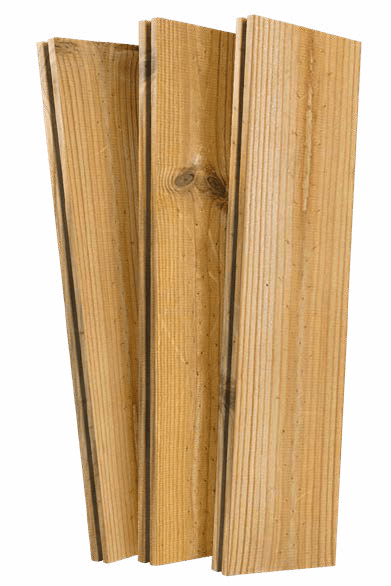
Understanding Bulletwood Decking Board Dimensions
Bulletwood decking is typically sold in linear feet, with specific board widths and thicknesses. Before you begin measuring, confirm the exact profile and dimensions of the Bulletwood decking you intend to use. Common widths might include 4-inch or 6-inch nominal sizes, with actual dimensions slightly less due to milling. Lengths are generally available in a range of increments, often starting from 8 feet and going up to 20 feet or more. Knowing these dimensions is fundamental to accurate calculations.
The project's overall aesthetic and structural requirements will influence your choice of board width and length. For example, longer boards can minimize butt joints, creating a more continuous look, but may be more challenging to transport and handle. Shorter boards might be more economical for smaller, intricate areas or if you have a design with frequent changes in direction.
Step 1: Measure Your Deck Area
Start by creating a detailed drawing of your deck area, noting all dimensions. For simple rectangular decks, measure the length and width. For L-shaped or irregularly shaped decks, break the area down into simpler geometric shapes (rectangles, squares, triangles) and measure each segment individually.
Always measure twice to ensure accuracy. Record your measurements in feet and inches, then convert them to a consistent unit, such as decimal feet, for easier calculations. For example, a deck that is 10 feet 6 inches wide and 12 feet 3 inches long would be 10.5 feet by 12.25 feet.
Step 2: Calculate Total Linear Footage Needed
Once you have the total area, you can calculate the linear footage of decking required. This calculation depends on the width of the Bulletwood boards you plan to use. Here's the formula:
Total Linear Feet = (Deck Area in Square Feet / Actual Board Width in Feet)
For example, if your deck is 120 square feet and you are using Bulletwood boards with an actual width of 5.5 inches (which is approximately 0.458 feet):
Total Linear Feet = 120 sq ft / 0.458 ft = 262.01 linear feet.
This gives you a baseline for the material needed, without accounting for waste or specific board lengths.
Step 3: Account for Waste and Cuts
Waste is an unavoidable part of any construction project, especially with decking that requires cuts for ends, angles, and around obstacles. A typical waste factor for decking projects can range from 5% to 15%, depending on the complexity of your deck design and your chosen layout. For straightforward rectangular decks with minimal cuts, 5-7% might be sufficient. For decks with intricate angles, multiple levels, or picture-frame borders, a 10-15% waste factor is more appropriate.
To incorporate waste, multiply your total linear footage by (1 + waste factor percentage). For our example of 262.01 linear feet with a 10% waste factor:
Linear Feet with Waste = 262.01 linear feet * 1.10 = 288.21 linear feet.
Step 4: Determine Board Quantities and Lengths
After calculating the total linear footage with waste, you need to decide on the specific board lengths to order. This is where careful planning can optimize your purchase and reduce waste. Consider the available lengths for Bulletwood decking from Lumber Plus. Try to match board lengths to the longest continuous runs on your deck to minimize butt joints and maximize material use.
For example, if you need 288.21 linear feet and plan to use mostly 12-foot boards, you would divide 288.21 by 12, which equals approximately 24.02 boards. You would round this up to 25 boards to ensure you have enough material. If your layout allows for using a mix of 10-foot and 16-foot boards to better fit your specific deck dimensions, factor that into your calculation.
It is often beneficial to sketch out your deck layout with the chosen board lengths. This visual plan helps identify where cuts will be made and where offcuts can be reused, potentially allowing you to reduce your waste factor slightly or confirm the one you've already chosen. Always round up to the nearest full board length when ordering.
Worked Example: A 14-foot by 10-foot Deck
Let's walk through a hypothetical project: a rectangular deck measuring 14 feet long by 10 feet wide. We plan to use Bulletwood decking boards with an actual width of 5.5 inches (0.458 feet) and anticipate a 7% waste factor due to a simple layout.
1. **Calculate Deck Area:** 14 feet * 10 feet = 140 square feet.
2. **Calculate Total Linear Footage (without waste):** 140 sq ft / 0.458 ft = 305.68 linear feet.
3. **Add Waste Factor:** 305.68 linear feet * 1.07 (for 7% waste) = 326.08 linear feet.
We need 326.08 linear feet. If we use 16-foot boards, 326.08 / 16 = 20.38 boards. We would round up and order 21 boards that are 16 feet long.
This calculation provides a practical estimate for ordering. Always confirm available lengths with Lumber Plus to finalize your board selection.
Before you order
- Confirm the exact actual width of the Bulletwood decking boards you plan to use.
- Measure your deck area accurately, breaking down complex shapes if necessary.
- Decide on a realistic waste factor (5-15%) based on your deck's complexity and layout.
- Sketch your deck layout to visualize board placement and identify potential offcut reuse.
- Check available Bulletwood board lengths from Lumber Plus before finalizing your order.
- Round up to the nearest whole board when calculating purchase quantities.
Confirm installation details, approved uses and warranty terms in the current instructions for the exact product and profile. Your installer should verify the substrate, structure and applicable project requirements.
Questions to help you decide
Why is a waste factor necessary for decking?
A waste factor accounts for material lost due to cuts, mistakes, damaged ends, or boards that don't quite fit a specific section. It ensures you have enough material to complete your project without delays from reordering.
Can I mix different board lengths?
Yes, mixing different board lengths can be an effective strategy to minimize waste, especially for decks with varied dimensions or if you want to stagger butt joints for a more appealing appearance. However, ensure your calculations accurately reflect the linear footage provided by each length.
What if my deck has curves or intricate patterns?
For decks with curves, diagonal layouts, or intricate patterns, the waste factor will likely be higher, potentially 15% or more. Consider consulting with a professional or creating a very detailed cutting diagram to optimize material use.
Ready to Plan Your Bulletwood Deck?
Request a material quote today with your project dimensions, desired Bulletwood profile, and ZIP code. Our team can help confirm current availability and service options for your project. Visit our Bulletwood Decking product page for more details: /decking/hardwood/bulletwood
Request a material quote →