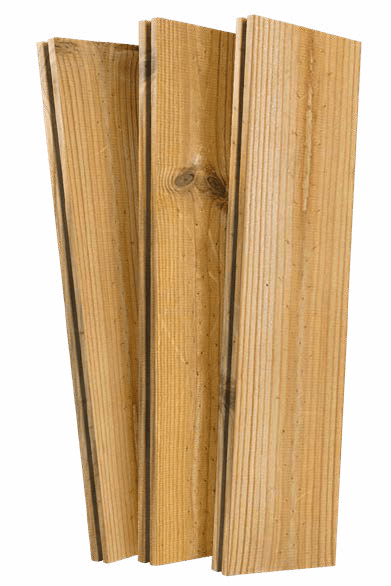
Understanding Bulletwood Decking as a Material Investment
Bulletwood is a dense tropical hardwood suitable for decking and other exterior applications. Its inherent properties contribute to its suitability for outdoor use, positioning it as a durable option for those seeking a long-lasting deck surface. The initial material cost is one component of the overall project budget, reflecting its characteristics and processing for exterior use.
When considering Bulletwood, factor in its appearance and how it complements your home's aesthetic. The natural color and grain of Bulletwood can offer a distinct look that may influence your design choices and, in turn, your budget for complementary elements like railings or landscaping. Exploring Bulletwood's profile and availability with a Lumber Plus branch can confirm specific details for your project.
Material Takeoff: Calculating Bulletwood Board Quantities
The first step in budgeting is an accurate material takeoff. This involves calculating the precise quantity of Bulletwood decking boards required for your project. You'll need the total square footage of your deck surface, taking into account any angles, steps, or custom shapes. Remember to add a waste factor, typically 10-15%, to account for cuts, defects, and future repairs. This is particularly important for hardwood where precise cuts are often needed.
For a simple rectangular deck, multiply the length by the width to get the square footage. Divide this by the square footage of a single board (length x width) to get the number of boards. Always round up to ensure you have enough material. For more complex designs, sketching a detailed layout plan can help visualize cuts and minimize waste, potentially reducing the number of boards you need to purchase.
Worked Example: Calculating Bulletwood for a 12' x 16' Deck
Let's consider a hypothetical rectangular deck measuring 12 feet by 16 feet. We'll assume Bulletwood decking boards are available in a standard profile, 5.5 inches wide (0.458 feet) and in various lengths, for this example, we'll use 16-foot lengths to minimize end-to-end seams.
1. **Deck Area:** 12 feet * 16 feet = 192 square feet.
2. **Board Coverage (per 16-foot board):** A 5.5-inch wide board (0.458 feet) x 16 feet long = 7.328 square feet per board.
3. **Number of Boards (Area Equivalent):** 192 sq ft / 7.328 sq ft/board 26.2 boards. Since you can't buy fractions, you'd initially consider 27 boards.
4. **Accounting for Layout (Width):** To cover the 12-foot width, you'll need 12 feet / 0.458 feet/board 26.2 boards across. Again, rounding up, this means 27 boards laid side-by-side. Each of these boards would be 16 feet long.
5. **Adding Waste Factor:** For Bulletwood, a 10% waste factor is prudent. 27 boards * 1.10 = 29.7 boards. Round up to 30 boards.
Therefore, for a 12' x 16' deck using 5.5-inch wide, 16-foot long Bulletwood boards, you would likely need to purchase 30 boards to account for cuts and waste.
This calculation provides a material estimate. Always confirm specific board dimensions and recommended waste factors with your supplier or installer. For boards of varied lengths, a detailed cut plan will be necessary to optimize material usage.
Accessories and Hidden Costs
Beyond the decking boards themselves, several other material components contribute to the total budget. These include fasteners (hidden clips or screws), joist tape for deck frame protection, suitable stains or sealants if you choose to finish your Bulletwood, and any specialized tools an installer might require for hardwood. Consider the type of fasteners carefully, as they impact both aesthetics and installation time.
Don't overlook the substructure. While Bulletwood is the surface, a robust deck frame is critical. Budget for lumber for joists, beams, and posts, along with concrete for footings, and any necessary hardware like joist hangers and post bases. If you're building a new deck, these structural components often represent a significant portion of the material cost. If you are reusing an existing frame, ensure it is structurally sound and compatible with the weight and fastening requirements of Bulletwood.
Labor and Professional Services
Unless you plan to install the deck yourself, labor costs will be a substantial part of your budget. Obtain multiple quotes from qualified deck builders or contractors. These quotes should ideally itemize labor for demolition (if applicable), frame construction, decking installation, and any finishing work.
Beyond installation, consider other professional services. This might include a structural engineer for complex designs or permits, especially if your deck is elevated or involves significant structural changes. Permitting fees, while often modest, are a mandatory part of the budget that should not be overlooked. Always confirm local building code requirements and obtain necessary approvals before starting construction.
The Importance of a Contingency Fund
Even with meticulous planning, unexpected issues can arise during a construction project. A contingency fund, typically 10-15% of the total estimated project cost, is crucial for covering unforeseen expenses. This could include minor material miscalculations, unexpected sub-surface conditions, or slight adjustments to the design.
Having a contingency budget provides a financial buffer, reducing stress and allowing for flexibility to address problems without derailing the entire project or compromising on material quality. It's a best practice for any home improvement project, particularly those involving exterior construction where weather and site-specific challenges can emerge.
Before you order
- Have you accurately measured your deck area, accounting for all dimensions and angles?
- Have you added a waste factor (10-15%) to your Bulletwood board quantity calculations?
- Have you identified all necessary accessories (fasteners, joist tape, sealants) and included them in your material list?
- Is your deck substructure material (joists, beams, posts) budgeted, or is an existing frame verified for compatibility?
- Have you obtained multiple quotes for professional installation labor?
- Have you accounted for any permitting fees or other professional services (e.g., structural engineer)?
- Have you included a contingency fund (10-15% of total project cost) in your budget?
- Have you confirmed the specific Bulletwood profile and availability with a Lumber Plus branch?
- Are you aware of potential long-term maintenance costs for Bulletwood decking?
- Have you considered the cost implications of different board lengths or widths on your layout and waste?
Confirm installation details, approved uses and warranty terms in the current instructions for the exact product and profile. Your installer should verify the substrate, structure and applicable project requirements.
Questions to help you decide
What factors most influence the cost of Bulletwood decking?
The primary factors influencing Bulletwood decking costs are the quantity of boards required, the specific profile and length of the boards, the type and quantity of fasteners, and labor costs for installation. The complexity of your deck design and site preparation can also significantly impact the overall budget.
Should I budget for professional installation of Bulletwood decking?
While some experienced DIYers may attempt installation, Bulletwood is a dense hardwood that can be challenging to work with. Professional installation ensures proper fastening, spacing, and a finished result that maximizes the material's durability and appearance. It's often a worthwhile investment to ensure the deck is built to last and to code.
How do I get an accurate quote for Bulletwood materials?
To get an accurate material quote, you'll need your project's precise dimensions, the preferred Bulletwood board profile (width and length), and your ZIP code. Providing these details to Lumber Plus allows us to confirm current availability and provide a tailored material estimate for your project. Be prepared to discuss your design to ensure all necessary components are included.
Ready to Plan Your Bulletwood Decking Project?
Request a material quote today. Provide your project dimensions, desired Bulletwood profile, and ZIP code to confirm current availability and service options. Visit our product page for more details on Bulletwood decking: [/decking/hardwood/bulletwood].
Request a material quote →