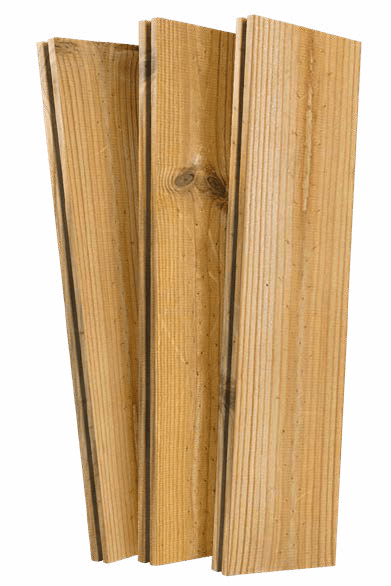
Understanding the Picture Frame Concept
A picture-frame border in decking refers to a perimeter of deck boards laid perpendicular or at an angle to the main field boards, creating a visual frame around the deck's edge. This design element can define the deck area, provide a clean finish, and conceal the cut ends of the field boards. For Bulletwood decking, known for its dense, durable qualities and attractive appearance, a picture frame can accentuate its inherent beauty and create a sophisticated look.
The primary benefits of a picture-frame border include enhanced aesthetics, a finished edge that can make the deck appear larger or more defined, and practical advantages in protecting the ends of field boards. It also offers an opportunity to introduce contrasting board widths or laying patterns if desired, though often the same Bulletwood material is used for a consistent, integrated look.
Structural Blocking Requirements for a Picture Frame
Implementing a picture-frame border requires specific structural support, often in the form of additional blocking, to properly secure the perimeter boards. Unlike field boards that typically run across multiple joists, picture-frame boards are supported by rim joists and intermediate blocking.
For the perimeter boards running parallel to the house, blocking needs to be installed between the outermost joists to provide continuous support. For boards running perpendicular to the house (the ends of the deck), the rim joist itself may provide adequate support, but additional blocking between joists may still be necessary to ensure solid fastening points for the ends of the field boards that butt into the frame.
Confirm that all blocking is adequately spaced and securely fastened, following local building practices. This ensures the stability and longevity of both the picture frame and the main deck surface. Proper blocking also helps prevent twisting or cupping of the border boards over time.
Selecting Bulletwood Boards for the Border
Bulletwood is a tropical hardwood known for its strength and rich, reddish-brown hues that deepen with age. When selecting boards for a picture frame, consistency in profile and appearance is key. Lumber Plus offers Bulletwood for decking and exterior applications, and it's important to confirm the available profiles for your project.
Typically, the same Bulletwood decking boards used for the main deck are also used for the picture frame. This ensures a uniform material and color transition. Consider board width carefully; a wider board can create a more prominent frame, while a narrower board offers a subtle accent. The choice depends on the overall scale of your deck and desired aesthetic. Ensure all boards are inspected for any imperfections before installation, as the border boards will be highly visible.
You can explore the available Bulletwood decking options at: /decking/hardwood/bulletwood
Coordinating with Fascia and Edge Finishes
The picture-frame border works in conjunction with the deck's fascia to create a complete and finished edge. Fascia boards are typically installed vertically along the perimeter of the deck frame, covering the rim joists and any exposed framing. When a picture frame is present, the fascia should align seamlessly with the bottom edge of the border boards.
Consider using Bulletwood fascia boards to match your decking for a cohesive look. Alternatively, a contrasting material or color for the fascia can be chosen to highlight the picture frame. Ensure that the thickness of your fascia material is compatible with the overall deck design and does not interfere with proper drainage or ventilation. The goal is a clean, continuous line from the top of the picture frame down to the bottom of the fascia.
Worked Example: Planning a 12'x16' Deck with a Single Picture Frame
Let's consider a hypothetical 12-foot by 16-foot deck with a single picture-frame border using 5.5-inch wide Bulletwood decking boards. The main field boards will run parallel to the 16-foot dimension.
First, determine the layout of the picture frame. We'll use one 5.5-inch board for the perimeter. This means the overall interior dimensions for the field boards will be reduced. For the 12-foot width, with a 5.5-inch border on each side, the field width becomes 12 feet - (2 * 5.5 inches) = 12 feet - 11 inches = 11 feet 1 inch. For the 16-foot length, with a 5.5-inch border on each end, the field length becomes 16 feet - (2 * 5.5 inches) = 16 feet - 11 inches = 15 feet 1 inch. This calculation ensures the frame is within the total deck dimensions.
Next, plan the blocking.
For material quantities, you would need two 16-foot Bulletwood boards and two 11-foot 1-inch (or cut from 12-foot) Bulletwood boards for the picture frame. The remaining field area of 11 feet 1 inch by 15 feet 1 inch would then be covered by the main Bulletwood boards, considering appropriate gapping. Always add a percentage for waste and cuts. This example assumes standard board lengths and minimal waste. Always confirm board lengths and availability with your Lumber Plus representative.
Remember to account for the thickness of the picture frame boards when determining the final dimensions of your supporting structure and fascia. The goal is for the picture frame to sit flush with the top of the field boards, and the fascia to cover the framing below neatly.
Before you order
- Confirm the desired width of your picture-frame border.
- Verify the structural requirements for additional blocking to support the border boards.
- Determine the direction of your main field boards relative to the picture frame.
- Calculate the adjusted interior dimensions for your field boards.
- Select Bulletwood boards with consistent profile and appearance for both the frame and field.
- Plan for compatible fascia material that integrates smoothly with the picture frame.
- Account for appropriate gapping between all boards, including where field boards meet the frame.
- Factor in waste when ordering materials for both the frame and field boards.
Confirm installation details, approved uses and warranty terms in the current instructions for the exact product and profile. Your installer should verify the substrate, structure and applicable project requirements.
Questions to help you decide
Can I use different widths of Bulletwood boards for the picture frame and the main deck?
Yes, you can use different widths for aesthetic effect. A wider board for the picture frame can create a more pronounced border, while a narrower one offers a subtle definition. Ensure that any variations in board thickness are accounted for in your structural planning to maintain a flush deck surface.
How do I ensure proper drainage with a picture-frame border?
Proper board spacing is crucial for drainage, even with a picture frame. Ensure that the recommended gaps are maintained between all boards, including where the field boards meet the picture frame. This allows water to drain effectively and promotes air circulation, which is important for the longevity of any hardwood decking, including Bulletwood.
Do I need special fasteners for the picture-frame boards?
The fastening method for picture-frame boards should be consistent with the rest of your Bulletwood deck. If using hidden fasteners for the field boards, ensure the system is compatible with the border boards and allows for proper installation, especially at the mitered corners. Face fastening is also an option, but consider the visual impact of exposed fasteners on the border.
Ready to Plan Your Bulletwood Picture-Frame Deck?
Request a material quote with your project dimensions, exact Bulletwood profile, and ZIP code. We can help confirm current availability and service options for your decking and related outdoor materials. Explore Bulletwood for dense, durable decking and exterior applications: /decking/hardwood/bulletwood. Also consider other decking options: /decking, /decking/hardwood, /decking/hardwood/ipe, /decking/composite, /decking/pvc.
Request a material quote →