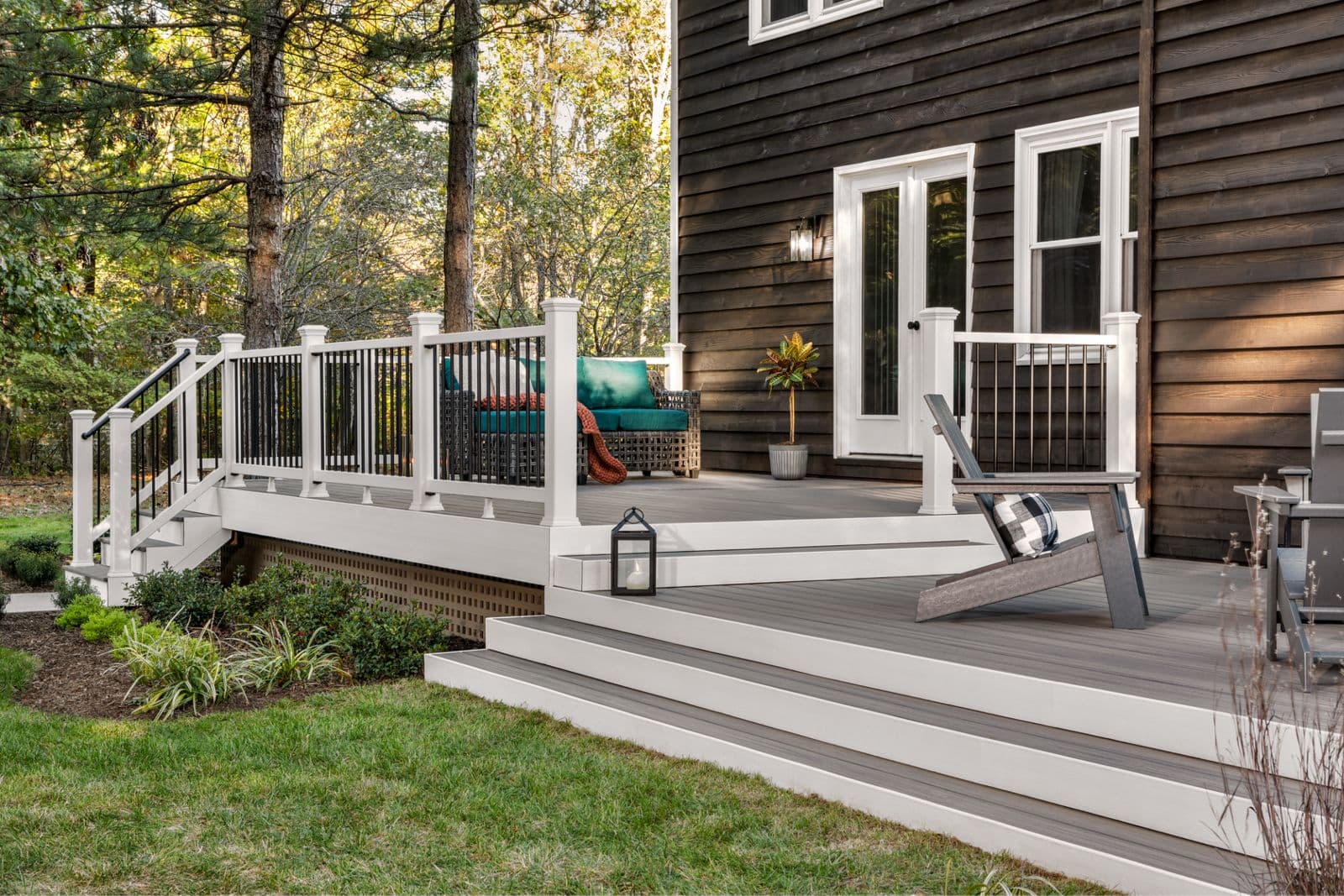
Understanding Trex Decking's Composition for Winter
Trex decking is a wood-plastic composite material, typically made from 95% recycled content, including reclaimed wood fibers and plastic film. This core is then encapsulated by a protective polymer shell on three sides. This capping is a key feature when considering winter performance.
The composite nature means Trex boards are designed to resist moisture absorption more effectively than traditional untreated wood, which can be prone to rot, warping, and splintering when exposed to repeated freeze-thaw cycles. The outer shell further enhances this resistance, acting as a barrier against moisture ingress and helping to maintain the board's structural integrity and appearance through various weather conditions.
Unlike wood, Trex decking does not require staining or sealing to maintain its warranty, simplifying winter preparation. A simple soap-and-water wash is generally sufficient for maintenance. This low-maintenance aspect is particularly beneficial in winter, as it eliminates the need for seasonal treatments that can be challenging to apply in cold weather.
Drainage and Substructure in Cold Climates
Proper drainage is critical for any deck, especially in regions with snow and ice. Water pooling on or under the deck can lead to ice formation, which poses slip hazards and can potentially stress the deck structure over time. Ensure the deck substructure is designed to allow for adequate airflow and water runoff.
The deck surface itself should have a slight slope away from the house to encourage water and melted snow to drain off. Gaps between boards are also important for drainage; ensure these are consistent and clear of debris. Consider using a drainage system beneath the deck, especially for elevated decks or those over living spaces, to direct water away from the structure and prevent ice buildup below.
For ground-level decks, ensure the ground beneath is properly graded and free-draining. Avoid designs that trap moisture or snow against the deck boards or supporting posts, as persistent dampness can still affect the substructure, even if the Trex boards themselves are highly resistant.
Snow and Ice Removal from Trex Decking
When snow accumulates on Trex decking, it should be removed to prevent prolonged moisture contact and to make the deck usable. Use a plastic shovel for snow removal to avoid damaging the deck surface. Metal shovels can scratch the capping and should be avoided.
For ice removal, calcium chloride-based deicers are generally recommended for use on Trex decking. These products are less corrosive than rock salt (sodium chloride) and are less likely to leave a residue or damage the deck surface. Always test any deicer in an inconspicuous area first and follow the manufacturer's instructions for application and removal.
Avoid using sand or abrasive materials for traction, as these can scratch the deck surface. Instead, consider using a rubber mat or a calcium chloride-based deicer for icy patches. Once the ice has melted, rinse the area thoroughly with water to remove any deicer residue.
Thermal Expansion and Contraction Considerations
Like most materials, Trex decking will expand and contract with temperature changes. In winter, as temperatures drop, the boards will contract. It is important that the installer follows the manufacturer's specific guidelines for gapping between boards and at butt joints. Incorrect gapping can lead to buckling or excessive gaps in extreme temperatures.
The specific spacing requirements can vary by product line and expected temperature range during installation. Always consult the latest Trex installation guide for precise recommendations to ensure proper performance through seasonal temperature fluctuations.
While Trex decking is designed to handle these changes, understanding and adhering to installation specifications is key to preventing potential issues. This includes ensuring adequate ventilation under the deck to help moderate temperature swings and moisture.
Worked Example: Planning a Winter-Ready Trex Deck
Consider a hypothetical 10-foot by 12-foot deck attached to a home in a region experiencing significant snowfall and freezing temperatures. The homeowner wants a low-maintenance deck that can withstand winter conditions for access to a hot tub.
First, the deck frame will be constructed using pressure-treated lumber, ensuring a minimum 1/4-inch per foot slope away from the house for drainage.
For the decking, Trex Transcend Earth Tones in "Gravel Path" will be used, with 12-foot grooved boards. Assuming an average board width of 5.5 inches, approximately 26 boards (120 inches / 5.5 inches per board ≈ 21.8, plus enough for cuts and waste) would be needed for the 10-foot width. For the 12-foot length, 12-foot boards are suitable, minimizing butt joints. Hidden fasteners will be used to maintain consistent gapping and a clean aesthetic.
Under the deck, the ground will be graded to direct water away from the foundation. For snow removal, the homeowner will be advised to use a plastic shovel and to have a calcium chloride-based deicer on hand for icy patches, avoiding rock salt or abrasive materials. Regular cleaning with soap and water in warmer months will prepare the surface for winter.
Before you order
- Is the deck substructure designed with adequate slope (minimum 1/4 inch per foot) for drainage?
- Are the deck boards gapped according to Trex's installation instructions for your climate's temperature range?
- Will a plastic shovel be used for snow removal to avoid damaging the deck surface?
- Is a calcium chloride-based deicer (not rock salt) readily available for ice management?
- Is there proper ventilation under the deck to prevent moisture buildup and moderate temperature fluctuations?
- Is the area around the deck clear of debris that could obstruct drainage?
- Have you consulted the latest Trex installation guide for specific cold-weather recommendations?
- Are there any areas where snow or ice might accumulate against the house or other structures, requiring special attention?
Confirm installation details, approved uses and warranty terms in the current instructions for the exact product and profile. Your installer should verify the substrate, structure and applicable project requirements.
Questions to help you decide
Can I use rock salt to melt ice on my Trex deck?
No, rock salt (sodium chloride) is not recommended for use on Trex decking. It can leave a residue and potentially damage the deck surface over time. Instead, use a calcium chloride-based deicer, which is generally safer for composite materials. Always rinse the deck thoroughly after deicer application.
Does Trex decking become slippery when wet or icy?
Like any outdoor surface, Trex decking can become slippery when wet, icy, or covered with snow. The textured surface of Trex boards offers some grip, but caution is always advised in winter conditions. Prompt snow and ice removal, along with the use of appropriate deicers, can help mitigate slip hazards.
Will Trex decking crack or warp in freezing temperatures?
Trex decking is engineered to be highly resistant to cracking, warping, and splintering, even in freezing temperatures, due to its composite core and protective capping. However, proper installation with correct gapping is crucial to accommodate thermal expansion and contraction and prevent issues. The material's low moisture absorption also helps it withstand freeze-thaw cycles better than untreated wood.
Request a Quote for Your Winter-Ready Trex Decking Project
Ready to plan your Trex decking project for year-round enjoyment? Provide your project dimensions, desired Trex profile (e.g., Trex Transcend, Enhance), and ZIP code. We can help confirm current availability and service options for your specific needs. Start your quote request today.
Request a material quote →