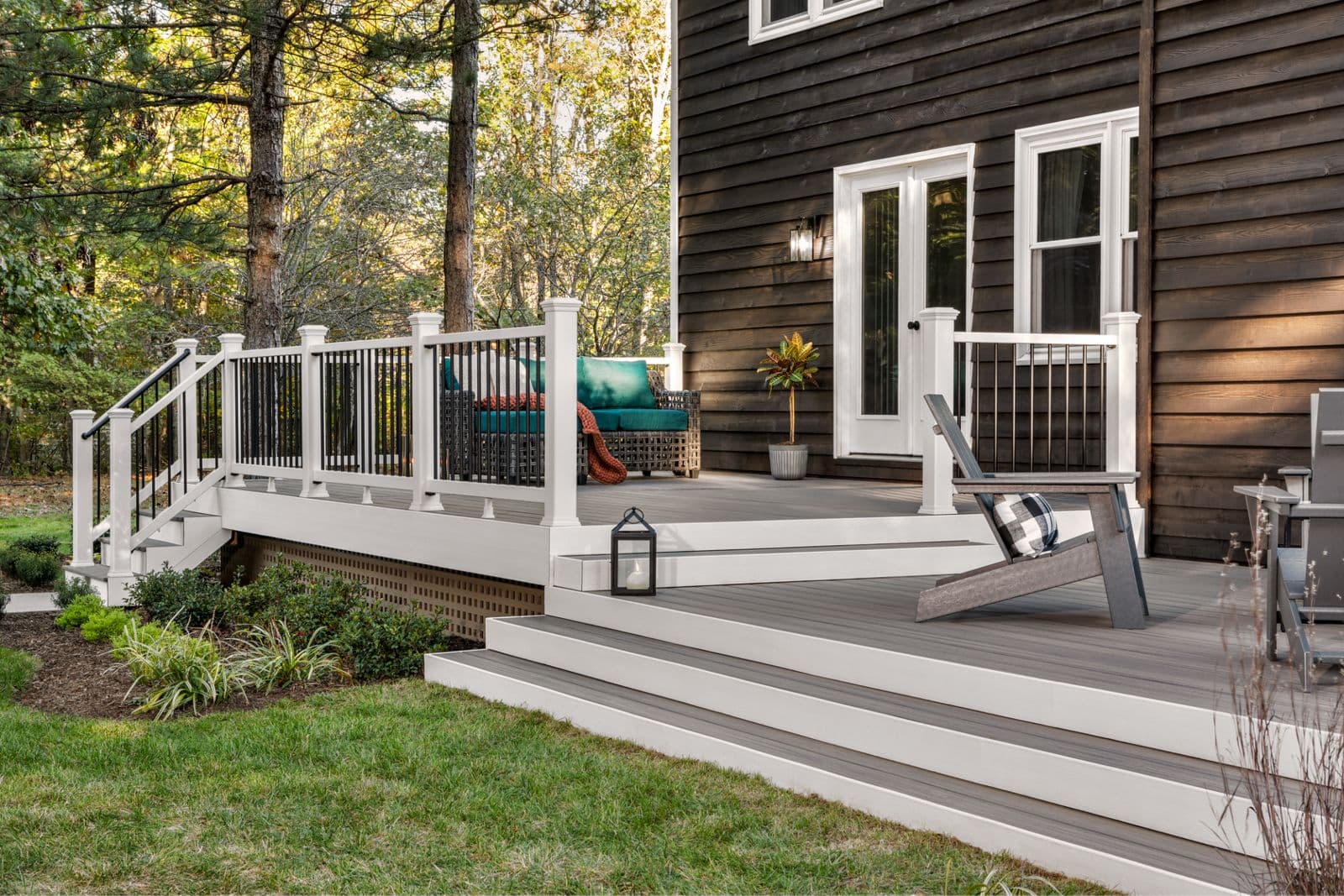
Why Physical Samples are Essential for Trex Decking
Trex decking is a wood-plastic composite material, known for its protective shell and range of colors and textures. Digital representations can vary significantly due to screen calibration and lighting conditions. A physical sample provides an accurate depiction of the product's color, sheen, and grain pattern.
The way light reflects off the decking surface is crucial. Different times of day, varying weather conditions, and even the direction of sunlight can alter how a color appears. A sample allows you to observe these changes in your actual project environment. Furthermore, the tactile experience of the board's texture can influence your comfort and satisfaction with the final deck. Trex offers various lines like Enhance® Basics, Enhance® Naturals, Select® Earth Tones, Transcend® Earth Tones, and Transcend® Tropical, each with distinct aesthetic qualities.
Trex decking is made from 95% recycled materials, offering a low-maintenance alternative to traditional wood. While all Trex lines share a core of recycled materials and a low-maintenance shell, they differ in finish depth, color range, and aesthetic details. Physical samples help you discern these differences.
For more information on Trex decking, visit our Trex brand page: /brands/trex
Evaluating Color and Tone in Different Lighting
Color is perhaps the most significant factor when choosing decking. What looks like a rich brown indoors might appear muted or even slightly different under direct sunlight. To properly evaluate Trex colors, observe your samples at various times:
Morning Light: Often cooler, bringing out blue or grey undertones.
Midday Sun: Intense and bright, revealing the truest color saturation.
Afternoon Light: Warmer, enhancing red and yellow undertones.
Overcast Days: Diffused light can reveal the depth and subtlety of multi-tonal boards, such as those in the Enhance® Naturals or Transcend® Tropical lines.
Place samples both in shaded areas and in direct sunlight. Note how colors like "Gravel Path" (Transcend® Earth Tones) or "Island Mist" (Transcend® Tropical) might shift. The goal is to ensure the color remains appealing across all typical conditions your deck will experience. Consider how the decking color will complement your home's exterior paint or siding, roofing, and surrounding landscaping elements.
Assessing Texture and Grain Patterns
Trex decking is designed to offer various textures and grain patterns, some mimicking natural wood more closely than others. The texture can impact both the aesthetic and functional aspects of your deck. For instance, a more pronounced wood grain, often found in lines like Transcend® Tropical, can add a rustic feel, while smoother finishes might appear more contemporary.
Run your hand over the samples. Consider how the texture feels. While Trex is designed to be barefoot safe with no splinters, the specific texture can still influence comfort and visual appeal. Also, observe how the grain pattern repeats or varies across the sample. This gives you an idea of the overall consistency you can expect across your finished deck.
Compare the texture of different lines, such as the authentic wood-grain appearance of Enhance® Naturals (e.g., "Foggy Wharf", "Rocky Harbor") versus the more refined finishes of Transcend® lines (e.g., "Havana Gold", "Lava Rock").
Coordinating with Adjacent Finishes and Materials
Your deck rarely exists in isolation. It needs to harmonize with existing elements of your home and yard. Bring your Trex samples to the project site and compare them directly with:
House Siding/Exterior Paint: Hold the sample against your home's exterior. Does the color complement or clash? For example, a "Pebble Grey" (Select® Earth Tones) might blend well with cool-toned siding, while "Woodland Brown" (Select® Earth Tones) could enhance warmer tones.
Railing and Trim: If you plan to use a different material or color for railing, ensure the decking sample looks good alongside it. Trex offers matching fascia and trim options, which can simplify coordination.
Landscaping Elements: Consider stone pathways, garden beds, and water features. The decking color should integrate seamlessly with your natural surroundings.
Outdoor Furniture: If you have existing outdoor furniture, place a sample next to it to ensure a cohesive look. This is especially important for larger pieces that will occupy significant deck space.
Understanding Sample Labels and Product Lines
Each Trex sample should come with a label indicating its product line and color name. It's important to understand these distinctions as they relate to performance, appearance, and availability. For example, a sample labeled "Transcend® Tropical - Island Mist" belongs to the flagship line, known for its vibrant colors and three-side shell protection, while "Enhance® Basics - Clam Shell" is part of an entry-level line.
The labels also help you identify specific features, such as whether the board is grooved for hidden fasteners or a square-edge board for face fastening. Always confirm the exact profile (1" x 5.5" grooved/square) and available lengths (12, 16, 20 ft) for your chosen line. This information is critical when planning your project dimensions and requesting a quote.
Familiarize yourself with the Trex product lines: Enhance® Basics, Enhance® Naturals, Select® Earth Tones, Transcend® Earth Tones, and Transcend® Tropical. Each offers distinct color palettes and aesthetic choices. Digital swatches are a starting point, but always confirm physical sample availability from your supplier.
Before you order
- Obtain physical Trex decking samples for your top choices.
- Observe samples at different times of day (morning, midday, afternoon) and under various weather conditions (sunny, overcast).
- Place samples in both shaded and sun-exposed areas of your project site.
- Compare samples directly against your home's exterior, existing railing, and other adjacent materials.
- Feel the texture of each sample to assess its tactile appeal and potential comfort.
- Verify the product line and color name on each sample label.
- Consider how the chosen decking will integrate with your landscaping and outdoor furniture.
- Confirm the availability of the specific board profile (grooved or square-edge) and lengths you need for your project.
Confirm installation details, approved uses and warranty terms in the current instructions for the exact product and profile. Your installer should verify the substrate, structure and applicable project requirements.
Questions to help you decide
How many samples should I request?
It is recommended to request samples for your top 2-3 color and line choices. This allows for direct comparison and helps you narrow down your options effectively. Having multiple samples also lets you place them in different areas of your project site simultaneously.
What if my desired color isn't available as a sample?
While most popular colors are available as samples, specific colors or lines might have limited sample availability. It's best to contact your supplier to confirm what samples they currently have in stock. If a specific sample isn't available, ask for the closest alternative or a larger display piece if possible, and rely more heavily on digital representations in conjunction with similar physical samples.
Can I keep the samples indefinitely?
Sample availability and retention policies vary by supplier. Typically, samples are provided for evaluation during the planning phase of your project. It's a good practice to inquire about the return policy or if there's a small fee for keeping them, especially for larger or more specialized samples. This ensures you have them for the duration of your decision-making process.
Ready to Plan Your Trex Deck Project?
Request a material quote today. Provide your project dimensions, desired Trex profile (e.g., grooved or square-edge), exact color, and ZIP code to confirm current availability and service options for your area. We can help you select the right Trex decking to bring your outdoor vision to life.
Request a material quote →