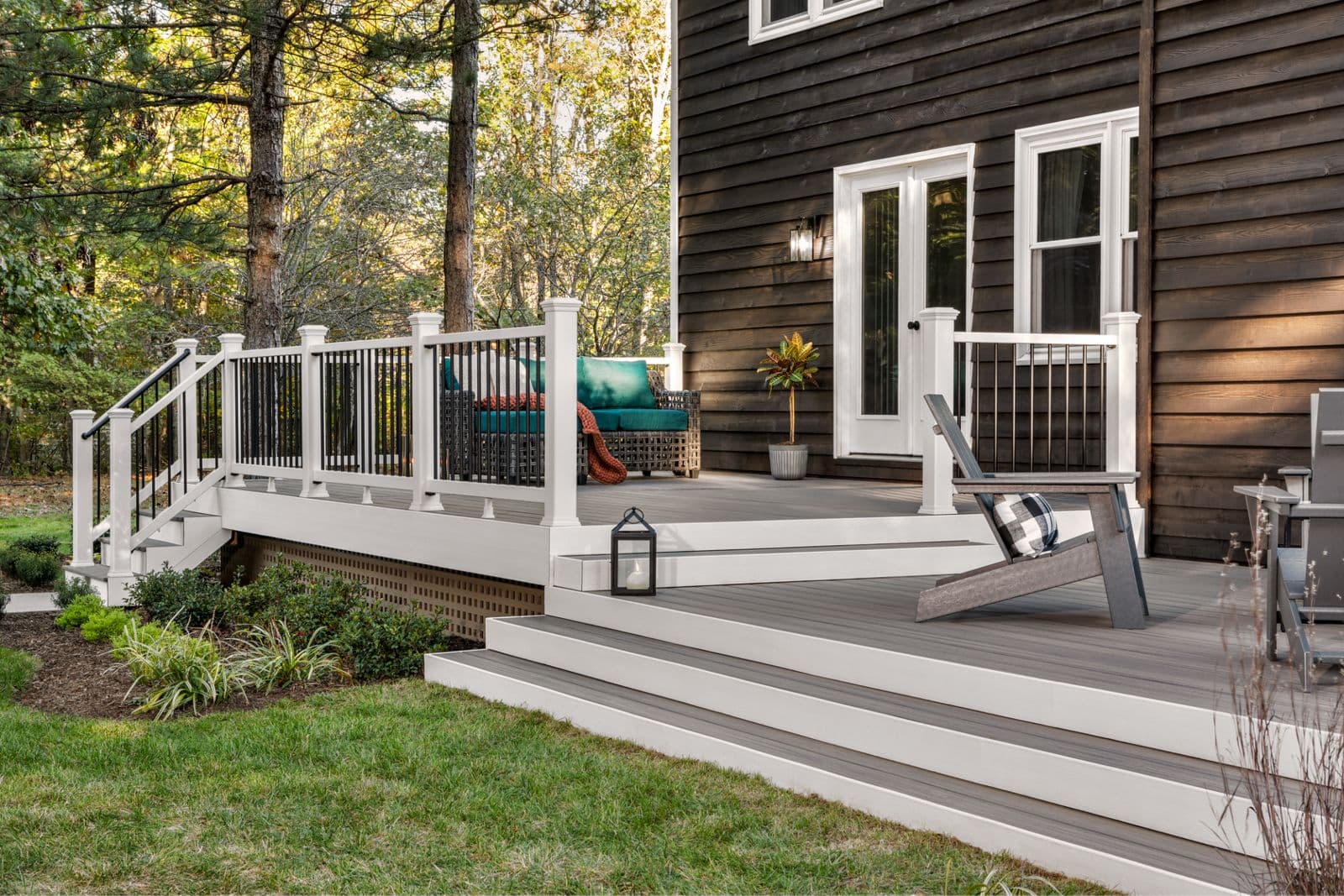
Understanding Commercial Use for Trex Decking
Before specifying any material, it's important to confirm its suitability for commercial applications. Trex decking is engineered to be a durable, low-maintenance alternative to traditional wood, which can be particularly advantageous in high-traffic commercial environments. Its composition of reclaimed wood fiber and plastic film provides resistance to rot, splinters, and insect damage, common issues with natural wood that can lead to costly repairs and downtime for a busy restaurant.
The protective shell on Trex decking is designed to resist fading and staining, a key factor for areas prone to food and beverage spills. This capping also helps lock in the pigment, maintaining the deck's appearance over time. For a restaurant, this means less time spent on intensive cleaning and more time focusing on operations. Always review the manufacturer's guidelines for commercial applications and confirm any specific requirements for your project type.
This is a transferable warranty, which can be an asset for future property transactions. (S1)
Selecting the Right Trex Product Line for Your Patio
Trex offers several product lines, each with distinct aesthetics and performance characteristics. For a restaurant patio, where durability and appearance are paramount, considering lines with enhanced protective features is often beneficial. All Trex lines share a recycled core and low-maintenance shell, but they differ in finish depth, color range, and warranty terms. (S1)
Trex Transcend® and Select® lines feature a high-performance shell technology. Transcend Tropical offers vibrant, multi-tonal colors like Havana Gold and Lava Rock, while Transcend Earth Tones includes options such as Gravel Path and Vintage Lantern. Select Earth Tones provides a range of nature-inspired colors, including Winchester Grey and Madeira. These lines are designed to maintain their color and finish, crucial for a patio that needs to look appealing day after day. (S1)
Enhance® Basics and Naturals are entry-level options that are lighter weight and come in more traditional or authentic wood-grain appearances. While suitable for many applications, for a high-traffic commercial patio, the enhanced durability and varied aesthetics of the Select or Transcend lines may be a more appropriate choice to withstand the rigors of daily restaurant use. (S1)
Consider the overall design of your restaurant and the desired ambiance. A tropical-inspired patio might benefit from the rich tones of Transcend Tropical, while a more modern or minimalist aesthetic could be complemented by the cooler grays of Select Earth Tones or Transcend Earth Tones. Physical samples should be reviewed to confirm color and texture before making a final decision. (S1)
Planning Seating Layout and Board Orientation
The layout of your Trex decking significantly impacts both the patio's appearance and its functionality for diners and staff. Board orientation can define zones, direct traffic flow, and create visual interest.
For a restaurant patio, consider how tables and chairs will be arranged. A straight, parallel board layout can offer a clean, expansive look that is easy to sweep and clean. Running boards perpendicular to the main entrance can visually widen the space, while a diagonal layout can add a custom, upscale feel, though it may result in more material waste due to angled cuts. (S1)
When planning, account for adequate spacing between tables for comfortable movement, and ensure there are clear pathways for servers. If your patio will feature fixed elements like planters or built-in benches, integrate these into your decking plan. Trex boards are available in 12, 16, and 20 ft lengths, which can help minimize seams in larger patio areas. (S1)
Maintenance and Cleaning for Commercial Patios
One of the primary advantages of Trex decking for a restaurant patio is its low-maintenance profile. Unlike wood, it does not require sanding, staining, or sealing. A simple soap-and-water wash is generally sufficient to keep the surface clean and maintain the warranty. (S1)
For a commercial setting, regular cleaning is essential to remove food spills, grease, and general foot traffic residue. Promptly cleaning spills helps prevent potential staining, even with the protective capping. Use a soft-bristle brush and a composite deck cleaner, or a mixture of soap and water. Avoid harsh chemicals or abrasive cleaning tools that could damage the deck surface. (S1)
Ensure proper drainage is incorporated into the patio design to prevent standing water, which can lead to dirt accumulation and potential issues over time. Good ventilation underneath the deck is also important to prevent moisture buildup. (S1)
Hypothetical Patio Project: The "Corner Bistro" Deck
Imagine a new outdoor dining area for a corner bistro, measuring 24 feet wide by 18 feet deep. The design goal is a sophisticated, low-maintenance space that accommodates varied seating arrangements and withstands daily wear.
For this project, we might select Trex Transcend® Tropical decking in 'Spiced Rum' to complement the bistro's warm, inviting interior. The boards are 1 inch thick by 5.5 inches wide, available in 12, 16, and 20-foot lengths. (S1)
To minimize seams and create a clean look, we'll run the 20-foot boards parallel to the 18-foot depth, spanning the full width of 24 feet. This means each 20-foot board will be cut to 18 feet, with a 2-foot offcut. Since the deck is 24 feet wide, and each board is 5.5 inches wide, we will need approximately 52 boards (24 feet * 12 inches/foot = 288 inches; 288 inches / 5.5 inches/board = 52.36 boards). Therefore, 53 full 20-foot boards would be purchased. The reusable 2-foot offcuts could potentially be used for a picture frame border or other small sections, if the design allows for it.
Matching Trex fascia in 'Spiced Rum' would be used for the perimeter, providing a finished edge. Hidden fasteners would be chosen for a smooth, barefoot-safe surface, essential for a dining area. (S1)
This approach provides a durable, attractive patio that aligns with the bistro's aesthetic and operational needs, keeping maintenance simple for the staff.
Before you order
- Confirm Trex product line suitability for commercial use with manufacturer guidelines.
- Select a Trex line (e.g., Transcend, Select) that balances durability, aesthetic, and budget.
- Review physical color samples to ensure they match your restaurant's brand and desired ambiance.
- Plan the patio layout to optimize seating capacity, traffic flow, and access for staff.
- Consider board orientation (parallel, perpendicular, diagonal) to achieve desired visual effects and minimize waste.
- Factor in required board lengths (12, 16, 20 ft) to reduce seams and optimize material use. (S1)
- Specify matching fascia and edge finishes for a complete, polished look. (S1)
- Choose a fastening system (hidden clips or face screws) that meets aesthetic and safety requirements. (S1)
- Develop a routine cleaning and maintenance plan for daily commercial use.
- Ensure proper sub-structure and ventilation are designed to support the deck and prevent moisture issues.
Confirm installation details, approved uses and warranty terms in the current instructions for the exact product and profile. Your installer should verify the substrate, structure and applicable project requirements.
Questions to help you decide
Can Trex decking be installed over an existing concrete patio?
Installing Trex decking over an existing concrete patio is possible, but it requires careful planning to ensure proper drainage and ventilation. A suitable sub-frame must be constructed on top of the concrete to provide adequate support and allow for airflow beneath the deck boards. This sub-frame creates the necessary spacing for water to drain and prevents moisture buildup, which is critical for the longevity of the deck structure. Consult the Trex installation guide for specific requirements regarding sub-frame construction and clearances over concrete.
How does Trex decking compare to natural hardwood for a restaurant patio?
Trex composite decking offers distinct advantages over natural hardwood for a restaurant patio, primarily in terms of maintenance and longevity. Hardwood requires regular sanding, staining, or sealing to protect against weathering, rot, and insect damage, which can be costly and disruptive for a commercial business. Trex, being a composite material, resists these issues and only requires a soap-and-water wash for maintenance. While natural hardwoods like Ipe offer a unique aesthetic, Trex provides consistent color and texture without splinters, making it a 'barefoot safe' option. The initial material cost may vary, but the long-term maintenance savings and durability of Trex can make it a more cost-effective solution for commercial use. (S1)
What are the best Trex colors for a high-traffic restaurant patio?
The 'best' colors depend on your restaurant's aesthetic, but for high-traffic areas, it's often practical to consider colors that can mask everyday dirt or minor scuffs. Medium to darker tones or multi-tonal boards, such as those found in the Trex Transcend Tropical or Earth Tones collections, can be more forgiving. Colors like 'Lava Rock,' 'Spiced Rum,' 'Gravel Path,' or 'Winchester Grey' offer depth and can blend well with various design schemes while being practical for a commercial environment. Always view physical samples under different lighting conditions to ensure the chosen color meets your expectations. (S1)
Ready to Plan Your Restaurant Patio with Trex Decking?
Request a material quote with your project dimensions, desired Trex profile, and ZIP code. We can confirm current availability and service options to help you bring your vision to life.
Request a material quote →