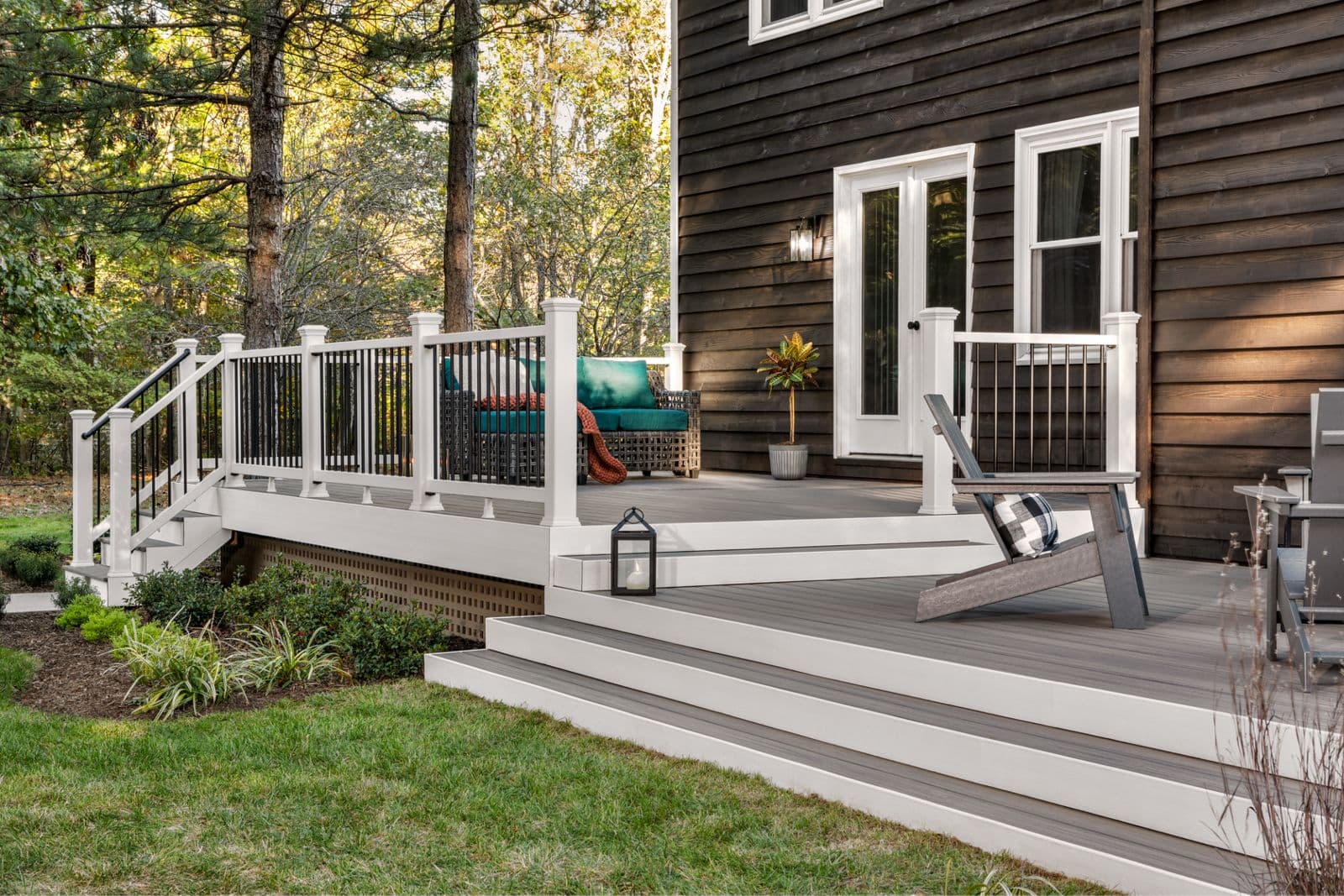
Understanding Trex Composite Decking for Wet Areas
Trex decking is a wood-plastic composite, primarily composed of reclaimed wood fiber and recycled plastic film, encapsulated in a protective shell. This three-sided capping is designed to resist moisture, fading, and staining. For pool surrounds, the material's resistance to water absorption is a key advantage, as it helps prevent common issues like rot, splintering, and warping that can affect traditional wood in consistently wet conditions.
The composite nature means Trex boards do not require the regular sanding, staining, or sealing associated with wood decking. A simple soap-and-water wash is generally sufficient for maintenance, which is particularly beneficial around a pool where cleanliness and hygiene are important. This low-maintenance aspect contributes to the long-term appeal and usability of a pool deck.
It is important to note that while Trex decking is designed for outdoor exposure, it is not impervious to all conditions. Standing water should always be avoided, and proper drainage around the pool deck is essential to prevent water from pooling on or under the boards.
Planning for Drainage and Ventilation Around Your Pool
Effective drainage is critical for any pool deck, especially with composite materials. Water splashing out of the pool, rainwater, and cleaning runoff must be able to drain away efficiently from the deck surface and the substructure. Ensure your deck design incorporates a slight slope away from the pool and house, typically 1/8 inch per foot, to facilitate water runoff.
Good ventilation beneath the deck is equally important. Trapped moisture can create an environment conducive to mold and mildew growth, even with composite decking. Design your substructure with adequate spacing between joists and ensure there is clear airflow around the perimeter of the deck. This allows moisture to evaporate and helps maintain the integrity of both the decking and the supporting framework. Consider adding lattice or open skirting to promote air circulation if the deck is close to the ground.
Edge Finishes and Fascia Boards
The edges of your pool deck are high-traffic areas and often where water accumulates or splashes. Trex offers both grooved and square-edge boards. Grooved boards are typically used with hidden fastening systems for a clean, fastener-free surface, while square-edge boards are suitable for face-fastening or for creating perimeter boards and stair treads.
For a polished look and to protect the substructure, matching Trex fascia boards are available. These boards are designed to cover the exposed rim joists and deck edges, providing a cohesive finish. When detailing around the pool, consider how the fascia will meet the pool coping or other surrounding hardscaping. A clean transition not only looks better but also helps prevent debris from collecting in gaps.
Careful planning of these edge details is essential for both aesthetics and long-term performance, ensuring water doesn't get trapped against the fascia or between boards and the pool coping.
Cleaning and Maintenance for Poolside Trex Decking
Trex decking is known for its low maintenance requirements, which is a significant advantage for a pool surround. Routine cleaning involves a simple wash with soap and water to remove dirt, pool chemicals, and other residues. This helps maintain the deck's appearance and can prevent the buildup of substances that might make the surface slippery.
For more stubborn stains or spills, consult the manufacturer's cleaning guidelines to ensure you use compatible products. Avoid abrasive cleaners or pressure washers set to high pressure, as these can potentially damage the deck surface. Regular sweeping or blowing off debris will also help keep the deck clean and reduce the chance of organic matter accumulating.
It is important to promptly clean up any spills of pool chemicals, sunscreens, or other liquids to prevent potential discoloration or residue buildup, even with the capped surface of Trex decking.
Worked Example: Calculating Trex Boards for a Pool Surround
Let's consider a hypothetical pool surround project for a rectangular pool measuring 15 feet by 30 feet. We want to create a deck that extends 8 feet out from the pool on one long side and 6 feet out from the pool on both short sides, leaving the other long side for landscaping.
First, calculate the deck area. The total length of the pool plus the deck extension on both short sides is 30 ft + 6 ft + 6 ft = 42 ft. The width of the pool plus the deck extension on one long side is 15 ft + 8 ft = 23 ft. The total area enclosed by the deck is 42 ft x 23 ft = 966 sq ft. The pool area is 15 ft x 30 ft = 450 sq ft. Therefore, the actual deck area requiring boards is 966 sq ft - 450 sq ft = 516 sq ft.
Trex boards are typically 1 inch thick by 5.5 inches wide and available in 12, 16, and 20-foot lengths. For this example, we will assume a layout where boards run parallel to the 30-foot length of the pool, meaning we will mostly use 20-foot boards to minimize seams. Each 20-foot board covers 5.5 inches (0.458 ft) x 20 ft = 9.16 sq ft.
To cover 516 sq ft, we would need approximately 516 sq ft / 9.16 sq ft/board = 56.3 boards. Since boards must be purchased in full lengths, and accounting for cuts and waste, it is prudent to add a waste factor (e.g., 5-10%). For this project, we might estimate around 60-65 boards. For the specific dimensions, consider the board layout carefully. The 8-foot wide section will require boards cut to various lengths, and the 6-foot wide sections will also need cuts. A detailed cut plan would optimize board usage, but for initial estimation, purchasing full 20-foot lengths is common, especially for larger sections, with shorter lengths used for smaller areas or to minimize waste from cuts. This example assumes a straightforward area calculation; actual purchase quantity depends on exact layout and cut plan.
Before you order
- Confirm local building codes for pool deck materials and installations.
- Verify substructure requirements for composite decking around water.
- Plan for adequate drainage and ventilation under and around the deck.
- Select Trex line (Enhance, Select, Transcend) and color based on aesthetic and performance needs.
- Determine board profile (grooved or square edge) for fastening and perimeter.
- Specify matching fascia boards for exposed edges.
- Consider the transition details where the deck meets pool coping or other hardscaping.
- Review manufacturer's cleaning and maintenance guidelines for poolside use.
- Create a detailed material list, including boards, fasteners, and accessories, accounting for waste.
- Obtain physical samples of chosen Trex colors to assess appearance in natural light.
Confirm installation details, approved uses and warranty terms in the current instructions for the exact product and profile. Your installer should verify the substrate, structure and applicable project requirements.
Questions to help you decide
Is Trex decking slippery when wet?
Trex decking is designed with a textured surface. As with any outdoor surface, water, algae, or debris can reduce traction. Regular cleaning helps maintain the surface and reduce potential slipperiness.
Does Trex decking get hot around a pool?
All decking materials, including composite, will absorb and retain some heat when exposed to direct sunlight. Lighter colors of Trex decking tend to absorb less heat than darker colors. The temperature of the deck surface can vary based on sun exposure, ambient temperature, and color choice. It's advisable to test a sample of your chosen color in direct sunlight if heat retention is a significant concern for your project.
How do pool chemicals affect Trex decking?
Trex decking's capped surface is designed to resist staining and fading from various elements, including typical pool chemicals. However, it's always recommended to clean up any spills of concentrated chemicals promptly to avoid potential issues. Regular cleaning with soap and water will help remove residues from chlorinated water or other pool treatments, maintaining the deck's appearance and integrity.
Ready to Plan Your Trex Pool Deck?
Request a material quote with your project dimensions, exact Trex profile, and ZIP code to confirm current availability and service options for your area. Explore the possibilities for your poolside retreat.
Request a material quote →