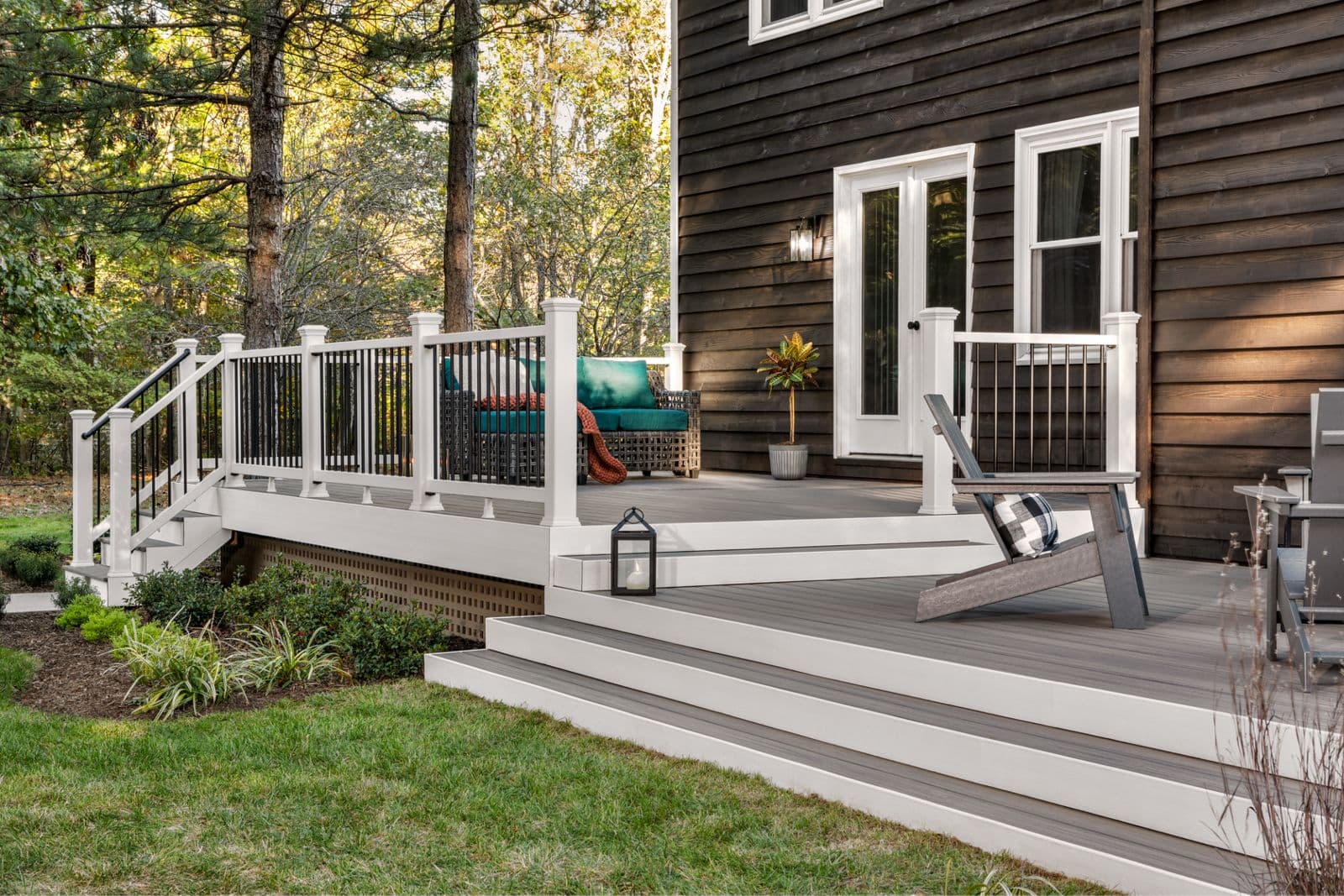
Understanding the Picture Frame Concept
This creates a visually distinct border that can highlight the deck's shape, conceal cut ends of the field boards, and provide a clean transition to stairs or other adjacent structures. For Trex decking, this often means using square-edge boards for the picture frame to allow for face fastening, or grooved boards if using a hidden fastening system with specific edge treatment.
The number of border boards, their width, and the color choice are key design decisions. A single board creates a subtle frame, while multiple boards can create a more substantial visual impact. Using a contrasting color for the border can make the frame stand out, while a matching color offers a more cohesive, subtle look. The choice of Trex line, such as Enhance, Select, or Transcend, will influence available colors and board profiles.
Substructure Requirements for Picture Frames
The most critical aspect of planning a picture-frame deck with Trex is ensuring adequate support for the border boards. Since the border boards run parallel to the joists, they cannot be directly fastened to the joists in the same manner as field boards. Additional blocking or framing is required to provide fastening points. This typically involves installing extra joists or blocking between the main joists, positioned to support the full width of the border boards and allow for proper fastener placement.
For a single picture-frame board, a continuous rim joist or blocking around the perimeter may suffice. For multiple border boards, multiple lines of blocking might be necessary. The specific spacing and size of this blocking will depend on the width of the Trex boards chosen for the border and the fastening method. Always consult the Trex installation guide for specific structural requirements and fastener spacing to ensure the deck is built to specification.
Selecting Trex Boards for the Border
Trex offers decking boards in both grooved and square-edge profiles. For picture-frame borders, square-edge boards are often preferred as they allow for face fastening, which can provide a secure connection at the perimeter. If grooved boards are desired for a hidden fastener system, specific edge treatment or clips designed for grooved board edges may be necessary. Trex boards are 1" x 5.5" in profile and come in 12, 16, and 20-foot lengths, which will influence how many seams are needed in the border.
Color selection is also important. Trex lines like Transcend Tropical (Havana Gold, Island Mist, Tiki Torch, Spiced Rum, Lava Rock) offer rich, multi-tonal options that can create a striking contrast with earthier field boards from the Transcend Earth Tones collection (Gravel Path, Rope Swing, Vintage Lantern). Alternatively, using a color from the same line, such as pairing Pebble Grey field boards with Winchester Grey border boards from Select Earth Tones, can create a more subtle, integrated look.
Integrating Fascia and Edge Finishes
The fascia board is the trim material that covers the exposed rim joist of the deck, providing a finished look to the side of the structure. When planning a picture frame, the fascia should be coordinated with the border boards. Trex offers matching fascia boards for all its decking lines. The fascia should align cleanly with the bottom edge of the border boards, creating a seamless transition from the deck surface to the side of the deck.
Careful measurement and cutting of both the picture frame boards and the fascia are essential for a professional appearance. Mitered corners are common for both the border and fascia to create clean, continuous lines around the deck perimeter. Ensuring proper spacing between the border boards and the main field boards, as specified by Trex, is also crucial for drainage and material expansion/contraction.
Worked Example: A 10x12 Foot Deck with a Double Picture Frame
Let's consider a hypothetical 10-foot by 12-foot deck. The homeowner desires a double picture frame border using Trex Transcend Tropical in "Island Mist" for the border and Trex Transcend Earth Tones in "Gravel Path" for the field boards.
This means the field boards will start 11 inches in from each edge. To support these two border boards, additional blocking is needed. This blocking must be robust and securely fastened to the main joists.
For the 10x12 deck, the perimeter is 2 * (10 + 12) = 44 linear feet. Each 5.5-inch border board would require approximately 44 linear feet of material, so a double border needs 88 linear feet. Given Trex boards come in 12, 16, or 20-foot lengths, purchasing six 16-foot boards (96 linear feet) would provide enough material for the double border, allowing for miter cuts and potential waste. Matching Island Mist fascia boards would be ordered to cover the rim joists.
Before you order
- Determine the number of border boards: single, double, or more?
- Choose border board color: contrasting or matching with field boards?
- Select border board profile: square-edge for face fastening or grooved for hidden clips (with specific edge treatment)?
- Plan substructure modifications: additional blocking or joists for border support?
- Calculate linear footage needed for border boards, accounting for cuts and waste.
- Select matching fascia boards for the deck perimeter.
- Confirm fastener type compatibility with chosen border board profile.
- Review Trex installation guides for specific spacing and fastening requirements.
- Consider mitered corners for a clean, continuous look.
- Account for material expansion and contraction with proper gapping.
Confirm installation details, approved uses and warranty terms in the current instructions for the exact product and profile. Your installer should verify the substrate, structure and applicable project requirements.
Questions to help you decide
What is the main advantage of a picture-frame border?
A picture-frame border provides a refined, custom aesthetic, defines the deck's perimeter, and can conceal the cut ends of the main field boards, offering a cleaner finish than a simple butt joint against the rim joist. It adds a premium look to the deck design.
Do I need special fasteners for a Trex picture frame?
The type of fastener depends on the Trex board profile you choose for the border. Square-edge boards are often face-fastened with color-matched screws. If you use grooved boards for the border, you may need specific hidden clips designed for edge fastening or alternative fastening methods, as standard hidden clips are typically designed for installation between field boards. Always consult the Trex installation guide for approved fasteners.
Can I use different Trex lines for the picture frame and the main deck?
Yes, you can mix Trex lines and colors for a picture frame and main deck, provided the board profiles are compatible (e.g., both are 1"x5.5" boards). This is a common design choice to create contrast or highlight the border. Ensure that any structural or fastening requirements for different lines are met, as some minor differences may exist. For example, you might pair a rich Transcend Tropical color with a more subdued Enhance Naturals shade.
Ready to Plan Your Trex Picture Frame Deck?
Request a material quote with your project dimensions, desired Trex profiles and colors, and your ZIP code. We can help confirm current availability and service options for your decking project.
Request a material quote →