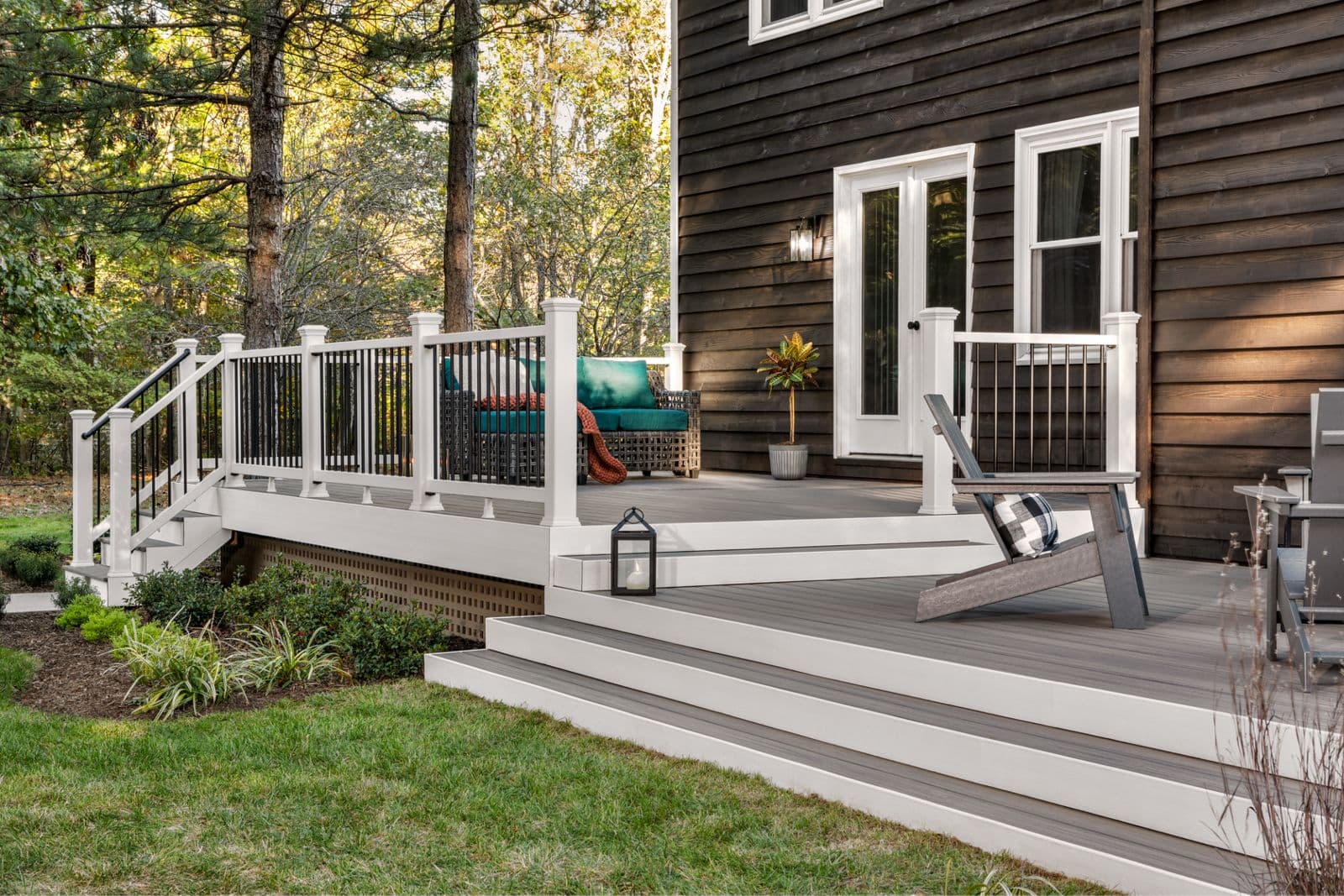
Understanding Grade and Level Transitions
One of the primary considerations when connecting a deck to other landscape features is managing changes in elevation. Trex decking, like most deck systems, typically sits above grade, while patios and pathways are often at or near ground level. Planning these transitions requires defining the finished heights of all surfaces.
For a smooth connection, consider a minimal step down from the deck to a patio or walkway. This can often be achieved by building the deck frame to accommodate the desired finished height relative to the adjacent surface. If a significant drop exists, a single step or a series of steps made from Trex boards or complementary materials may be necessary. Ensure that any steps meet local building code requirements for rise and run.
When transitioning directly to a lawn or garden bed, the deck edge should generally be elevated slightly above the surrounding soil to prevent moisture accumulation against the deck structure. This also helps define the boundary and keeps mulch or soil from migrating onto the deck surface.
Integrating with Patios and Walkways
Connecting Trex decking to a paver patio or concrete walkway involves aligning heights and selecting appropriate border materials. A common approach is to set the top surface of the patio or walkway a small distance below the top surface of the Trex deck boards, typically a 1-inch to 2-inch drop. This creates a clear visual break and helps with drainage away from the deck.
For a clean edge, consider using Trex fascia boards or square-edge deck boards as a border around the perimeter of the deck where it meets the hardscape. This provides a finished look and protects the deck frame. The Trex brand offers various lines such as Enhance Basics, Enhance Naturals, Select Earth Tones, Transcend Earth Tones, and Transcend Tropical, each with matching fascia options to ensure color consistency.
When installing the hardscape, ensure that the final grade slopes away from the deck to prevent water from pooling at the transition point. This is critical for the longevity of both the deck and the adjacent paving.
Transitions to Garden Beds and Lawns
Connecting your Trex deck to soft landscaping elements like garden beds or lawns requires strategies to manage soil, moisture, and maintenance. The goal is to create a distinct separation that prevents organic matter from encroaching on the deck while maintaining a natural aesthetic.
A simple method is to use a landscape border, such as treated lumber, stone, or metal edging, buried along the deck perimeter. This creates a physical barrier to hold back soil, mulch, and grass. Ensure the top of this border is flush with or slightly below the finished grade of the garden bed to prevent tripping hazards.
For a more integrated look, consider planting low-growing, non-invasive plants that can tolerate being near a deck. Always maintain adequate clearance between plants and the deck boards to ensure proper air circulation and prevent moisture buildup, which is important even for low-maintenance composite decking like Trex.
When working near lawns, ensure that the deck's edge is high enough to allow for easy lawn maintenance without damaging the deck boards. A small gap or a durable border can help prevent mowers or trimmers from impacting the deck structure.
Drainage Considerations at Transitions
Effective drainage is paramount when combining different outdoor surfaces. Water management prevents structural damage to the deck, erosion of landscaping, and pooling on patios.
Always design the overall landscape with a slight slope away from the house and the deck. This directs rainwater and irrigation away from foundations and minimizes standing water. For areas where water might collect, consider installing a trench drain or channel drain along the transition line between the deck and a patio or walkway.
If your deck is elevated and has an open underside, ensure that water draining through the deck boards has a clear path away from any adjacent structures or landscaping. For decks with an under-deck drainage system, direct the collected water to a suitable discharge point away from the transition areas.
Even though Trex decking is capped on three sides and designed for low maintenance, proper drainage is still important for the sub-structure and surrounding elements. The 95% recycled composite material offers durability, but the underlying structure benefits from a dry environment.
For projects in areas with significant rainfall or winter exposure, planning for snowmelt and ice runoff is also crucial. Ensure that water can drain freely and does not become trapped against the deck or hardscape surfaces.
Worked Example: Deck-to-Paver Transition
Consider a hypothetical project where a new Trex deck (12 feet by 16 feet) needs to connect to an existing paver patio (10 feet by 12 feet). The existing patio is 6 inches below the desired finished height of the deck boards. The deck will use Trex Transcend® Earth Tones in "Gravel Path" and will feature a picture-frame border.
First, determine the finished height of the deck frame. This allows for a clean transition.
Next, plan the edge treatment. Use Trex "Gravel Path" fascia boards (1 inch x 12 inches) along the side of the deck where it meets the patio. These fascia boards will conceal the deck joists and provide a finished look. The top edge of the fascia will align with the top of the deck boards.
To ensure proper drainage, the paver patio should have a slight slope (approximately 1/8 inch per foot) away from the deck. This directs any water that lands on the patio or drains from the deck surface away from the deck structure. If the existing patio does not have this slope, consider re-grading or installing a linear drain along the deck edge.
For the material quantity, the fascia board for a 16-foot side would require one 16-foot Trex fascia board. If the patio were longer, additional boards would be needed, accounting for cuts and waste. Always confirm board lengths and availability before ordering. Trex boards are available in 12, 16, and 20-foot lengths.
Before you order
- Determine the finished height of your Trex deck relative to adjacent surfaces.
- Decide on the desired step-down or level transition height for patios and walkways.
- Select appropriate Trex fascia or square-edge boards for deck borders.
- Plan for landscape edging materials (stone, metal, treated lumber) for garden beds and lawns.
- Map out the overall site drainage, ensuring slopes direct water away from the deck and structures.
- Consider adding trench drains or other water management solutions at critical transition points.
- Account for plant growth and maintenance access when connecting to soft landscaping.
- Verify local building codes for step dimensions and railing requirements at transitions.
- Sketch your project layout, including all transitions and material changes, to visualize the outcome.
Confirm installation details, approved uses and warranty terms in the current instructions for the exact product and profile. Your installer should verify the substrate, structure and applicable project requirements.
Questions to help you decide
Can I install Trex decking directly onto a concrete slab or patio?
Trex decking requires a proper substructure for support and ventilation. It should not be installed directly onto a concrete slab or patio without a framed system that allows for air circulation and drainage. The substructure can be constructed using traditional lumber or steel framing, ensuring a stable and well-ventilated base for your Trex boards.
How do I prevent weeds or grass from growing between my Trex deck and a garden bed?
To prevent weeds and grass from encroaching, install a physical barrier along the deck's edge where it meets the garden bed. This can be a landscape fabric, plastic edging, or a more decorative option like stone or treated lumber edging. Ensure the barrier is properly installed and buried to create a clear separation. Regular maintenance, such as weeding, will also help keep the area tidy.
What is the recommended gap between Trex decking and an adjacent paver patio?
This allows for minor material movement due to temperature changes and helps prevent stress on either surface. Always refer to the specific Trex installation guide for precise recommendations on board spacing and clearances.
Plan Your Trex Decking Project with Expert Guidance
Ready to integrate Trex decking into your outdoor space? Request a material quote today by providing your project dimensions, desired Trex profile (e.g., Trex Transcend Tropical in "Island Mist"), and ZIP code. We can help confirm current availability and service options for your specific needs.
Request a material quote →