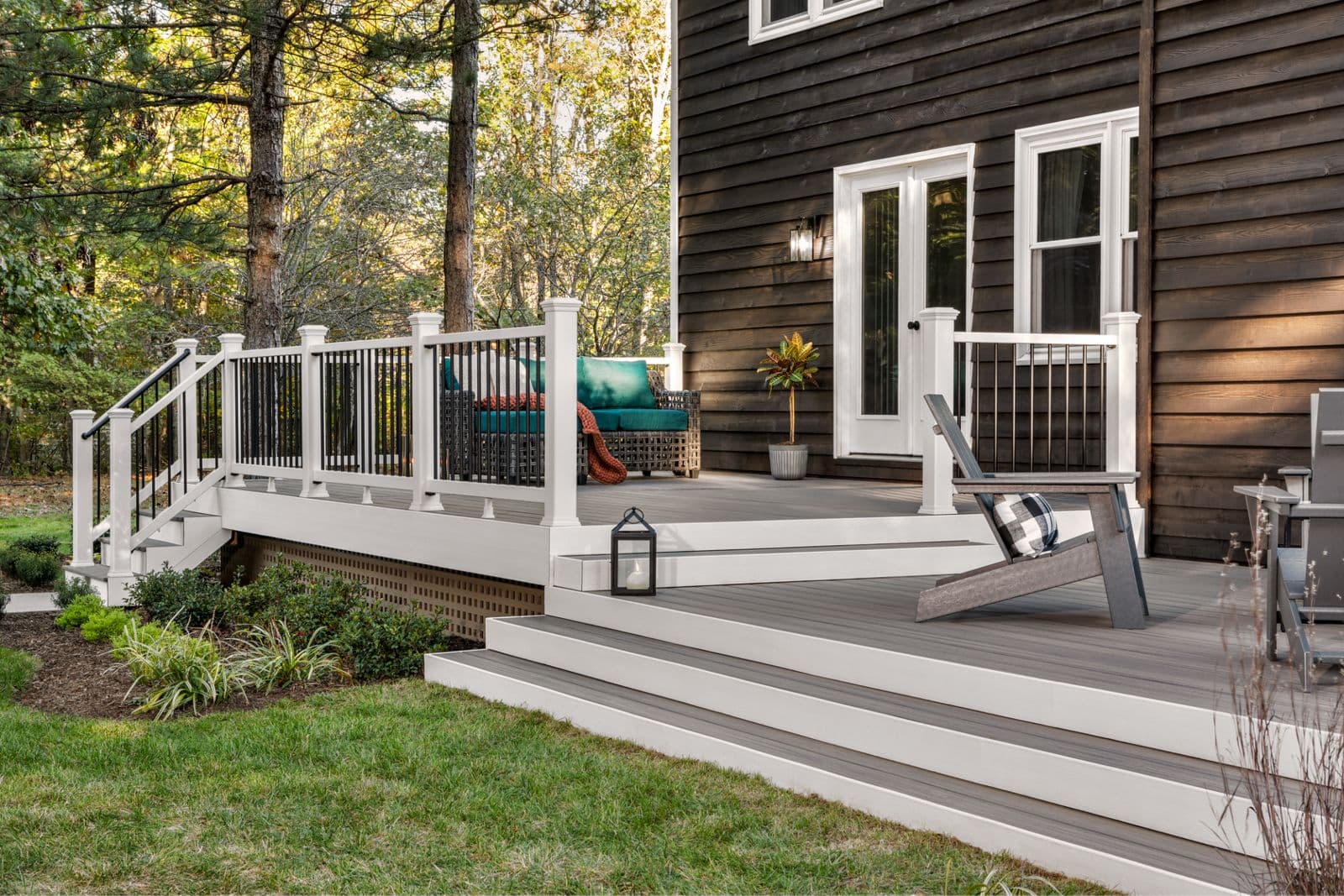
Prioritizing Durability and Low Maintenance for High-Traffic Areas
Hospitality decks are subjected to constant foot traffic, spills, and varying weather conditions. Traditional wood decking, while attractive, often requires frequent staining, sealing, and repair to withstand this wear. Trex composite decking, by contrast, is designed to reduce ongoing maintenance. Its protective shell, which caps three sides of the board, helps resist fading and staining, a critical factor for maintaining a polished appearance over time in commercial settings.
The composite material does not splinter, which contributes to a safer barefoot experience for guests. This is particularly important around pool areas, outdoor dining spaces, or resort walkways where guests may be walking without shoes. The manufacturing process ensures consistent board-to-board texture, which avoids unexpected variations that could create trip hazards.
Routine cleaning typically involves a soap-and-water wash, which simplifies maintenance protocols for hotel and restaurant staff. This low-maintenance cycle means less downtime for the deck and lower operational costs compared to the intensive care often required by natural wood.
Consider the Trex Transcend® Tropical line for areas where maximum durability and a vibrant, luxurious finish are desired. Its unyielding, three-side shell protection is formulated to maintain color and finish in demanding conditions. The Trex Select® Earth Tones line also offers high-performance shell technology with nature-inspired colors, suitable for mid-range applications.
Achieving Visual Consistency Across Outdoor Spaces
Maintaining a consistent aesthetic across all outdoor areas is vital for brand identity and guest experience in hospitality. Trex offers multiple lines and a broad palette of colors, enabling designers to select options that complement existing architecture and interior design themes. The protective shell on Trex boards locks pigment in, meaning the installed color is designed to remain stable over time.
For a cohesive look, it's important to coordinate decking with other outdoor elements like railings, trim, and fascia. Trex provides matching fascia and offers both grooved and square-edge boards, which can be integrated with hidden fastening systems or face screws, depending on the desired finish and installation requirements. This allows for a clean, uninterrupted surface or a more traditional fastened appearance.
When selecting colors, consider the overall design scheme. For example, the rich, multi-tonal hues of Trex Transcend® Tropical, such as Havana Gold or Lava Rock, can evoke a warm, high-end resort feel. For a more subtle, natural aesthetic, the Trex Enhance® Naturals line offers colors like Foggy Wharf or Coastal Bluff, inspired by natural wood grains. Always confirm physical sample availability to ensure color accuracy before making a final selection.
Designing for Guest Experience: Safety and Comfort
A hospitality deck must prioritize the comfort and safety of its guests. Beyond the splinter-free surface, consider how the deck integrates with other amenities. For instance, around a hotel pool, a deck surface that doesn't retain excessive heat is beneficial. While Trex composite decking is designed to be barefoot safe, its surface temperature in direct sunlight can still vary. Planning for shaded areas, umbrellas, or water features can enhance guest comfort.
Layout is also crucial. Ensure clear pathways for foot traffic, adequate space for dining tables or lounge chairs, and accessibility for all guests. The 1" x 5.5" board profile and available lengths (12, 16, 20 ft) allow for flexible design layouts, whether creating expansive dining patios or intimate lounge zones. Consider how board orientation can direct traffic flow or visually expand a space.
Proper drainage is another key design consideration, especially in areas prone to spills or rain. While Trex boards themselves are water-resistant, the substructure and overall deck design must allow for adequate water runoff to prevent pooling and maintain structural integrity. This also contributes to preventing slippery surfaces, enhancing guest safety.
Material Takeoff Example: A Hotel Courtyard Deck
Let's consider a hypothetical hotel courtyard deck project measuring 30 feet by 20 feet, requiring Trex Transcend® Earth Tones in Gravel Path. The total area is 600 square feet. We will use 1" x 5.5" grooved boards, typically available in 12, 16, and 20 ft lengths.
1. **Board Coverage:** Each 5.5-inch wide board covers 0.458 feet in width. For a 20-foot width, you'd need 20 ft / 0.458 ft/board ≈ 43.6 boards. Round up to 44 boards.
You can use a 20-foot board and a 12-foot board (with a 2-foot offcut) for each run, or strategically cut longer boards. For simplicity, if we primarily use 20-foot boards and minimize seams, we would need 44 boards for the main run. The remaining 10-foot sections would require additional boards.
3. **Refined Calculation:** For a 30-foot length, it's more efficient to use a combination of lengths. If we use 20-foot boards for the majority and 12-foot boards for the remaining length (requiring a 2-foot cut), then for each 30-foot run, we'd use one 20-foot board and one 12-foot board. This covers 32 feet, leaving a 2-foot offcut. Since we need 44 'rows' of boards, this would mean 44 x 20-foot boards and 44 x 12-foot boards for the main deck surface. This calculation assumes minimal waste and ideal cutting. Actual purchase quantities should account for cuts, waste factor (typically 5-10%), and potential damage.
4. **Fascia:** For a 30x20 ft deck, the perimeter is (30+20)*2 = 100 linear feet. Trex fascia is available in specific lengths. If using 12-foot fascia boards, you would need 100 ft / 12 ft/board ≈ 8.33 boards, so 9 fascia boards. Remember to account for corner cuts.
The quantity will depend on the square footage and specific fastener product. Consult the fastener manufacturer's guide for precise quantities per square foot.
This example is hypothetical. Always measure your specific project dimensions, account for any unique angles or features, and consult product installation guides for exact spacing and fastening requirements. A 5-10% waste factor is generally advisable for cuts and unforeseen issues.
Coastal and Winter Considerations for Hospitality Decks
Hospitality venues in coastal or winter-prone regions face additional environmental challenges. Coastal decks are exposed to salt air and humidity, while winter decks endure snow, ice, and freeze-thaw cycles. Trex composite decking is engineered to withstand various environmental conditions.
For coastal areas, the material's resistance to moisture absorption helps prevent issues like rot and insect damage that can plague natural wood in humid, salty environments. The capped surface also helps protect against UV degradation, which can be accelerated by sun exposure reflecting off water. While Trex is designed for durability, regular cleaning to remove salt buildup is still recommended to maintain its appearance.
In winter climates, Trex decking performs well under snow loads. The material does not absorb water and expand/contract like wood, which can lead to warping or cracking during freeze-thaw cycles. It's important to ensure proper substructure design to support snow loads and allow for adequate drainage as snow melts. When clearing snow, avoid using metal shovels or sharp tools that could potentially damage the deck surface. Plastic shovels are generally recommended. Always check the manufacturer's specific guidelines for snow removal and de-icing products.
For both scenarios, proper ventilation beneath the deck is crucial. This allows air circulation, helping to prevent moisture buildup and ensuring the longevity of both the decking and the substructure.
Coordinating with Complementary Outdoor Products
A hospitality outdoor space often includes more than just decking. To create a fully integrated and functional area, consider how Trex decking can be complemented by other outdoor materials. For example, railings are a key safety feature and design element. Trex offers its own railing systems designed to match their decking lines, ensuring a cohesive look. Alternatively, metal or glass railings can be paired with Trex decking for a modern aesthetic.
For areas requiring additional shade, pergolas or awnings can be integrated. Selecting materials that harmonize with the deck's color and texture enhances the overall design. Outdoor furniture should be chosen for both comfort and durability, capable of withstanding commercial use and outdoor conditions.
Lighting is also essential for evening use and ambiance. Incorporate discreet deck lighting, pathway lights, or overhead fixtures to create an inviting atmosphere. Finally, consider landscaping elements such as planters and non-invasive greenery to soften the hardscape and add natural appeal. Ensure planters are placed on protective pads to prevent moisture buildup or staining on the deck surface, and that the deck's structural integrity is not compromised by heavy items.
Before you order
- Define the primary use cases for the deck (dining, lounge, pool surround, walkway).
- Assess traffic levels and potential for spills/wear.
- Determine the desired aesthetic and color palette (e.g., natural wood tones, modern grey).
- Review available Trex lines (Enhance, Select, Transcend) for features, finish depth, and color range.
- Confirm board profile (grooved or square edge) and desired fastening method (hidden clips or face screws).
- Plan for fascia and trim to match or complement the deck boards.
- Consider the local climate (coastal, winter) and plan for appropriate installation and maintenance.
- Evaluate accessibility requirements and safety features (e.g., non-splintering surface, railing needs).
- Factor in long-term maintenance protocols and staffing capabilities.
- Obtain physical samples of chosen Trex colors to verify appearance.
- Calculate material quantities for boards, fascia, and fasteners, including a waste factor.
- Coordinate with other outdoor elements: railings, lighting, furniture, landscaping.
Confirm installation details, approved uses and warranty terms in the current instructions for the exact product and profile. Your installer should verify the substrate, structure and applicable project requirements.
Questions to help you decide
What are the primary differences between Trex decking lines for hospitality use?
Trex offers several lines, including Enhance, Select, and Transcend. All share a recycled core and a low-maintenance shell. The key differences lie in the finish depth, the range of colors, and specific performance characteristics. Enhance is an entry-level option, Select offers a mid-range with hallmark performance, and Transcend is the flagship line with elevated aesthetics and the highest level of performance, including a more robust three-sided capping. For high-traffic hospitality areas, Transcend and Select lines are often preferred due to their enhanced durability and aesthetic options.
How does Trex decking contribute to a sustainable hospitality project?
Trex decking is made from 95% recycled content, primarily reclaimed wood fiber and plastic film that would otherwise go to landfills. This commitment to recycling offers a strong green story for hospitality businesses looking to emphasize their environmental responsibility. Its durability and low-maintenance requirements also contribute to sustainability by reducing the need for frequent material replacement or chemical treatments like stains and sealants.
What maintenance is required for Trex decking in a commercial setting?
Trex decking is designed for low maintenance. Routine care typically involves a simple soap-and-water wash to keep the surface clean. Unlike traditional wood, it does not require oiling, staining, or sealing to maintain its warranty. For commercial settings with high traffic or potential for spills, prompt cleaning of spills is recommended. Always refer to the specific Trex cleaning guidelines to ensure proper care and to validate the warranty.
Plan Your Hospitality Deck with Trex Decking
Ready to design a durable, low-maintenance, and visually appealing outdoor space for your hotel or restaurant? Request a material quote today. Provide your project dimensions, desired Trex profile, and ZIP code to confirm current availability and service options.
Request a material quote →