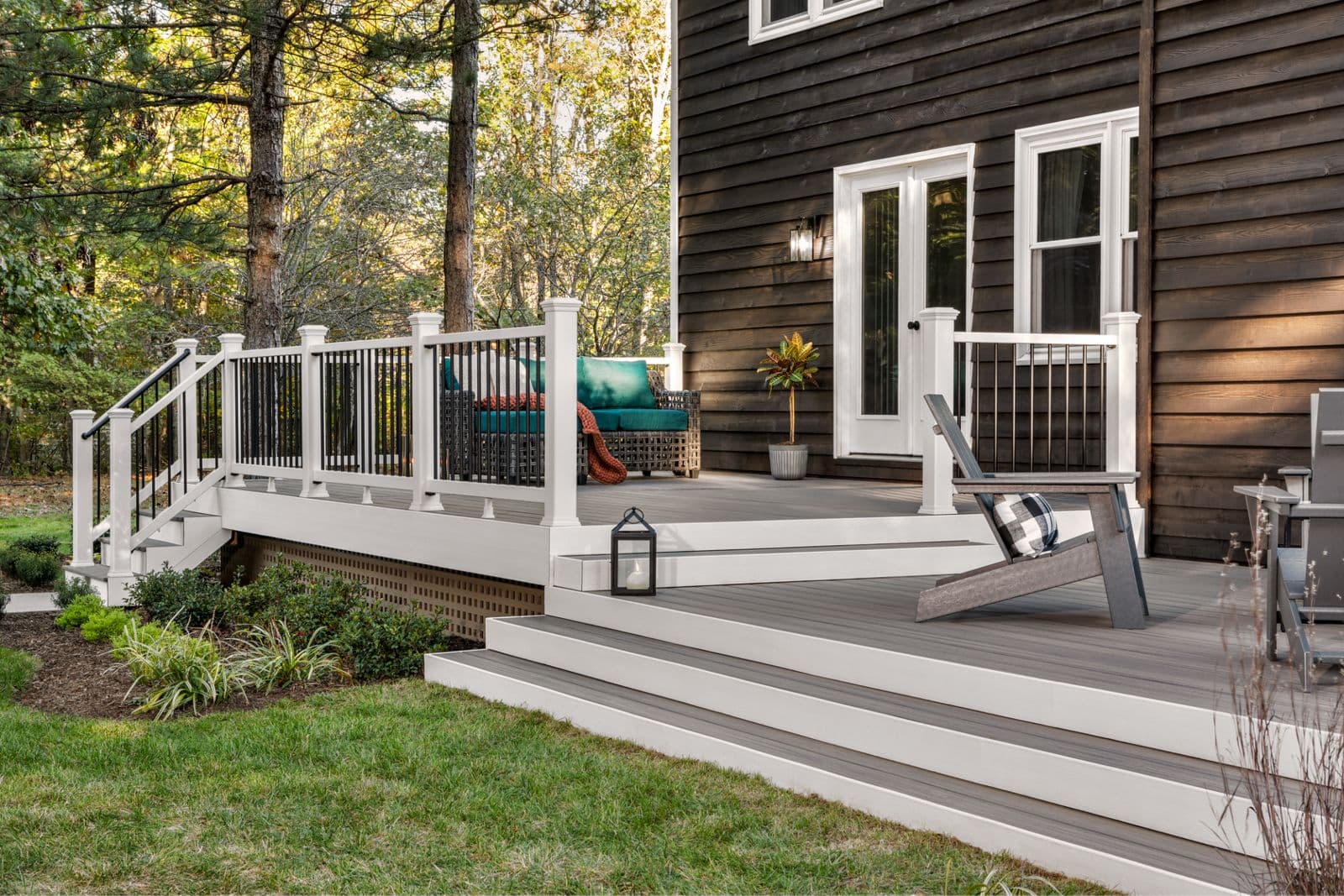
Understanding Trex Deck Board Profiles
Trex decking is available in two main board profiles: grooved and square-edge. This distinction is crucial for hidden fastener compatibility.
Grooved boards feature a continuous groove along both side edges of the board. These grooves are specifically designed to accept hidden fastening clips, which slide into the groove and secure the board to the joist below. All Trex lines, including Enhance, Select, and Transcend, offer grooved board options. These are the most common choice for hidden fastener installations. The profile is typically 1" x 5.5".
Square-edge boards have flat, ungrooved sides, similar to traditional lumber. They are primarily intended for face-fastening with screws or for use in areas where hidden fasteners are not practical, such as perimeter boards, stairs, or fascia. While some specialized hidden fastening systems exist for square-edge boards, they often involve routing a groove or using a different installation method than the standard grooved board clips.
Trex Hidden Fastening Systems
Trex offers a proprietary hidden fastening system designed specifically for their grooved deck boards. This system typically involves clips that secure the boards to the joists, providing consistent spacing and a uniform appearance.
The Trex Universal Hidden Fastener is a common option. These clips are designed to fit into the side grooves of Trex grooved deck boards and attach to the top of the joist. They help maintain consistent spacing between boards and allow for easy installation. The clip's design can also facilitate removal of individual boards if necessary for maintenance or repair, though this depends on the specific clip and installation method.
It is important to use the manufacturer's recommended hidden fastening system or other approved compatible systems to ensure the integrity of your deck and to maintain any applicable product warranties. Using non-approved fasteners could compromise the deck's stability and void the warranty.
Substructure Compatibility
The type of substructure you are building on also influences hidden fastener choice. Most hidden fastening systems are designed to be installed on standard wood joists (e.g., pressure-treated lumber). The clips typically screw directly into the top of the joist.
If you are using a different substructure material, such as steel framing, you will need to verify that the chosen hidden fasteners are compatible. Some clips may require specific screws or adapters for metal framing. Always consult the fastener manufacturer's instructions for compatibility with your substructure material.
Worked Example: Calculating Hidden Fastener Needs
Consider a hypothetical deck project measuring 12 feet by 10 feet, using Trex grooved deck boards.
First, calculate the number of deck boards needed. For a 12-foot (144-inch) width, you would need approximately 144 / 5.75 = 25.04 boards. Round up to 26 boards to ensure full coverage and account for perimeter boards or cuts.
Next, determine the number of joists.
It is always recommended to purchase an additional 10-15% for waste, mistakes, or future repairs. In this case, approximately 220-230 clips would be a reasonable estimate.
Remember, this example is for illustrative purposes. Always measure your specific project dimensions and consult the fastener manufacturer's guidelines for precise quantities.
Considerations for Special Areas
While hidden fasteners are excellent for the main deck surface, certain areas often require face-fastening:
Perimeter Boards: The first and last deck boards, especially if they are square-edge, typically need to be face-fastened or secured with specialized perimeter clips that are then concealed by fascia.
Stairs: Stair treads are usually face-fastened for maximum security and code compliance.
Fascia and Risers: These trim pieces are always face-fastened, often with color-matched screws for a neat appearance.
Hidden fasteners are designed for optimal performance on the main field of the deck where grooved boards are used. Always plan for a combination of fastening methods to cover all aspects of your deck project.
Before you order
- Confirm your Trex decking line (Enhance, Select, Transcend).
- Verify if your chosen Trex boards are grooved or square-edge.
- Ensure the hidden fastener system is compatible with grooved Trex boards.
- Check if the fasteners are suitable for your substructure material (e.g., wood, steel).
- Calculate the number of clips needed based on deck dimensions and joist spacing.
- Plan for face-fastening or specialized clips for perimeter boards, stairs, and fascia.
- Review manufacturer installation instructions for specific spacing and installation requirements.
Confirm installation details, approved uses and warranty terms in the current instructions for the exact product and profile. Your installer should verify the substrate, structure and applicable project requirements.
Questions to help you decide
Can I use hidden fasteners with Trex square-edge boards?
Trex square-edge boards are primarily designed for face-fastening. Standard hidden clips are made for grooved boards. If you wish to use hidden fasteners with square-edge boards, you would typically need to route a groove into the board or use a specialized system, which may not be universally compatible or recommended by the manufacturer. It's best to use grooved boards for hidden fastening.
Are all hidden fasteners compatible with all Trex lines?
Most standard Trex-branded hidden fasteners are designed for universal compatibility with all grooved Trex decking lines (Enhance, Select, Transcend). However, always double-check the product specifications for both your chosen Trex line and the fastener system to confirm compatibility, especially if considering third-party fasteners.
Do hidden fasteners provide specific board spacing?
Yes, a significant benefit of most hidden fastening systems is that they automatically provide consistent spacing between deck boards. The design of the clips includes a built-in gap, ensuring uniform spacing across your deck surface, which is crucial for proper drainage and ventilation, and contributes to a professional finished look.
Ready to Plan Your Trex Decking Project?
Request a material quote with your project dimensions, exact Trex profile, and ZIP code. We can help confirm current availability and service options for your area. Explore our full range of Trex decking and complementary products today.
Request a material quote →