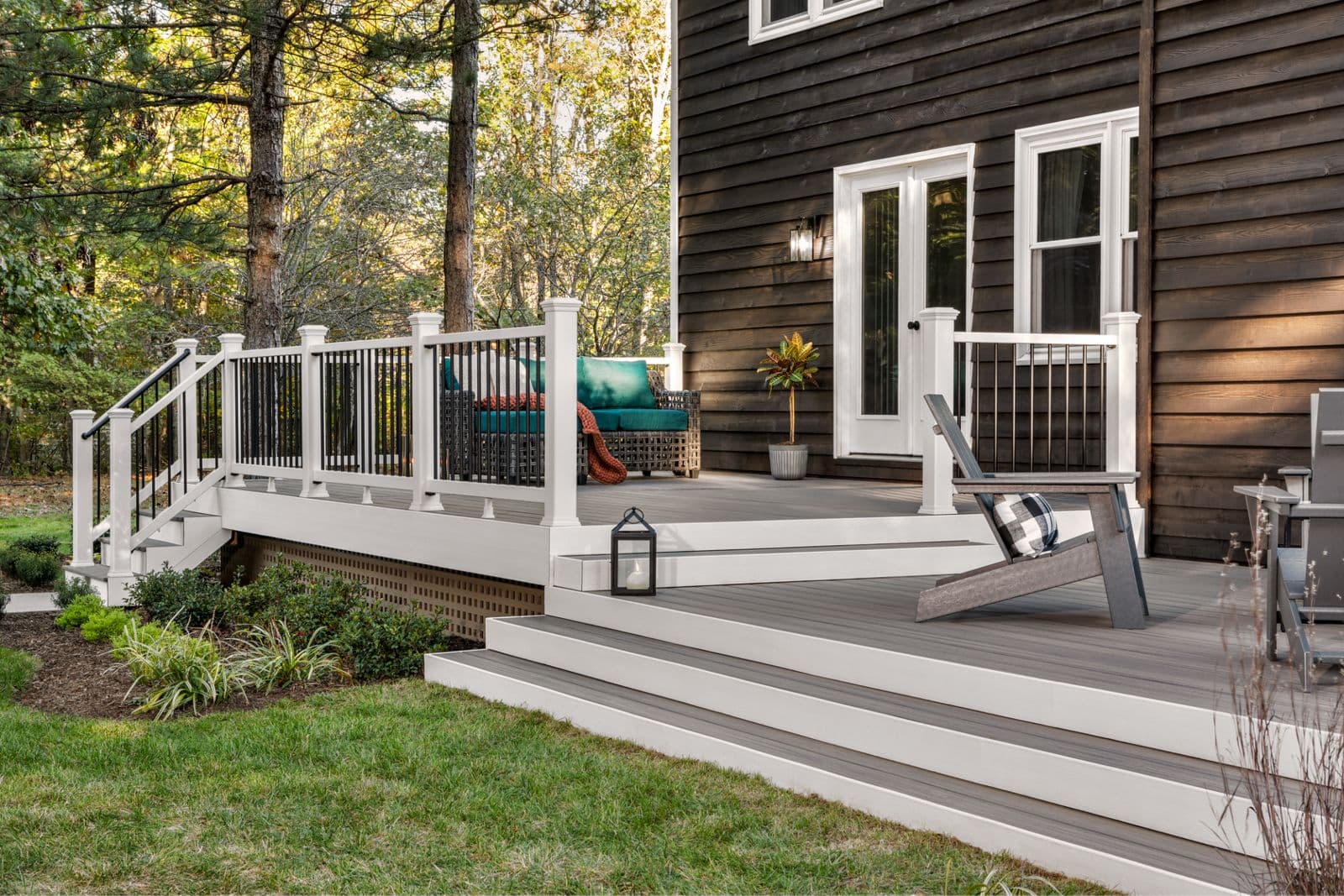
Why Consider Resurfacing with Trex Decking?
Trex composite decking offers a low-maintenance alternative to traditional wood, featuring 95% recycled content and a durable capped surface that resists fading and staining. For many, the appeal of Trex lies in its promise of no oiling, staining, or sealing, requiring only a soap-and-water wash for maintenance. This makes it an attractive choice for upgrading an older wood deck.
Resurfacing can be a cost-effective way to achieve this upgrade. By retaining a sound existing frame, you reduce the amount of demolition, disposal, and new material purchasing, particularly for structural lumber. This can accelerate project timelines and minimize disruption to your outdoor living area. The key is confirming the existing frame is truly ready for a new surface.
Trex offers various lines, including Enhance, Select, and Transcend, each with distinct aesthetics and performance features, all sharing a recycled core and low-maintenance shell. These options allow you to select a finish that complements your home while benefiting from the material's durability. You can explore the full range of Trex decking options at our main Trex product page.
Initial Frame Assessment: Condition First
Before considering any dimensions or spacing, the structural integrity of your existing deck frame is paramount. A thorough inspection for rot, insect damage, or significant warping is critical. Pay close attention to joists, beams, ledger boards, and support posts. Use a screwdriver or awl to probe wood components, especially near fasteners and ground contact points, checking for soft spots.
Any signs of significant deterioration in load-bearing elements mean the frame is likely unsuitable for reuse. Repairing extensive damage can sometimes be more costly and less reliable than building a new frame. Cracks, splits, or twisting in joists can compromise the stability of the new deck surface. Ensure all fasteners are secure and free from corrosion.
Also, assess the overall stability of the frame. Does it wobble or feel bouncy? Are there any visible signs of settling or shifting? A professional inspection by a qualified builder or engineer is highly recommended if you have any doubts about the frame's structural soundness. This step is non-negotiable for safety and longevity.
Understanding Joist Spacing for Trex Decking
Trex composite boards are designed for specific support requirements to ensure proper performance and maintain warranty coverage. Incorrect joist spacing can lead to excessive deflection, sagging, or premature wear of the decking boards.
These requirements are standard for many composite decking products, but it is essential to consult the specific installation guide for the Trex line you choose, as requirements can vary by product series or board profile.
Measure the distance between the centers of your existing joists across the entire deck surface. If your current joist spacing exceeds these recommendations, you will need to add additional blocking or sister new joists alongside the existing ones to meet the necessary support. This modification can add complexity and cost to your project, so factor it into your decision.
Deck Height, Ventilation, and Drainage
Consider the existing deck height relative to any adjacent structures, such as doorways or steps. The new Trex boards will add thickness, and you need to ensure adequate clearance and proper transition. If the existing frame is too low, you might need to add sleepers or adjust the frame height, which can be a significant undertaking.
Proper ventilation under the deck is crucial for the longevity of both the Trex decking and the substructure. Trex composite decking, like most decking materials, needs air circulation to prevent moisture buildup.
Also, verify that the existing frame provides adequate drainage. Water should not pool on or under the deck. Any areas prone to standing water will need to be addressed before installing new decking. This might involve grading the ground beneath the deck or ensuring proper flashing around the ledger board.
Worked Example: Resurfacing a 10x12 Foot Deck
Let's consider a hypothetical 10-foot by 12-foot existing deck frame you wish to resurface with Trex Transcend® Tropical decking. You've inspected the frame, and it appears structurally sound with no rot or damage.
These new joists must be securely fastened to the existing beams or ledger board, matching the height and level of the original joists. This modification ensures that the Trex boards have adequate support every 12 or 16 inches, preventing deflection and ensuring the long-term performance of your new deck surface. This example highlights that even a structurally sound frame may require modifications to meet modern decking product specifications.
Before you order
- Is the existing deck frame structurally sound with no rot, insect damage, or significant warping?
- Are all existing fasteners secure and free from corrosion?
- If joist spacing is insufficient, are you prepared to add new joists or blocking?
- Is there adequate ventilation beneath the deck and proper drainage?
- Will the new Trex decking thickness allow for proper clearances (e.g., doorways, steps)?
- Have you consulted local building codes for any specific resurfacing requirements?
- Have you obtained a professional inspection if there are any doubts about the frame's integrity?
Confirm installation details, approved uses and warranty terms in the current instructions for the exact product and profile. Your installer should verify the substrate, structure and applicable project requirements.
Questions to help you decide
What if my existing deck frame has wider joist spacing than Trex recommends?
Failing to do so can void your Trex warranty and lead to premature sagging or damage to the decking boards. This modification should be done by a qualified professional to ensure structural integrity.
Can I mix new lumber with old lumber in my deck frame?
Yes, you can typically mix new lumber with old lumber for frame modifications, provided the existing lumber is in good condition and all new lumber is appropriately sized and treated for outdoor use. Ensure that any new wood used for structural components matches or exceeds the strength and durability of the existing frame elements. All connections between old and new lumber must be securely fastened with appropriate hardware.
Do I need to check local building codes for a deck resurfacing project?
Yes, always check with your local building department before starting any deck project, including resurfacing. While replacing only the decking surface might seem minor, some jurisdictions consider it a renovation that requires a permit, especially if structural modifications (like adding joists) are involved. Local codes also dictate requirements for railings, stairs, and clearances, which may need to be updated to current standards during your project.
Ready to Plan Your Trex Deck Resurfacing?
Before you commit to your project, request a material quote with your project dimensions, desired Trex profile, and ZIP code. Confirm current availability and service options with our team.
Request a material quote →