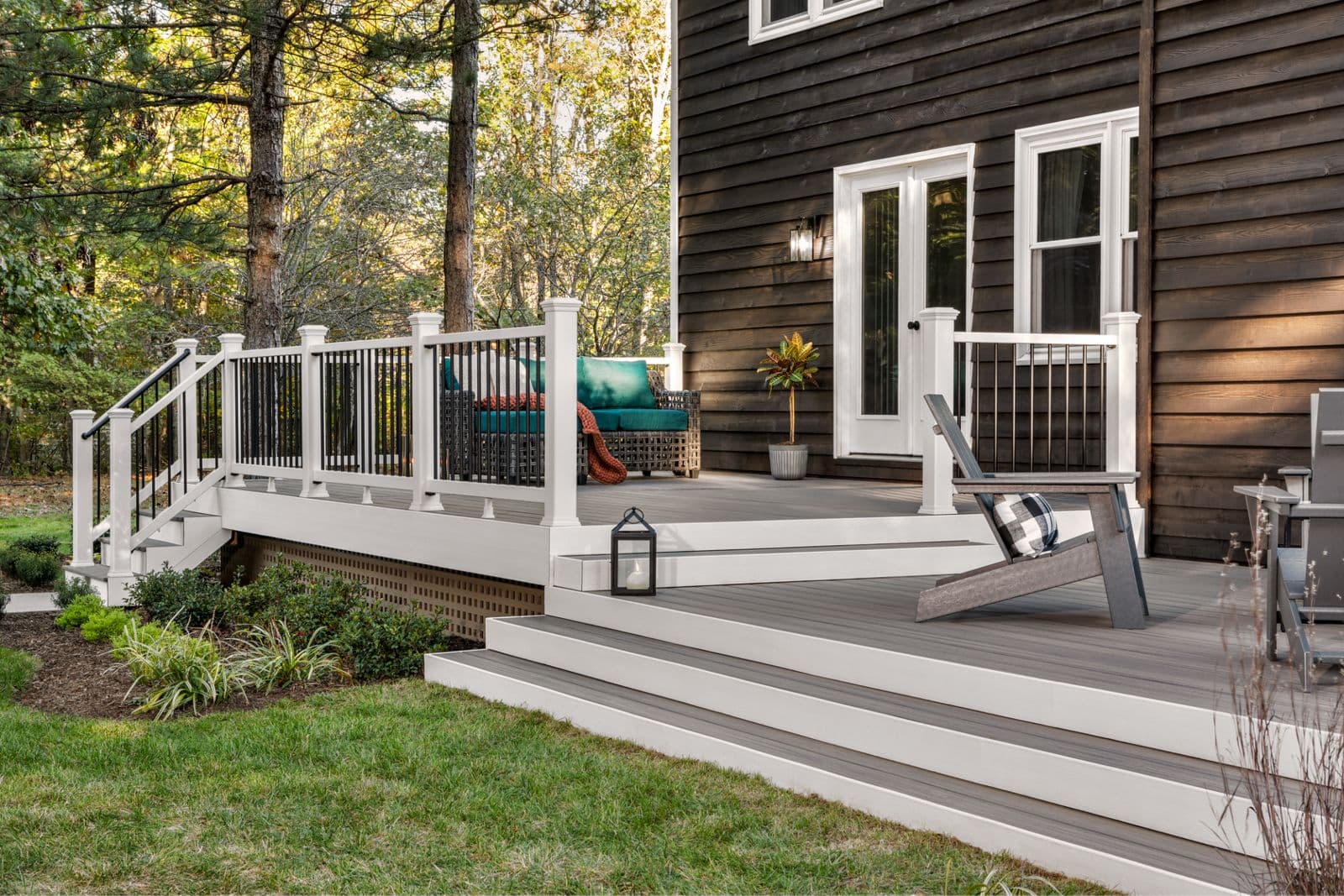
The Core of Trex Decking: Capped Composite Technology
Trex decking is a wood-plastic composite product, distinguished by its protective capping. This capping is a key factor in its finished appearance and long-term performance. Each Trex board features a high-performance shell that encases a core made from 95% recycled materials, including reclaimed wood fiber and plastic film. This shell is engineered to resist fading and staining, contributing significantly to the deck's consistent look over time.
The capping is applied to three sides of the board, meaning the top and two long edges are protected. The underside and cut ends are not capped. This design is integral to the product's low-maintenance claims and the stability of its color and texture. Understanding this construction helps clarify why certain finishes and treatments are not necessary or recommended for Trex products.
Trex boards are available in both grooved and square-edge profiles, typically 1" x 5.5". While the profile affects the installation method (hidden clips for grooved, face screws for square edge), it does not alter the surface finish or the capping technology.
Factory Finishes: Enhance®, Select®, and Transcend® Lines
Trex offers several product lines, each with unique factory finishes and color palettes, catering to different aesthetic preferences and budgets. The finish depth and color range vary by line, but all share the underlying capped composite technology.
The Enhance® line, including Enhance® Basics and Enhance® Naturals, provides traditional and multi-tonal colors. Enhance Basics features classic tones like Clam Shell, Beach Dune, and Saddle. Enhance Naturals expands on this with nature-inspired, multi-tonal options such as Foggy Wharf, Rocky Harbor, Toasted Sand, and Coastal Bluff. These lines are designed to be lightweight and offer an authentic wood-grain appearance.
The Select® Earth Tones line incorporates hallmark high-performance shell technology with nature-inspired colors like Pebble Grey, Winchester Grey, Saddle, Woodland Brown, and Madeira.
The flagship Transcend® line includes Transcend® Earth Tones and Transcend® Tropical. Transcend Earth Tones offers elevated aesthetics with colors such as Gravel Path, Rope Swing, and Vintage Lantern. Transcend Tropical maintains vibrant colors and a luxurious finish, with options like Havana Gold, Island Mist, Tiki Torch, Spiced Rum, and Lava Rock. These tropical-inspired colors often feature streaking or variations that mimic exotic hardwoods, providing a distinctive high-end look.
Natural Weathering and Color Stability
A key advantage of Trex decking's capped composite construction is its resistance to the significant color changes and weathering typical of natural wood. The protective shell locks pigment in, meaning the color installed is largely what you can expect to see years later. This stability helps avoid the graying or silvering that often occurs with untreated wood.
While Trex is designed for color stability, some initial, subtle lightening may occur during the first few months of exposure to sunlight and weather. This is a normal part of the material's stabilization process and is generally minimal. After this initial period, the color is expected to remain consistent.
Unlike wood, Trex does not require staining, sealing, or painting to maintain its color or protect its surface. These treatments are not necessary and can even void the manufacturer's warranty if not specifically approved. The factory finish is intended to be the permanent surface appearance.
Maintenance for Appearance Retention
Maintaining the appearance of Trex decking primarily involves simple cleaning. A soap-and-water wash is typically sufficient to keep the surface looking its best and to fulfill warranty conditions. This low-maintenance requirement is a significant factor in its appeal, as it eliminates the recurring effort and cost associated with refinishing wood decks.
Periodic cleaning helps remove dirt, pollen, and other environmental debris that can accumulate on the surface and dull its appearance. For more stubborn stains, specific composite deck cleaners may be used, but it's important to verify compatibility to avoid damaging the surface or affecting its finish. Pressure washing can be used with caution, but at a low-pressure setting to avoid etching the surface.
The protective capping also means Trex decking is resistant to splinters, which contributes to its
Worked Example: Selecting a Finish for a Backyard Deck
Consider a hypothetical project for a 12-foot by 20-foot backyard deck, connecting to a home with light-colored siding and dark trim. The homeowner desires a contemporary look with minimal maintenance.
Initial thought: A classic wood look. However, the homeowner wants to avoid the yearly staining and sealing associated with natural wood.
Decision Point: Trex composite decking. Now, which finish?
Option 1: Trex Enhance® Basics in "Clam Shell". This is a lighter, traditional color. It would offer a clean, bright contrast to the dark trim and complement the light siding. The finish is consistent and subtle, providing a uniform base.
Option 2: Trex Transcend® Tropical in "Lava Rock". This is a deeper, multi-tonal brown with subtle streaking, mimicking exotic hardwood. It would create a more dramatic, rich look, potentially tying into the dark trim more closely. The varied tones would add visual interest.
Trade-offs: "Clam Shell" offers a uniform, bright appearance, which might show dirt more readily but feels expansive. "Lava Rock" provides a sophisticated, multi-tonal finish that could hide minor debris better but might absorb more heat in direct sun. The choice depends on whether a uniform, lighter aesthetic or a rich, varied, darker look is preferred for the specific context of the home and local climate.
For this project, the homeowner chose "Lava Rock" from the Transcend Tropical line, valuing the deeper, multi-tonal appearance and its ability to integrate with the existing dark trim, creating a cohesive, upscale outdoor living space without the maintenance burden of natural wood.
Before you order
- Consider the overall architectural style of your home: Traditional, modern, or rustic?
- Evaluate existing exterior colors: Siding, trim, roof, and hardscaping.
- Think about desired visual impact: Do you want the deck to blend in or stand out?
- Consider sun exposure: Darker colors may absorb more heat than lighter ones.
- Review available Trex lines: Enhance®, Select®, and Transcend® each offer distinct finishes.
- Examine physical samples: Digital swatches are a starting point; see actual boards in different lighting.
- Understand the specific color variations within multi-tonal boards.
- Confirm maintenance expectations: Trex is low-maintenance, but specific cleaning may be needed for certain stains.
- Discuss with your contractor: Ensure your chosen finish is compatible with your project design and installation plan.
Confirm installation details, approved uses and warranty terms in the current instructions for the exact product and profile. Your installer should verify the substrate, structure and applicable project requirements.
Questions to help you decide
Does Trex decking fade over time?
Trex decking is designed with a high-performance protective shell that resists fading. While some minimal, initial lightening may occur during the first few months of exposure, the color is engineered to remain consistent for many years, unlike traditional wood decking which can significantly fade or gray.
Can I paint or stain my Trex deck?
No, painting or staining Trex decking is not recommended. The product is manufactured with its finished color and surface appearance built into the protective cap. Applying paint or stain can void the manufacturer's warranty and may not adhere properly or last as intended. Regular cleaning with soap and water is sufficient to maintain its appearance.
How does the finish of Trex Transcend Tropical differ from Trex Enhance Naturals?
Trex Transcend Tropical boards feature a deeper, often multi-tonal, luxurious finish with streaking designed to mimic exotic hardwoods, offering a premium aesthetic. Trex Enhance Naturals also provides multi-tonal, nature-inspired colors but generally with a more understated, authentic wood-grain appearance, aiming for a lighter, more traditional look.
Ready to Plan Your Trex Deck?
Request a material quote with your project dimensions, desired Trex profile, and ZIP code. We can confirm current availability and service options for your area. Explore our full range of Trex decking products and complementary materials today.
Request a material quote →