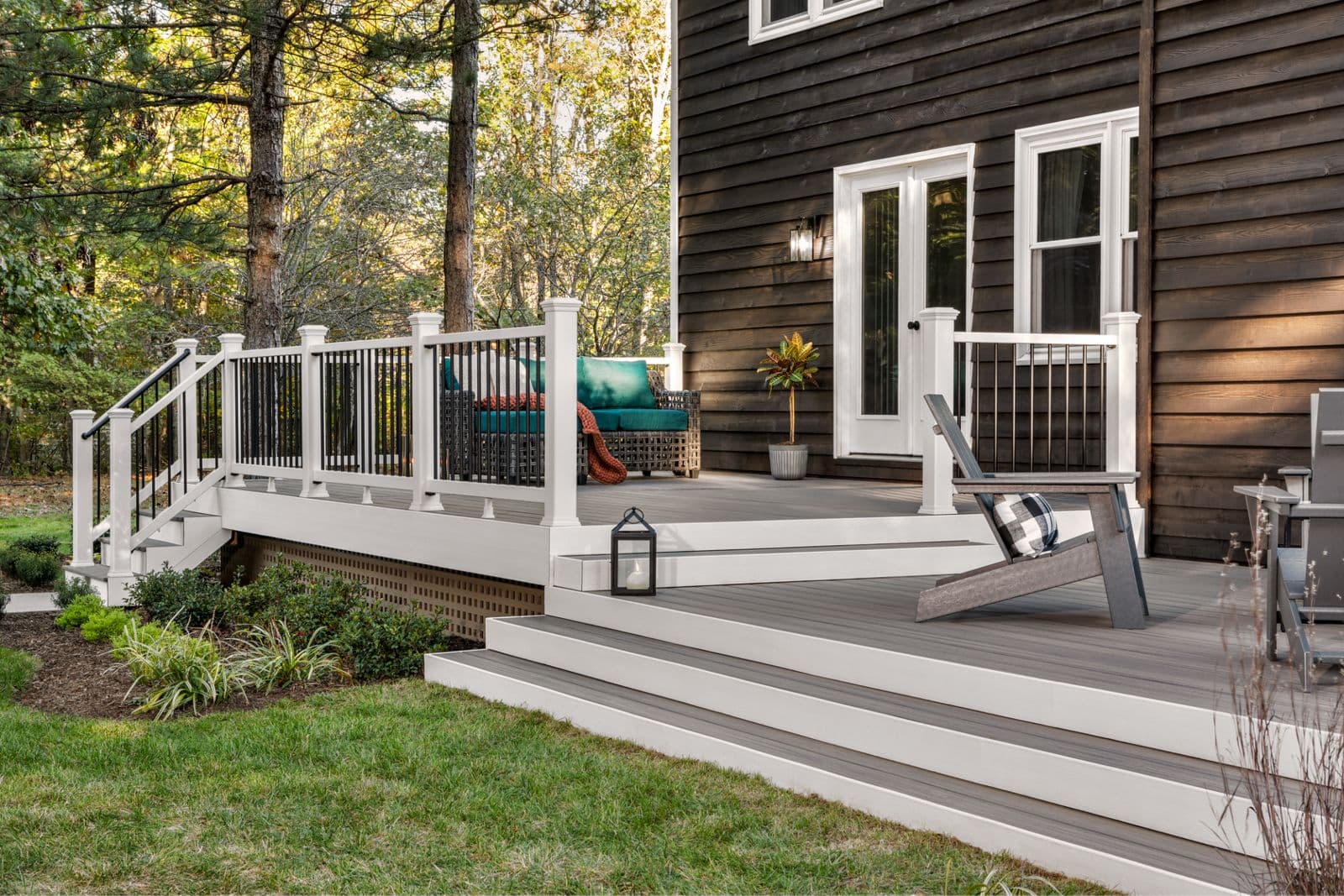
Why Choose Face-Fastening for Trex Decking?
Face-fastening, where screws are driven directly through the deck board into the joist below, offers a robust connection. While hidden fastening systems are popular for their seamless look, face-fastening provides a direct, mechanical attachment that can be advantageous in certain situations, such as perimeter boards, stair treads, or where specific structural requirements dictate.
Trex composite decking, made from 95% recycled materials, is engineered to resist rot, splinters, and insect damage, making it a low-maintenance choice. When properly face-fastened, this durability extends to the connection points, contributing to the overall longevity of the deck. Trex offers both grooved and square-edge boards, with square-edge boards typically used for face-fastening applications, especially for the deck's edges and stairs.
Approved Fasteners for Trex Decking
Not all screws are suitable for face-fastening Trex decking. Using the correct type of fastener is critical to prevent damage to the composite material and ensure a secure hold. Trex recommends specific composite deck screws designed to penetrate the material without mushrooming or cracking. These screws often feature a specific thread pattern and head design that helps to create a clean finish.
Your installer should use screws explicitly approved for composite decking. These are typically coated or made from stainless steel to resist corrosion, which is vital for outdoor applications. Confirming the fastener type with your installer ensures compatibility with Trex's material composition and helps maintain the deck's warranty.
Pilot Holes: A Critical Step
For most face-fastening applications with Trex decking, pre-drilling pilot holes is a critical step. Unlike wood, composite materials can be prone to splitting or cracking if screws are driven directly without proper preparation, especially near the ends or edges of boards. Pilot holes guide the screw and reduce stress on the material.
The size of the pilot hole is as important as drilling it. It should be slightly smaller than the screw's shank diameter but large enough to prevent undue stress. Your installer should follow Trex's specific recommendations for pilot hole diameters, which can vary based on the board profile and fastener type. This precision ensures a clean installation and prevents future issues.
The Role of Plugs in Face-Fastening
To achieve a more finished appearance, face-fastened Trex decking can incorporate screw plugs. These plugs are small pieces of composite material, often color-matched to the deck boards, that are inserted into a counter-sunk hole after the screw is driven. The result is a deck surface with minimal visible fasteners.
Plug systems typically involve a specialized bit that drills a pilot hole and a counter-sink in a single step, creating a cavity for the screw head and the plug. After the screw is installed, the plug is glued into place, providing a clean, flush finish. This method requires careful execution to ensure the plugs sit flush and are consistently applied across the deck surface. Discuss this aesthetic option with your installer to determine if it aligns with your project's vision.
Worked Example: Face-Fastening a Trex Deck Stair Tread
Consider a hypothetical deck stair tread measuring 48 inches wide by 12 inches deep, using a Trex square-edge board. For this application, face-fastening provides a secure attachment.
First, the installer would mark the screw locations, ensuring they are consistently placed and adequately distanced from the board edges. For each screw location, a specialized composite deck screw bit would be used to drill a pilot hole and counter-sink. After drilling, a Trex-approved composite deck screw would be driven through the board into the joist, ensuring it is flush or slightly recessed. Finally, if a plug system is desired, a color-matched Trex plug would be glued into the counter-sunk hole, covering the screw head. This process would be repeated for all six screw locations on this single stair tread, ensuring a secure and aesthetically pleasing finish.
Installation Checklist for Your Installer
Before your installer begins, review these points to ensure a successful face-fastened Trex decking project:
Confirm the use of Trex-approved composite deck screws.
Verify that pilot holes will be drilled for all face-fastened connections.
Discuss the specific pilot hole diameter recommended for your chosen Trex board and fasteners.
Inquire about the use of a plug system for a cleaner finish and confirm the availability of color-matched plugs.
Ensure the installer is familiar with the correct torque settings for driving screws to avoid over-tightening or stripping.
Confirm the spacing of screws and their distance from board edges to prevent splitting.
Before you order
- Have you selected square-edge Trex boards for face-fastening applications?
- Are the chosen fasteners specifically approved for composite decking and compatible with Trex products?
- Will pilot holes be drilled for all face-fastened screws?
- Is the pilot hole diameter correct for the chosen screws and Trex board type?
- Do you want to incorporate a plug system for a hidden fastener look on face-fastened boards?
- Have you discussed screw placement and spacing with your installer?
- Are there any specific structural requirements that necessitate face-fastening over hidden clips for certain areas of your deck?
Confirm installation details, approved uses and warranty terms in the current instructions for the exact product and profile. Your installer should verify the substrate, structure and applicable project requirements.
Questions to help you decide
Can I use regular wood screws to face-fasten Trex decking?
No, it is not recommended to use regular wood screws. Trex composite decking requires specialized composite deck screws designed to prevent mushrooming, cracking, and to provide a secure, long-lasting hold in the material. Using incorrect screws can compromise the deck's integrity and void the warranty. Always use fasteners approved by Trex for composite decking.
Is face-fastening required for any part of a Trex deck?
While many Trex deck boards can be installed with hidden fasteners, face-fastening is often recommended or required for specific applications. These commonly include perimeter boards, stair treads, fascia boards, and sometimes the first and last boards of a deck section. Always consult the specific Trex installation guide for your chosen product line to determine exact requirements.
How do I make face-fastened screws less visible?
To minimize the visibility of face-fastened screws, you can use a color-matched plug system. This involves counter-sinking the screw head and then inserting a small, color-matched composite plug into the hole, which is typically glued in place for a flush and clean finish. Alternatively, some composite deck screws are designed with smaller heads or specific coatings to blend in with the decking surface.
Ready to Plan Your Trex Decking Project?
Request a material quote with your project dimensions, exact Trex profile, and ZIP code. We can help you confirm current availability and service options for your decking needs.
Request a material quote →