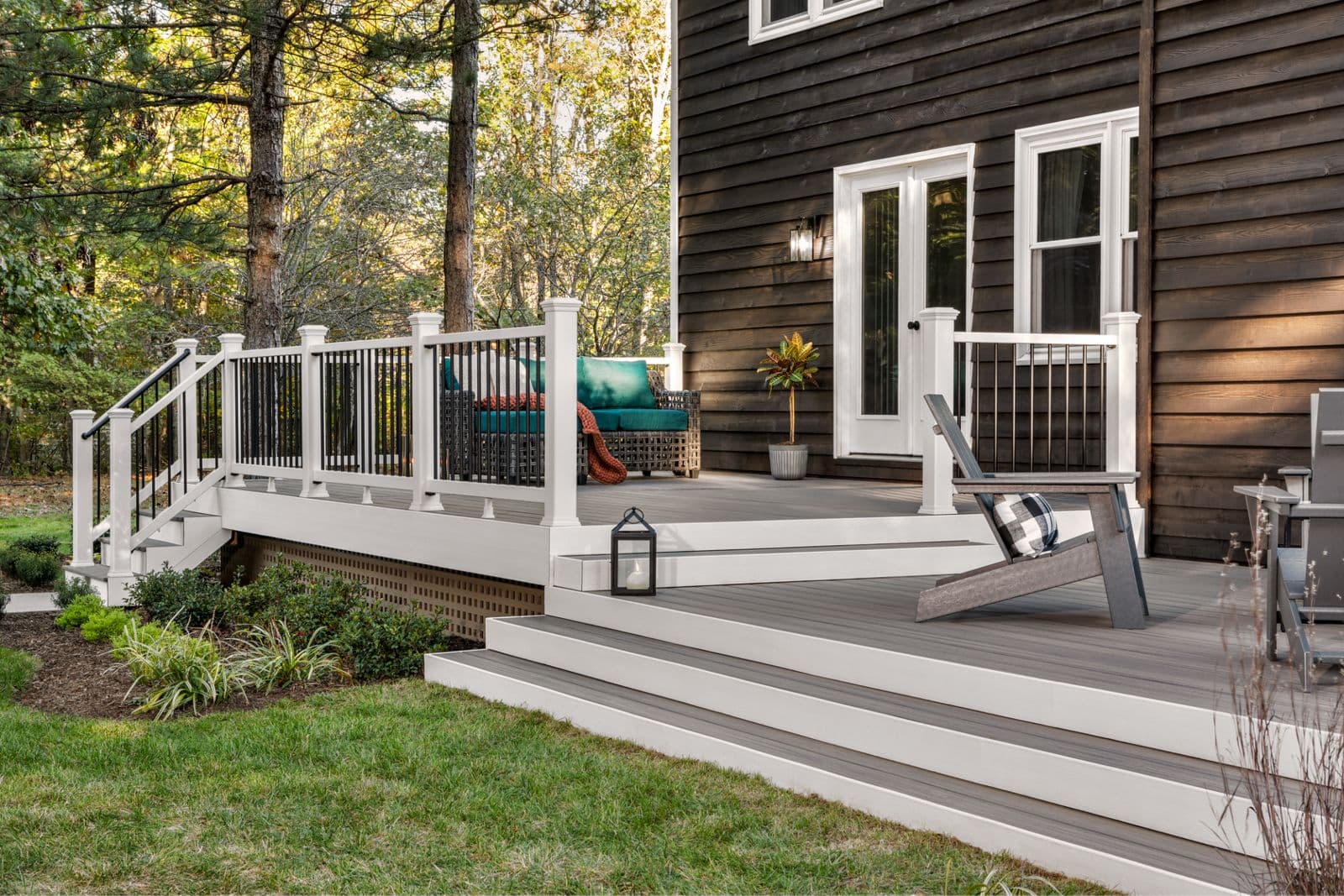
Understanding the Covered Porch Environment
A covered porch, by definition, is sheltered from direct overhead sun and precipitation. This creates a different microclimate for your decking compared to an open deck. While Trex decking is designed for outdoor exposure, the reduced direct sunlight and potential for less airflow in covered areas can influence color perception, temperature variations, and the drying time of the deck surface.
Consider how the covered space will be used. Will it primarily house outdoor furniture, or will it see heavy foot traffic? The level of shelter can also impact how the decking interacts with moisture, such as humidity or splashes from rain entering from the sides. Proper ventilation, both above and below the deck boards, remains important to prevent moisture accumulation, even in covered settings.
Trex Decking Lines for Covered Porches
Trex composite decking is made from 95% recycled materials, combining reclaimed wood fiber and plastic film. All Trex lines feature a protective shell on at least three sides, designed for resistance to fading and staining. This capping helps maintain the board's appearance over time, which is beneficial in a covered environment where consistent aesthetics are often a priority.
The various Trex lines—Enhance® Basics, Enhance® Naturals, Select® Earth Tones, Transcend® Earth Tones, and Transcend® Tropical—offer different finish depths, color ranges, and visual textures. For a covered porch, where the decking is often viewed up close and in varying light conditions, the nuanced grain patterns and multi-tonal colors of lines like Enhance® Naturals or Transcend® Tropical might be considered to add visual interest. These lines aim to mimic the appearance of natural wood.
Each line is available in 1-inch by 5.5-inch grooved or square-edge profiles and comes in 12, 16, or 20-foot lengths. The grooved boards are typically used with hidden fastening systems for a clean, screw-free surface, while square-edge boards are suitable for face-fastening or as perimeter boards and stair treads.
For specific color palettes, Trex offers options such as "Clam Shell," "Beach Dune," and "Saddle" in Enhance® Basics; "Foggy Wharf" and "Toasted Sand" in Enhance® Naturals; "Pebble Grey" and "Woodland Brown" in Select® Earth Tones; "Gravel Path" and "Vintage Lantern" in Transcend® Earth Tones; and "Havana Gold" and "Island Mist" in Transcend® Tropical. Digital swatches are a starting point; confirm physical sample availability before making a final decision, as colors can appear differently under porch lighting.
Coordinating Thresholds and Adjacent Surfaces
A key aspect of covered porch planning is the transition from interior spaces and to any adjacent uncovered outdoor areas. The height of your Trex deck boards should align appropriately with interior thresholds to minimize trip hazards and create a smooth flow. This often means careful planning of the sub-structure to achieve the desired finished deck height.
If your covered porch connects to an open deck or patio, consider how the Trex decking will meet these other surfaces. You might choose to extend the same Trex color and line for continuity, or select a complementary material or color to define zones. For example, a Trex Transcend® Tropical board like "Lava Rock" could provide a rich contrast to lighter pavers on an adjoining patio. Ensure that any transitions between different materials are designed to manage drainage effectively and prevent water pooling.
Fascia boards, also available from Trex, can be used to finish the perimeter of the deck, providing a clean edge that matches or complements the deck boards. This detail is important for the overall aesthetic, especially where the porch deck is visible from the ground level.
Furniture and Layout Considerations
The covered nature of a porch means furniture and decor often remain in place for extended periods. Trex decking is designed to be barefoot safe, with no splinters and a consistent texture. This makes it a suitable surface for outdoor living and dining areas. When arranging furniture, consider the weight distribution, especially for heavy items like large planters or outdoor kitchens. While Trex decking is durable, the underlying structure must be designed to support all intended loads.
The layout of your Trex boards can influence the perception of space. Running boards parallel to the house can make a porch feel longer, while a diagonal layout might create a sense of width or add visual interest. For a covered porch, where the ceiling often defines the space, coordinating the decking layout with the overhead structure or ceiling panels can enhance the overall design.
Worked Example: A 10x14 Foot Covered Porch
Let's consider a hypothetical 10-foot by 14-foot covered porch. The homeowner desires a low-maintenance, wood-look surface that connects to an existing interior door and an adjacent concrete patio.
**Step 1: Board Selection.** The homeowner chooses Trex Enhance® Naturals in "Toasted Sand" for its authentic wood-grain appearance and multi-tonal color, which will complement the home's exterior.
**Step 2: Layout and Dimensions.** The porch dimensions are 10 feet by 14 feet. To minimize seams and waste, 14-foot long boards will be oriented parallel to the 14-foot side of the porch. The 10-foot width will require multiple boards. Since each board is 5.5 inches wide, approximately 22 boards (10 feet / 5.5 inches per board ≈ 21.8) would be needed across the 10-foot width. For a clean edge, square-edge boards will be used for the perimeter, and grooved boards for the interior, installed with hidden fasteners.
**Step 3: Quantity Calculation.** For the 14-foot length, we need 22 full 14-foot boards. Total linear footage: 22 boards * 14 feet/board = 308 linear feet. To account for cuts and potential waste, adding 10-15% is prudent. For fascia, assuming a 14-foot front and two 10-foot sides, we would need 14 + 10 + 10 = 34 linear feet of matching fascia. This would translate to two 20-foot fascia boards.
**Step 4: Threshold Coordination.** The existing interior threshold is 1.5 inches above the structural framing. The Trex boards are 1 inch thick.
**Step 5: Patio Connection.** The Trex deck will meet the concrete patio with a slight step down. A matching Trex fascia board will be used as a trim piece at this transition to provide a finished appearance and protect the edge of the decking.
Before you order
- Determine the primary use of your covered porch (e.g., dining, lounging, entry zone).
- Assess existing thresholds from interior spaces and adjacent outdoor areas.
- Consider the level of natural light and ventilation within the covered space.
- Select a Trex decking line and color that complements your home's exterior and interior.
- Decide on board orientation (parallel, diagonal) to optimize space and minimize waste.
- Plan for fascia and trim details to create a finished look.
- Verify the structural requirements for your chosen layout and anticipated loads.
- Account for proper drainage and ventilation underneath the deck surface.
Confirm installation details, approved uses and warranty terms in the current instructions for the exact product and profile. Your installer should verify the substrate, structure and applicable project requirements.
Questions to help you decide
Does Trex decking require special maintenance in a covered porch environment?
Trex decking is designed for low maintenance, requiring only a soap-and-water wash. While covered porches offer protection from direct elements, it's still important to keep the deck clean from debris and ensure adequate ventilation to prevent moisture build-up underneath the boards. The protective capping helps resist staining and fading regardless of direct sun exposure.
Can I mix different Trex colors or lines on a covered porch?
Yes, you can mix different Trex colors or even lines to create custom patterns or define areas. For example, a picture-frame border in a contrasting color can highlight the perimeter of the porch. Ensure that any mixed materials are compatible in terms of thickness and installation requirements. Always confirm physical samples as digital representations can vary.
How does the covered environment affect the color of Trex decking over time?
Trex's protective shell is designed to lock in pigment and resist fading. In a covered environment, the decking will experience less direct UV exposure than a fully open deck, which can help maintain its initial color vibrancy. However, all outdoor materials will undergo some degree of natural weathering. The consistent color retention is a key advantage of capped composite decking.
Ready to Plan Your Trex Covered Porch?
Request a material quote for your project. Provide your project dimensions, desired Trex profile and color, and your ZIP code to confirm current availability and service options for Trex decking and complementary materials.
Request a material quote →