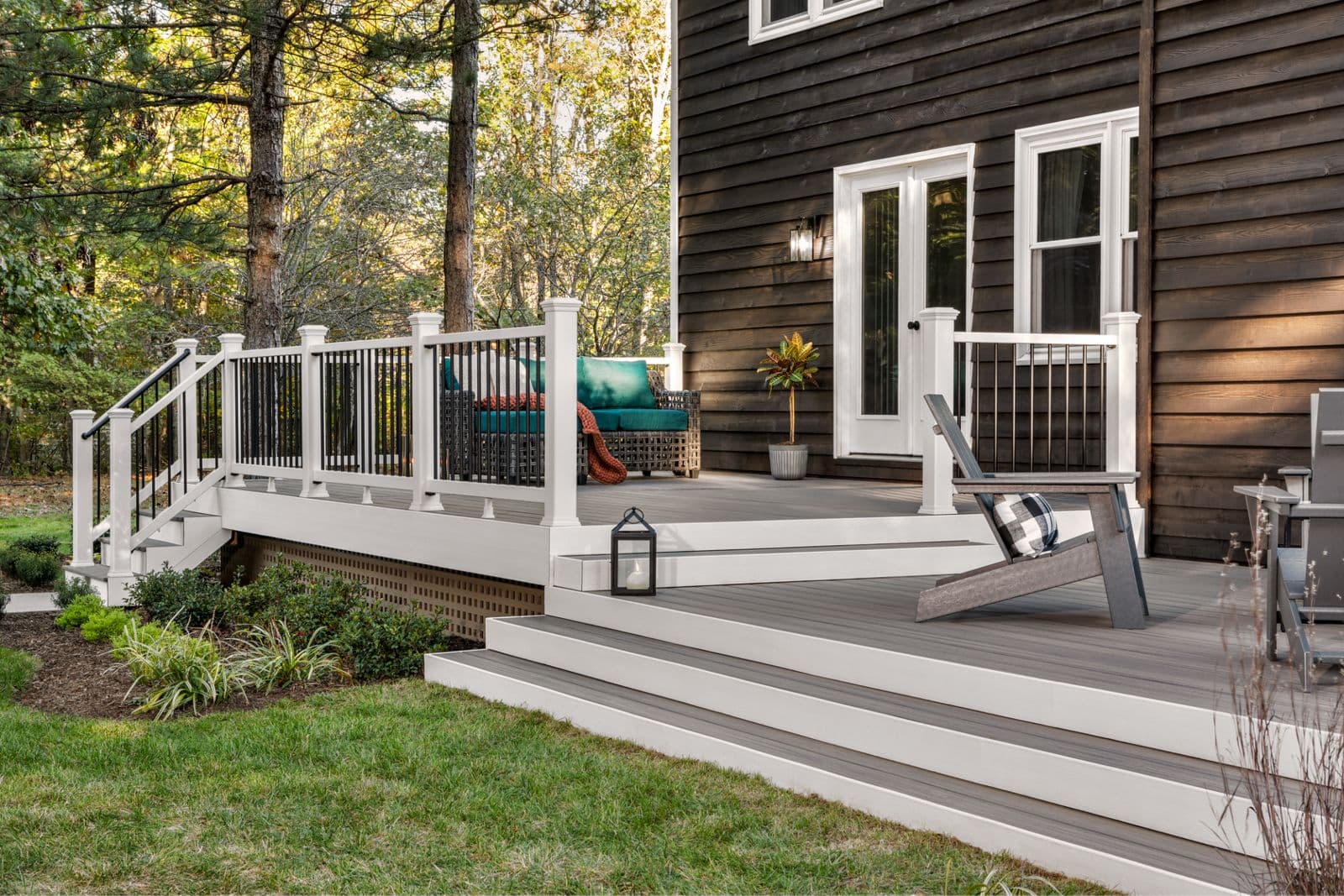
Understanding Trex Composite Decking in Coastal Environments
Trex composite decking is engineered with a protective shell that encases a core made from reclaimed wood fiber and recycled plastic film. This capping is crucial for performance, as it shields the core from moisture, insects, and UV radiation. In a coastal setting, this shell plays a vital role in resisting the corrosive effects of salt spray and humidity.
The various Trex lines, including Enhance, Select, and Transcend, all feature this capped construction. While the finish depth and color range may vary, the fundamental resistance to environmental degradation remains consistent across the product family. This inherent protection makes Trex a suitable candidate for coastal applications where traditional wood might require more frequent and intensive maintenance.
However, the presence of salt can still impact the deck's surface and the fasteners used. Regular cleaning with soap and water is recommended to remove salt deposits and maintain the deck's appearance and warranty validity. This routine care is particularly important in coastal areas where salt accumulation is common.
Material Selection: Trex Lines and Coastal Suitability
All Trex decking lines are designed with a three-sided cap, providing a protective barrier. For coastal projects, the key consideration often shifts from the core material's resistance to the aesthetic and practical aspects of the cap itself.
The Trex Enhance line, including Enhance Basics (Clam Shell, Beach Dune, Saddle) and Enhance Naturals (Foggy Wharf, Rocky Harbor, Toasted Sand, Coastal Bluff), offers a range of traditional and multi-tonal colors. These can blend well with natural coastal palettes.
Trex Select Earth Tones (Pebble Grey, Winchester Grey, Saddle, Woodland Brown, Madeira) provides a mid-range option with hallmark high-performance shell technology. For a more elevated aesthetic and finish, the Trex Transcend line, with its Earth Tones (Gravel Path, Rope Swing, Vintage Lantern) and Tropical colors (Havana Gold, Island Mist, Tiki Torch, Spiced Rum, Lava Rock), offers vibrant options with enhanced durability.
When selecting a color, consider how it will interact with direct sunlight and reflect heat. Lighter colors may absorb less heat, which can be a practical consideration for bare feet on hot coastal days.
Fastening Systems for Coastal Exposure
The choice of fasteners is critical for any deck, but especially so in a coastal environment where corrosion can be accelerated. Trex decking supports both hidden clip systems and face screws.
Hidden fastening systems create a clean, fastener-free surface and are generally preferred for aesthetic reasons. These clips are typically made from stainless steel or coated materials designed to resist corrosion. It is crucial to use only manufacturer-approved hidden fasteners that are explicitly rated for outdoor, and ideally, coastal use.
When face-fastening, using high-quality, corrosion-resistant screws is non-negotiable. Standard galvanized or coated screws may not offer adequate protection and could lead to premature corrosion and staining of the deck boards.
Always confirm the specific fastener recommendations from Trex and the fastener manufacturer for coastal environments. Improper fasteners can compromise the deck's structural integrity and potentially void portions of the decking warranty.
Planning for Ventilation and Drainage in Coastal Settings
Proper ventilation beneath a deck is essential in any climate, but it is particularly important in humid coastal areas. Adequate airflow helps prevent moisture buildup, which can lead to mold, mildew, and potential issues with the substructure. Ensure there is sufficient space between the ground and the deck joists, and that obstructions to airflow are minimized.
Good drainage is also crucial. The deck design should allow water to shed away from the home and prevent pooling on or under the deck. While Trex decking itself is resistant to water absorption, standing water can still lead to debris accumulation and create an environment conducive to biological growth on the surface, requiring more frequent cleaning.
Consider the spacing between deck boards. While Trex provides guidelines for board spacing to allow for thermal expansion and contraction, this spacing also facilitates drainage and airflow, which is beneficial in coastal conditions. Always adhere to the manufacturer's specific installation instructions for spacing.
A Hypothetical Coastal Deck Project: Material Takeoff Example
Consider a hypothetical 16-foot by 10-foot coastal deck project using Trex Transcend Tropical decking in 'Island Mist'. This deck will have a picture frame border and be attached to a coastal home. The project requires 16-foot long boards.
For the 14-foot length, this would translate to 17 x 14 ft = 238 linear feet. Since boards come in 16-foot lengths, we would need 17 boards x 16 ft = 272 linear feet for the main field, allowing for cuts.
For the picture frame border, two 16-foot boards and two 10-foot boards are needed. Using 16-foot boards for all border pieces would mean purchasing four 16-foot boards (two cut to 10 ft with 6 ft offcuts).
Total linear feet of decking: 272 (field) + 64 (border) = 336 linear feet. This translates to 21 x 16-foot Trex Transcend Tropical boards. Fascia boards for the perimeter would also be necessary, typically matching the decking color.
This example simplifies the calculation; actual projects require precise measurements, a detailed cut plan, and consideration of joist spacing, waste factors, and specific fastener system requirements. Always round up to the nearest full board length for purchase.
Warranty Considerations for Coastal Environments
This warranty is a significant advantage for coastal homeowners, as it provides protection against common issues like discoloration from UV exposure and staining from environmental factors. The warranty is also transferable, which can be a benefit if the property changes ownership.
However, it is crucial to review the full warranty document for any specific exclusions related to extreme environmental conditions or improper installation. While Trex products are designed for durability, adherence to installation guidelines, including proper fastening and ventilation, is essential to maintain warranty validity. Neglecting recommended cleaning practices, particularly in salt-rich environments, could also impact warranty claims related to surface appearance.
Always confirm the current warranty terms and conditions directly with Trex or your supplier, especially regarding any nuances for coastal applications.
Before you order
- Have you confirmed that all chosen fasteners (hidden clips, face screws) are rated for coastal, salt-exposure environments?
- Is the deck design incorporating adequate ventilation beneath the deck to prevent moisture buildup?
- Does the deck plan ensure proper drainage to prevent standing water on or around the deck boards?
- Have you reviewed the Trex warranty document for any specific exclusions or conditions applicable to coastal installations?
- Are you prepared for routine cleaning with soap and water to remove salt deposits and maintain the deck's appearance?
- Have you considered the heat absorption of your chosen Trex color in direct coastal sunlight?
- Is the deck substructure also built with materials resistant to coastal conditions (e.g., pressure-treated lumber, marine-grade fasteners)?
- Have you accounted for all necessary accessories, such as fascia boards and matching trim, that are also suitable for coastal use?
Confirm installation details, approved uses and warranty terms in the current instructions for the exact product and profile. Your installer should verify the substrate, structure and applicable project requirements.
Questions to help you decide
Does salt water affect Trex decking?
While Trex decking is designed with a protective cap that resists moisture and environmental elements, prolonged exposure to salt spray and accumulation can lead to salt deposits on the surface. These deposits should be regularly cleaned with soap and water to maintain the deck's appearance and prevent potential issues. The core material is protected by the cap, but the surface still requires care.
What kind of fasteners should I use for Trex decking in a coastal area?
For coastal applications, it is crucial to use corrosion-resistant fasteners. For hidden fastening systems, ensure the clips are specifically rated for outdoor and coastal use. Always consult Trex's installation guide and the fastener manufacturer's specifications for coastal environments.
How often should I clean my Trex deck in a coastal environment?
The frequency of cleaning depends on the level of salt spray and debris accumulation. In highly exposed coastal areas, more frequent cleaning, perhaps monthly or quarterly, with soap and water is advisable to remove salt deposits, sand, and other environmental residues. Regular cleaning helps maintain the deck's appearance and supports the validity of the warranty.
Plan Your Coastal Trex Deck Project
Ready to build a durable, low-maintenance deck for your coastal home? Request a material quote for Trex decking, including your project dimensions, desired profile, and ZIP code. We can help you confirm current availability and service options for your specific needs. Explore our full range of Trex products and complementary decking materials.
Request a material quote →