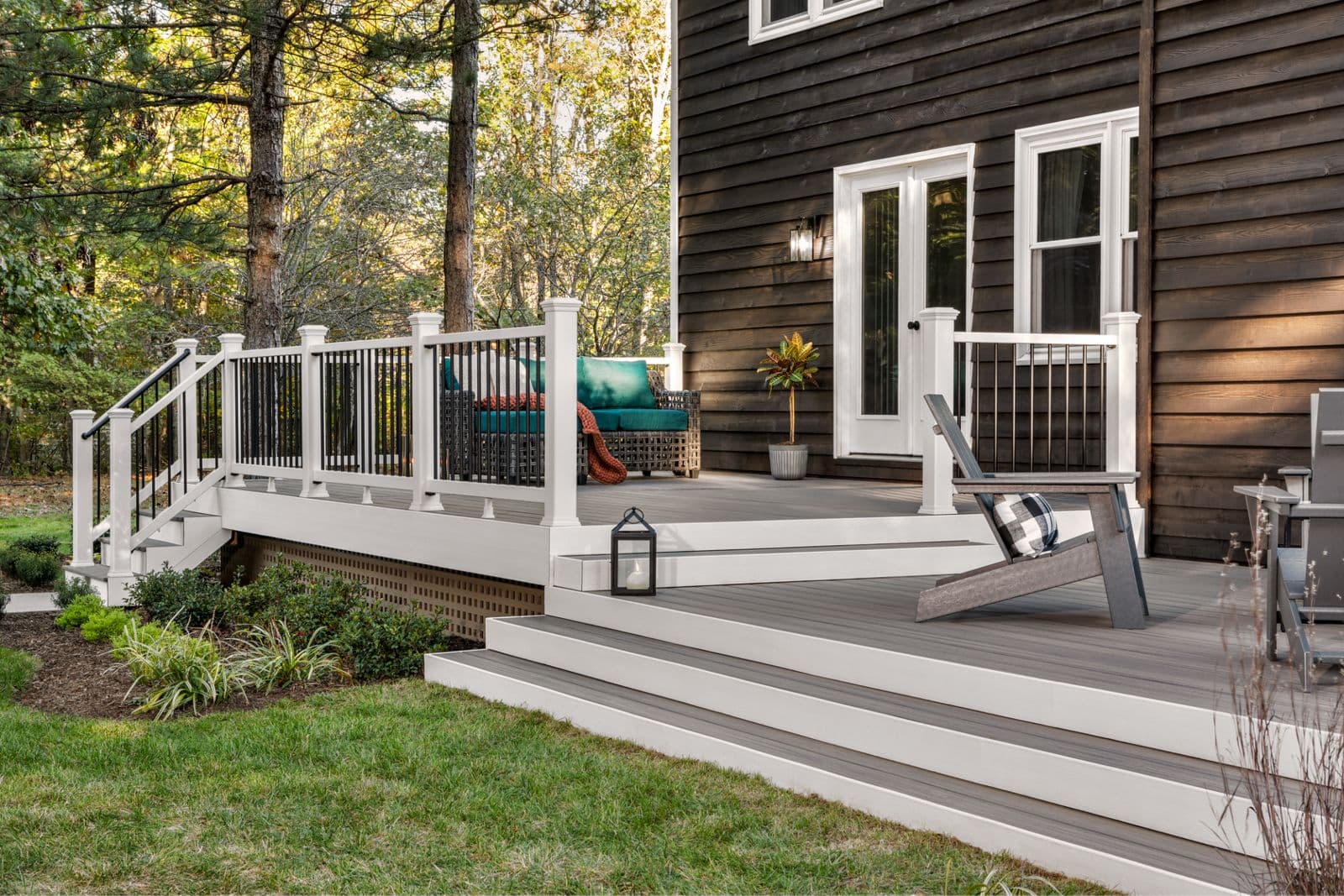
Standard Trex Decking Board Dimensions
Trex composite decking is primarily available in a nominal 1-inch thickness and 5.5-inch width, often referred to as a 1x6 profile. This dimension applies to both grooved and square-edge boards across lines such as Trex Enhance, Select, and Transcend. The 5.5-inch width is a widely adopted standard in composite decking, designed to mimic traditional lumber dimensions while offering the benefits of a capped composite material. These boards are typically supplied in lengths of 12, 16, or 20 feet.
This standard width provides a versatile foundation for most deck designs, allowing for straightforward installation with compatible hidden fastening systems or face screws. The uniform dimensions ensure a consistent appearance and simplify planning for various deck shapes and sizes.
Visual Impact of Board Width on Deck Aesthetics
The width of your decking boards significantly influences the overall aesthetic and perceived scale of your deck. A standard 5.5-inch width creates a balanced, classic appearance that integrates well with most architectural styles. It offers a familiar visual rhythm that is neither too busy nor overly expansive.
For smaller decks or areas where you wish to create a sense of greater length or width, the standard board often works effectively. The consistent lines draw the eye, making a compact space feel more deliberate. Conversely, on very large decks, the standard width can contribute to a grander, more expansive feel without appearing overwhelming.
Considering Narrower Board Profiles
While 5.5 inches is the prevailing standard, some Trex lines or specialized applications may offer narrower profiles. These narrower boards, if available, can introduce a different visual dynamic. A narrower board can create a more intricate, detailed surface, often preferred in modern or minimalist designs. They can also be useful for intricate patterns or when integrating with other design elements that require a finer scale.
It is important to confirm the exact availability of narrower profiles within the specific Trex line you are considering, as they are not universally offered across all collections. Always verify the precise dimensions and compatibility with fastening systems before making a selection.
Worked Example: Calculating Board Quantities for a 10x12 Foot Deck
Let's consider a hypothetical deck project measuring 10 feet (120 inches) by 12 feet (144 inches). We will use standard Trex boards with a nominal width of 5.5 inches.
If the boards are laid along the 10-foot dimension:
Number of boards needed across the 10-foot width = 120 inches / 5.75 inches per board 20.87. We round up to 21 boards.
Each board needs to be 12 feet long. So, you would need 21 boards, each 12 feet in length. Since Trex boards come in 12, 16, or 20-foot lengths, you would purchase 21 of the 12-foot boards.
If the boards are laid along the 12-foot dimension:
Number of boards needed across the 12-foot width = 144 inches / 5.75 inches per board 25.04. We round up to 26 boards.
Each board needs to be 10 feet long. Since Trex boards come in 12, 16, or 20-foot lengths, you would purchase 26 of the 12-foot boards and cut them to 10 feet, resulting in 2 feet of offcut per board. Some of these offcuts might be reusable for other parts of the project, such as shorter sections or repairs, but the primary purchase quantity is 26 boards.
This example illustrates how board orientation and the effective coverage width (including gaps) directly influence the total number of boards required. Always account for waste and potential cuts when ordering.
Planning for Fascia and Trim Boards
Beyond the main decking surface, consider how board width impacts fascia and trim. Trex offers matching fascia boards, which are typically thinner and designed to finish the perimeter of the deck structure. While these are distinct from the main decking boards, their coordination in color and texture is important.
The choice of main decking board width won't directly dictate fascia dimensions, but it's part of the overall visual scheme. A consistent, well-planned edge treatment enhances the finished look of any deck. Ensure that you order coordinating fascia with your chosen decking line and color.
For additional outdoor projects, consider coordinating materials like hardwood decking or PVC decking, which can offer different aesthetic possibilities for other areas of your property. Explore options such as Ipe hardwood for a natural timber look or specialized composite decking for unique applications.
Before you order
- Confirm the exact board width available for your chosen Trex decking line.
- Consider the visual impact of the chosen width on your deck's overall size and design.
- Calculate the number of boards needed, factoring in both board width and required spacing.
- Account for waste, cuts, and potential offcuts in your material order.
- Verify the availability of matching fascia and trim boards for a cohesive finish.
Confirm installation details, approved uses and warranty terms in the current instructions for the exact product and profile. Your installer should verify the substrate, structure and applicable project requirements.
Questions to help you decide
What is the standard width of Trex decking boards?
The standard nominal width for most Trex composite decking boards, including lines like Enhance, Select, and Transcend, is 5.5 inches. This is often referred to as a 1x6 profile.
How does board width affect my deck design?
The board width influences the visual rhythm and perceived scale of your deck. Standard 5.5-inch boards offer a classic, balanced look suitable for most designs. Narrower boards, if available, can create a more intricate or modern aesthetic, while wider boards might make a deck feel more expansive.
Do I need to account for spacing between Trex boards when calculating quantities?
Yes, it is crucial to account for the recommended spacing between boards. Always refer to the specific product installation guidelines for exact spacing recommendations.
Ready to Plan Your Trex Decking Project?
Request a material quote with your project dimensions, desired Trex profile, and ZIP code. We can help confirm current availability and service options.
Request a material quote →