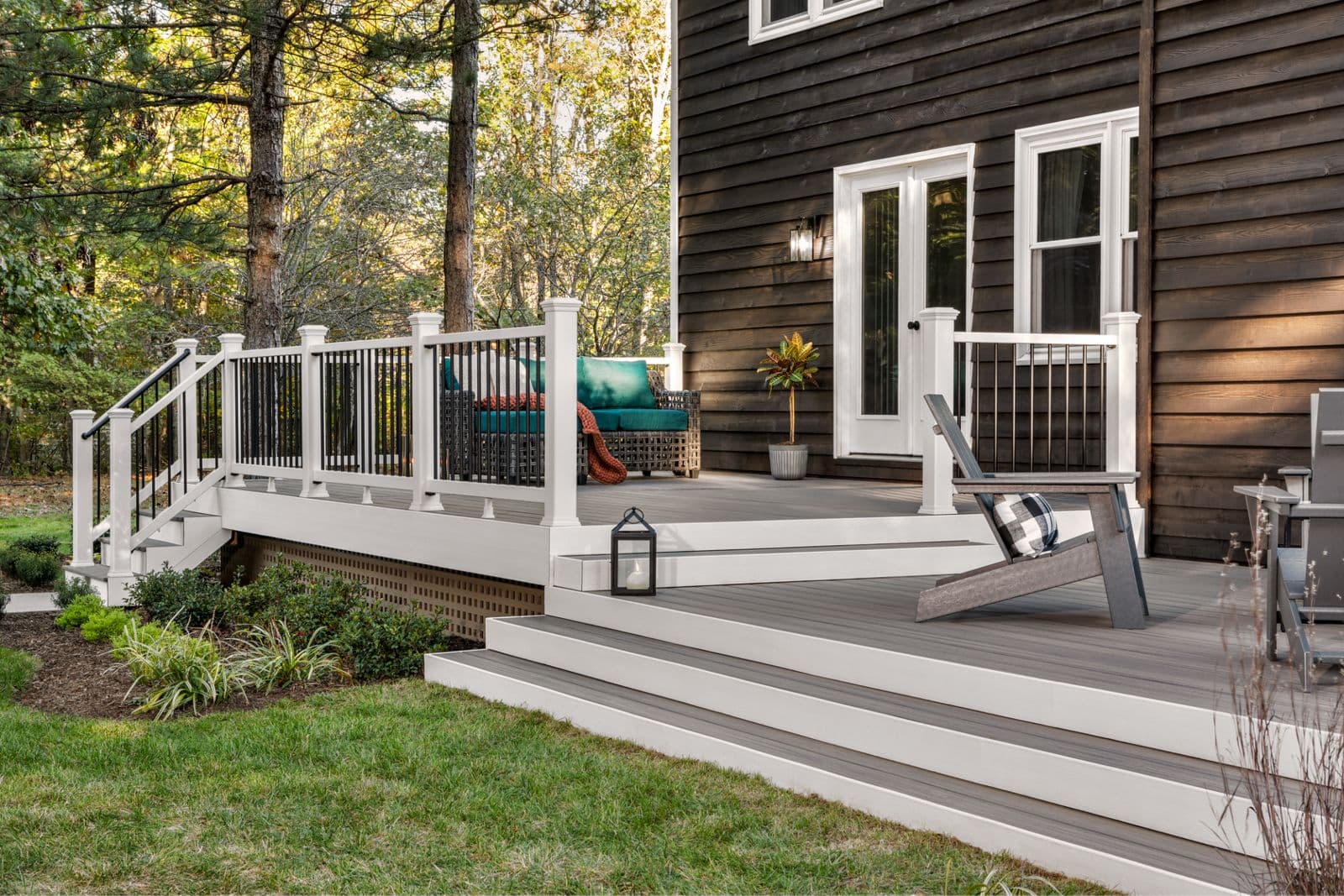
Selecting the Right Trex Decking Line for Your Vision
Trex offers several decking lines, each with distinct aesthetics and features. For a backyard gathering space, the choice often balances desired appearance, durability, and budget. The Enhance® Basics and Enhance® Naturals lines provide an entry point with traditional and wood-grain appearances, respectively. These are suitable for projects where a straightforward, reliable surface is the priority.
The Select® Earth Tones line introduces hallmark high-performance shell technology and a broader range of nature-inspired colors, offering a step up in aesthetics and surface protection. For those seeking a premium finish and the highest level of performance, the Transcend® Earth Tones and Transcend® Tropical collections feature elevated aesthetics and robust three-side shell protection, designed to maintain vibrant color and a luxurious finish over time. Consider the overall design of your gathering space and the ambiance you wish to create when selecting a line.
For instance, a modern, minimalist gathering area might benefit from the subtle tones of Transcend® Earth Tones like "Gravel Path," while a more vibrant, lush setting could be complemented by the rich, multi-tonal hues of Transcend® Tropical such as "Havana Gold" or "Island Mist."
All Trex lines share a common foundation of 95% recycled content and a low-maintenance shell, meaning they do not require oiling, staining, or sealing. A simple soap-and-water wash is typically sufficient for maintenance.
Coordinating Dimensions and Layout for Gathering
Effective planning of your deck's dimensions and layout is crucial for a functional gathering space. Trex decking boards are available in a standard profile of 1" x 5.5" and come in lengths of 12, 16, and 20 feet. These lengths allow for flexibility in design, minimizing seams and material waste, especially for larger areas.
When designing your gathering space, consider zones for different activities: a dining area, a lounge section, or a space for a fire pit. A well-planned layout can define these zones using board direction or contrasting picture-frame borders. For example, running boards perpendicular to the house can visually expand the space, while a diagonal pattern can add visual interest. Ensure adequate space for furniture and comfortable circulation around these zones.
A common mistake is underestimating the space needed for chairs to pull out or for people to move freely. For a dining area, allow at least 3 feet of clear space around the table for chairs and movement. For lounge areas, consider the footprint of your outdoor furniture and ensure pathways are at least 36 inches wide. These considerations help create a truly inviting and functional gathering space.
Understanding Fascia and Edge Finishes
The fascia and edge finishes are critical details that complete the look of your Trex deck, particularly in a gathering space where aesthetics are important. Trex offers matching fascia boards for all its decking lines, designed to conceal the deck's substructure and provide a clean, finished appearance. These are typically thinner boards used to trim the perimeter of the deck.
When planning your order, ensure you account for enough fascia to cover all exposed edges of your deck. For a standard deck, this would include the perimeter. If your design includes multiple levels or built-in elements like benches, these will also require fascia for a cohesive look. The consistent color and texture of Trex fascia boards ensure a seamless transition from the deck surface to its edges.
Consider how the fascia will interact with any adjacent landscaping or hardscaping. A clean, well-defined edge can enhance the overall appeal of your gathering space. Trex boards are available in both grooved and square-edge profiles. Grooved boards are designed for hidden fastening systems, while square-edge boards are typically used for face-fastening or as perimeter boards that are visible.
Fastening Systems: Hidden vs. Face-Fastened
Trex decking offers options for both hidden and face-fastened installations, each impacting the deck's appearance and installation process. Hidden fastening systems utilize clips that fit into the grooved edges of the deck boards, securing them to the joists from the side. This method results in a smooth, fastener-free deck surface, which is often preferred for gathering spaces for both aesthetics and comfort (no exposed screws).
Face-fastening involves screwing directly through the top surface of the deck board into the joist. While visible, this method can be suitable for perimeter boards or specific design elements where a hidden fastener cannot be used. Trex recommends using color-matched composite deck screws for face-fastening to minimize their visual impact.
The choice between hidden and face-fastening often comes down to aesthetic preference and structural requirements. Hidden fasteners are ideal for a clean, contemporary look, while face-fastening provides a strong, direct connection. It is important to follow the manufacturer's specific guidelines for both types of fastening to ensure proper installation and warranty validity.
Hypothetical Project: A Salt Lake City Backyard Oasis
Imagine a 16-foot by 20-foot deck designed as a central gathering space in a Salt Lake City backyard. The homeowners envision distinct areas for dining and lounging. They've selected Trex Transcend® Tropical decking in "Island Mist" for its multi-tonal appearance and robust capping.
For the 16-foot width, they decide to run the 20-foot boards parallel to the house, minimizing cuts and seams. This requires 16 feet / 5.5 inches (board width) = approximately 35 boards for the main deck surface.
A picture-frame border using square-edge "Lava Rock" Transcend® Tropical boards will define the perimeter and add a contrasting accent. This border will require 20 feet (long side) x 2 + 16 feet (short side) x 2 = 72 linear feet of border material. Assuming the border is one board wide, this translates to four 20-foot boards and two 16-foot boards, or approximately six 12-foot boards and three 20-foot boards depending on stock and cut planning.
Hidden fasteners will be used for the main deck boards for a smooth finish. The fascia boards, also in "Lava Rock," will wrap the entire 72-linear-foot perimeter of the deck, concealing the substructure. This plan prioritizes a cohesive, elegant look that maximizes the visual appeal and functional use of the outdoor gathering space.
Maintenance and Longevity for Your Trex Deck
One of the key advantages of Trex decking for a gathering space is its low-maintenance profile. Unlike traditional wood decks, Trex does not require sanding, staining, or sealing. The protective shell resists fading and staining, helping to maintain the deck's appearance over time.
Regular cleaning with soap and water is generally sufficient to keep the deck looking its best. This simple regimen helps remove dirt, pollen, and other debris that can accumulate. For more stubborn stains, consult the manufacturer's cleaning guidelines to ensure compatibility with the decking material.
Proper ventilation beneath the deck is also important for longevity. Ensure that there is adequate airflow to prevent moisture buildup, which can affect the substructure. By following these basic maintenance practices, your Trex deck can remain an inviting and attractive gathering space for years to come.
Before you order
- Determine the primary activities for your gathering space (dining, lounging, cooking).
- Select a Trex decking line (Enhance, Select, or Transcend) that matches your aesthetic and performance needs.
- Choose a color and finish that complements your home's exterior and landscaping.
- Map out the deck's dimensions, considering optimal flow and furniture placement.
- Decide on the board layout (e.g., parallel, diagonal, picture-frame border).
- Calculate the required quantity of deck boards, accounting for cuts and potential waste.
- Plan for fascia boards to finish all exposed edges of the deck.
- Choose between hidden fasteners for a smooth surface or face-fastening for perimeter boards.
- Consider any complementary products like railings or lighting for your gathering space.
- Review local building codes and structural requirements for deck construction.
- Confirm current availability of chosen Trex products and coordinating accessories.
Confirm installation details, approved uses and warranty terms in the current instructions for the exact product and profile. Your installer should verify the substrate, structure and applicable project requirements.
This is a planning guide for projects in Salt Lake City, UT. Ask our team to confirm availability, delivery to your ZIP code and which branch can support your order.
Questions to help you decide
How does Trex decking stand up to Salt Lake City's climate?
Trex decking is engineered to withstand various weather conditions, including those found in Salt Lake City. Its durable, three-sided capping helps resist fading, staining, and moisture, which are important factors given seasonal temperature fluctuations and sun exposure. The composite material is designed to be more stable than traditional wood, reducing issues like warping or splintering.
Can I mix different Trex colors or lines in my design?
Yes, you can mix different Trex colors or even lines to create unique designs for your gathering space. Many homeowners use a contrasting color for a picture-frame border, a diagonal inlay, or to delineate different functional zones on a larger deck. When mixing lines, ensure the board profiles are compatible for installation, especially if using hidden fasteners. Always confirm the exact product specifications for compatibility.
What kind of substructure is required for Trex decking?
Trex decking requires a properly constructed substructure, typically made from pressure-treated lumber. The spacing of the joists will depend on the deck board span rating and the intended load, but standard residential deck framing practices generally apply. Adequate ventilation under the deck is crucial to prevent moisture buildup. Always consult local building codes and the specific Trex installation guide for precise substructure requirements.
Plan Your Salt Lake City Trex Decking Project
Ready to design your backyard gathering space? Request a material quote today. Provide your project dimensions, desired Trex profile, and ZIP code to confirm current availability and service options for your Salt Lake City, UT project.
Request a material quote →