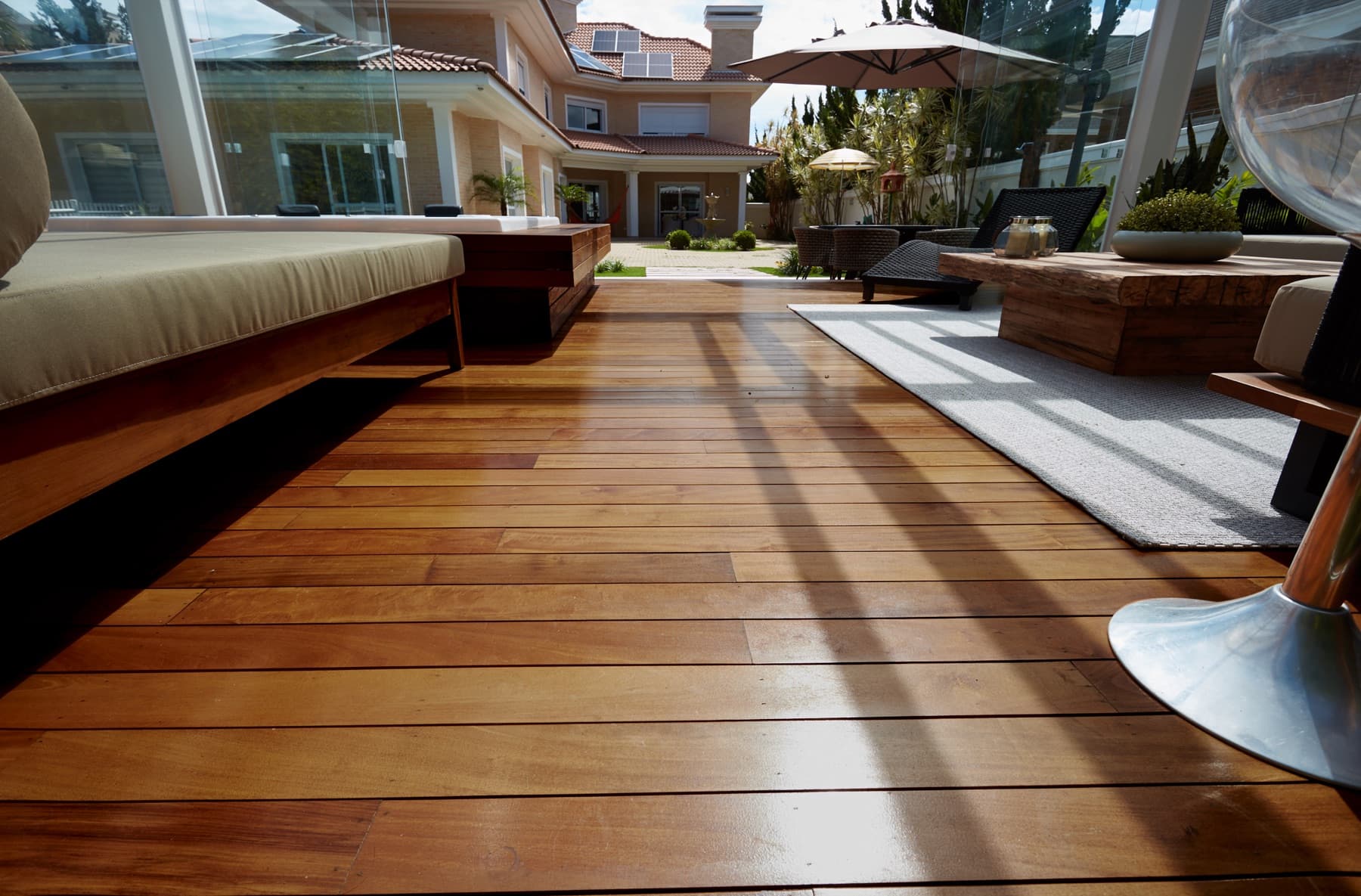
Assessing Your Existing Deck Frame
Before selecting any new decking material, inspect your existing deck frame. Hardwood decking, particularly dense species like Ipe and Cumaru, will add significant weight. Verify that your joists, beams, and posts are in sound condition, free from rot, insect infestation, or excessive deflection. Standard joist spacing for hardwood decking often aligns with common construction practices, but confirming the specific requirements for your chosen hardwood species and board dimensions is important. If the frame shows signs of wear or inadequate support, structural upgrades may be necessary.
Consider the age of your existing deck and the materials used in its construction. Older decks, or those built with less durable wood species, might have frames that are not robust enough for the long-term demands of dense hardwood. Consulting with a local structural engineer or experienced contractor can provide a professional assessment of your frame's load-bearing capacity and identify any required modifications.
Comparing Hardwood Decking Species: Ipe vs. Cumaru
Lumber Plus offers a range of hardwood decking options, with Ipe and Cumaru being popular choices due to their durability and aesthetic qualities. Understanding the differences between these species can help you select the best fit for your Salt Lake City renovation.
Ipe, also known as Brazilian Walnut, is renowned for its exceptional density and longevity. Its color ranges from reddish-brown to olive-brown, offering a sophisticated look. Ipe exhibits minimal movement post-installation and has natural resistance to weather changes, mold, and termites. It also carries a Class A fire rating, which can be a consideration for some projects. For those seeking the benchmark in hardwood performance, Ipe is a leading option.
Cumaru's color palette can vary, often displaying a warm, reddish-brown tone. When worked, Cumaru is noted for emitting a scent of cinnamon and vanilla. While slightly less dense than Ipe, Cumaru still provides excellent durability and resistance, often at a different price point, making it a compelling alternative for many renovation projects.
Both Ipe and Cumaru are naturally resistant to rot, insects, and mold, minimizing the need for chemical treatments. They can be maintained with occasional cleaning and sealing to preserve their original color, or allowed to weather to a silvery-gray patina without compromising structural integrity.
You can explore more about these and other hardwood species at the Lumber Plus hardwood decking product page: [https://lumberplus.com/decking/hardwood](https://lumberplus.com/decking/hardwood).
Considering Salt Lake City's Climate and Exposure
Salt Lake City experiences distinct seasons, with hot, dry summers and cold winters with snow. These conditions mean that outdoor decking materials must withstand significant temperature fluctuations, UV exposure, and moisture from snowmelt. Both Ipe and Cumaru are highly weather-resistant hardwoods, capable of performing well in such environments. Their natural oils help protect them from cracking or warping due to moisture exposure and drying cycles.
For decks with significant sun exposure, UV-blocking sealers can help preserve the wood's original color. If left untreated, both species will gradually weather to a silvery-gray patina. This natural aging process does not affect the structural performance of the wood. Proper ventilation beneath the deck is also crucial in any climate to prevent moisture buildup and ensure the longevity of both the decking and the substructure.
Hardwood Decking Profiles and Dimensions
Hardwood decking is available in various profiles and lengths. Common profiles include standard decking boards designed for face-fastening or hidden fastener systems. The specific dimensions you choose will impact the final appearance and installation method. For instance, Ipe is available in dimensions ranging from 1"x2" through 6"x6" and lengths from 3–24 feet.
When planning your renovation, consider how the new board widths and lengths will integrate with your existing frame and desired layout. Longer boards can reduce the number of end joints, creating a cleaner look, while different widths can be used to create specific design patterns. Always confirm the current profiles and lengths available for your chosen species before finalizing your design.
For complementary products like composite or PVC decking, which might be considered for different sections or design elements, you can visit: [https://lumberplus.com/decking/composite](https://lumberplus.com/decking/composite) and [https://lumberplus.com/decking/pvc](https://lumberplus.com/decking/pvc).
Worked Example: Renovating a 10' x 12' Deck
The owner wants to replace old, worn decking with Ipe hardwood boards, specifically choosing 1x6 (nominal) boards for their classic appearance.
First, calculate the total square footage: 10 feet * 12 feet = 120 square feet.
Next, determine the linear footage of decking required. A nominal 1x6 board is typically 5.5 inches wide. Round up to 22 boards for practical purposes. Since the deck is 12 feet long, each board would be 12 feet long. So, 22 boards * 12 feet/board = 264 linear feet.
It is always recommended to add an overage for cuts, waste, and potential future repairs. A common recommendation is 10-15%. For this project, let's use a 10% overage: 264 linear feet * 1.10 = 290.4 linear feet. Round up to 291 linear feet.
If Ipe boards are primarily available in 12-foot and 16-foot lengths, the most efficient purchase would be 25 boards at 12 feet each (25 * 12 = 300 linear feet). This provides a slight overage and minimizes cuts for the main deck area. For any border or stair elements, additional calculations would be needed. This example assumes a straightforward, parallel board layout.
This calculation is an estimate for material quantity. Always confirm actual board dimensions and account for specific installation requirements, such as end-matching, picture framing, or diagonal layouts, which may increase material needs. It is also important to consider the dimensions of any fascia boards or stair treads separately.
Before you order
- Assess existing deck frame for structural integrity, rot, and insect damage.
- Verify current joist spacing against chosen hardwood decking specifications.
- Consider the weight of hardwood decking and ensure the frame can support it.
- Research hardwood species (e.g., Ipe, Cumaru) for durability, appearance, and maintenance needs.
- Account for Salt Lake City's climate (hot summers, cold winters) and UV exposure.
- Select appropriate board profiles and lengths for your design and minimize waste.
- Calculate total material needed, including an overage for cuts and waste.
- Plan for proper ventilation beneath the deck.
- Determine desired finish: natural weathering to gray or maintaining original color with sealant.
Confirm installation details, approved uses and warranty terms in the current instructions for the exact product and profile. Your installer should verify the substrate, structure and applicable project requirements.
This is a planning guide for projects in Salt Lake City, UT. Ask our team to confirm availability, delivery to your ZIP code and which branch can support your order.
Questions to help you decide
Can I use my existing deck frame for hardwood decking?
It depends on the condition and construction of your existing frame. Hardwood decking is dense and heavy, so the frame must be structurally sound and adequately spaced to support the new material. A professional inspection is recommended to ensure safety and longevity. Look for signs of rot, insect damage, or structural weakness.
How do I choose between Ipe and Cumaru for a deck renovation?
Both Ipe and Cumaru are excellent choices for durability and weather resistance. Consider your budget, desired aesthetic (color tones), and specific project requirements when making your decision. Both perform well in Salt Lake City's climate.
What maintenance does hardwood decking require in Salt Lake City?
Hardwood decking like Ipe and Cumaru requires minimal maintenance. A yearly wash is generally sufficient. If you wish to preserve the original rich color, an annual application of a UV-blocking oil is recommended. If left untreated, the wood will naturally weather to a beautiful silvery-gray patina, which does not affect its structural integrity. Regular cleaning helps prevent dirt and debris buildup.
Ready to Plan Your Hardwood Deck Renovation?
Request a material quote for your project. Provide your project dimensions, desired hardwood profile, and ZIP code to confirm current availability and service options.
Request a material quote →