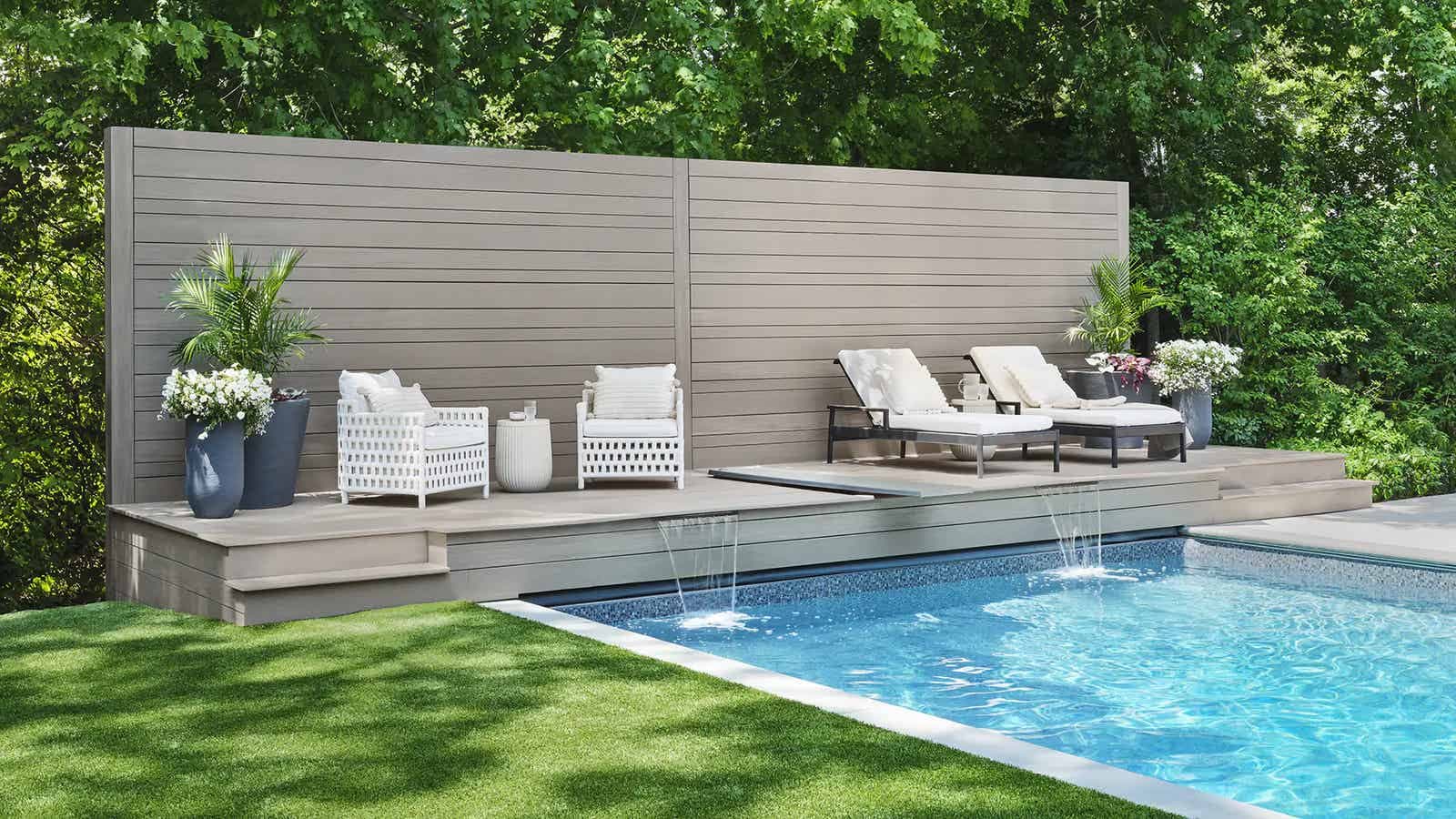
Why PVC Decking for Pool Terraces?
The primary benefit of PVC decking for a pool terrace is its inherent resistance to water. Unlike wood or composite materials that contain wood fibers, PVC is entirely synthetic. This characteristic makes it a suitable choice for areas that are consistently wet, such as around pools or on docks.
Beyond its water resistance, PVC decking is engineered for low maintenance. Its capped polymer surface is designed to shed common spills like grease and wine, allowing for easy cleaning with soap and water. This can be a significant advantage in a high-traffic area like a pool terrace, where spills and dirt are frequent. Some PVC decking lines also offer heat-mitigating color options, which can be a consideration for comfort on hot summer days around a pool.
The material's lighter weight compared to hardwood and some composite options can also simplify installation, particularly for larger projects or those involving elevated structures.
Design Considerations for a Salt Lake City Pool Terrace
When planning a PVC deck around a pool in Salt Lake City, consider the local climate and your specific design goals. While PVC decking is designed for wet environments, proper drainage and ventilation beneath the deck remain important for the overall health of the structure. Ensure that the deck design allows water to drain away from the house and pool foundation.
Board width and length can influence the visual flow of your pool terrace. Wider boards can create a more contemporary look, while narrower boards might offer a more traditional aesthetic. Planning board lengths carefully can minimize seams, contributing to a cleaner appearance.
Consider integrating picture-frame borders around the perimeter of your deck or pool edge. This can create a finished look and define the space. Fascia and edge finishes are also important for a polished appearance and protecting the deck's perimeter. These elements should be coordinated with your chosen decking boards for a cohesive design.
Board Profiles and Finishes
PVC decking is available in various collections, offering different aesthetic profiles and finishes. For example, lines like Vintage, Landmark, and Harvest collections feature deeper wood looks. These options allow you to achieve the desired visual without compromising on the material's performance benefits.
When selecting a finish, consider both its appearance and its practical implications for a pool area. Lighter colors may feel cooler underfoot in direct sunlight, while darker colors might offer a more striking contrast with the pool water. Always review samples in person to accurately assess color and texture under natural light conditions.
The surface texture of PVC decking can also vary. Some boards mimic the grain of natural wood, while others offer a smoother finish. For a pool terrace, consider a texture that provides some grip, especially when wet, to enhance safety.
Installation and Fastening for Poolside Decks
Proper installation is critical for the longevity and performance of any deck, especially one exposed to constant moisture. For PVC decking, hidden fastener systems are often preferred as they create a clean, unblemished surface that is comfortable for bare feet around a pool. These systems typically involve clips that secure the boards to the joists from the side, leaving the top surface free of visible screws.
If face-fastening is chosen, ensure that the screws are specifically designed for PVC decking and installed according to manufacturer guidelines to prevent issues like mushrooming or cracking. Always confirm the recommended board spacing for your chosen product; this spacing allows for proper drainage and accommodates any minor thermal expansion or contraction.
Under-deck ventilation is important to prevent moisture buildup beneath the deck surface. While PVC itself is waterproof, good airflow helps keep the substructure dry and prevents issues like mold or mildew growth on joists or beams, especially in areas with varying humidity.
Maintenance and Care for Your PVC Pool Terrace
One of the key advantages of PVC decking for a pool terrace is its low maintenance. The capped polymer surface is designed to resist staining and can typically be cleaned with just soap and water. Regular cleaning, especially after pool parties or heavy use, helps maintain its appearance.
For tougher stains, always consult the manufacturer's cleaning guide for your specific PVC decking product to ensure compatibility with cleaning agents. Avoid abrasive cleaners or tools that could damage the surface finish. Promptly addressing spills, especially those containing pool chemicals or sunscreen, can help prevent potential discoloration over time.
While PVC decking is resistant to rot and insects, it is still advisable to keep the deck surface free of debris like leaves and dirt, which can trap moisture and potentially lead to surface discoloration or a slippery film. A simple sweep or rinse can often suffice.
Before you order
- Have you measured the exact dimensions of your pool terrace area, including any curves or irregular shapes?
- Have you considered the desired aesthetic (color, texture, board width) and obtained samples to view in your specific outdoor lighting?
- Will you use hidden fasteners for a clean look, or face-fasten the boards?
- Have you planned for proper drainage and ventilation beneath the deck structure?
- Will you incorporate picture-frame borders or contrasting fascia for a finished edge?
- Have you reviewed the manufacturer's specific installation and maintenance guidelines for the chosen PVC decking product?
- Are there any specific local building codes or HOA requirements in Salt Lake City, UT, that might impact your deck design or material choice?
Confirm installation details, approved uses and warranty terms in the current instructions for the exact product and profile. Your installer should verify the substrate, structure and applicable project requirements.
This is a planning guide for projects in Salt Lake City, UT. Ask our team to confirm availability, delivery to your ZIP code and which branch can support your order.
Questions to help you decide
Is PVC decking slippery when wet around a pool?
The specific texture and finish will vary by product line. It is always recommended to review samples and consider the actual feel and performance of the chosen boards, especially in a wet environment like a pool terrace. Regular cleaning also helps prevent the buildup of slippery films.
Can PVC decking get hot in the Salt Lake City sun?
Like most outdoor materials, PVC decking can absorb heat from direct sunlight. However, some PVC decking lines offer heat-mitigating color options designed to stay cooler underfoot compared to darker shades. Choosing lighter colors can help, but it's important to remember that any surface exposed to intense sun will warm up. Always review product specifications for heat absorption characteristics.
How do I clean pool chemicals or sunscreen spills from PVC decking?
PVC decking is designed to be resistant to stains. For most spills, a simple cleaning with soap and water is effective. It is crucial to clean up spills promptly. For specific chemicals or stubborn stains, always refer to the manufacturer's cleaning and care instructions for your particular PVC decking product to ensure you use compatible cleaning agents and methods, preventing potential damage to the surface.
Plan Your PVC Pool Terrace with Lumber Plus
Ready to design a durable and low-maintenance pool terrace in Salt Lake City? Request a material quote for PVC decking. Provide your project dimensions, desired profile, and ZIP code to confirm current availability and service options for your project.
Request a material quote →