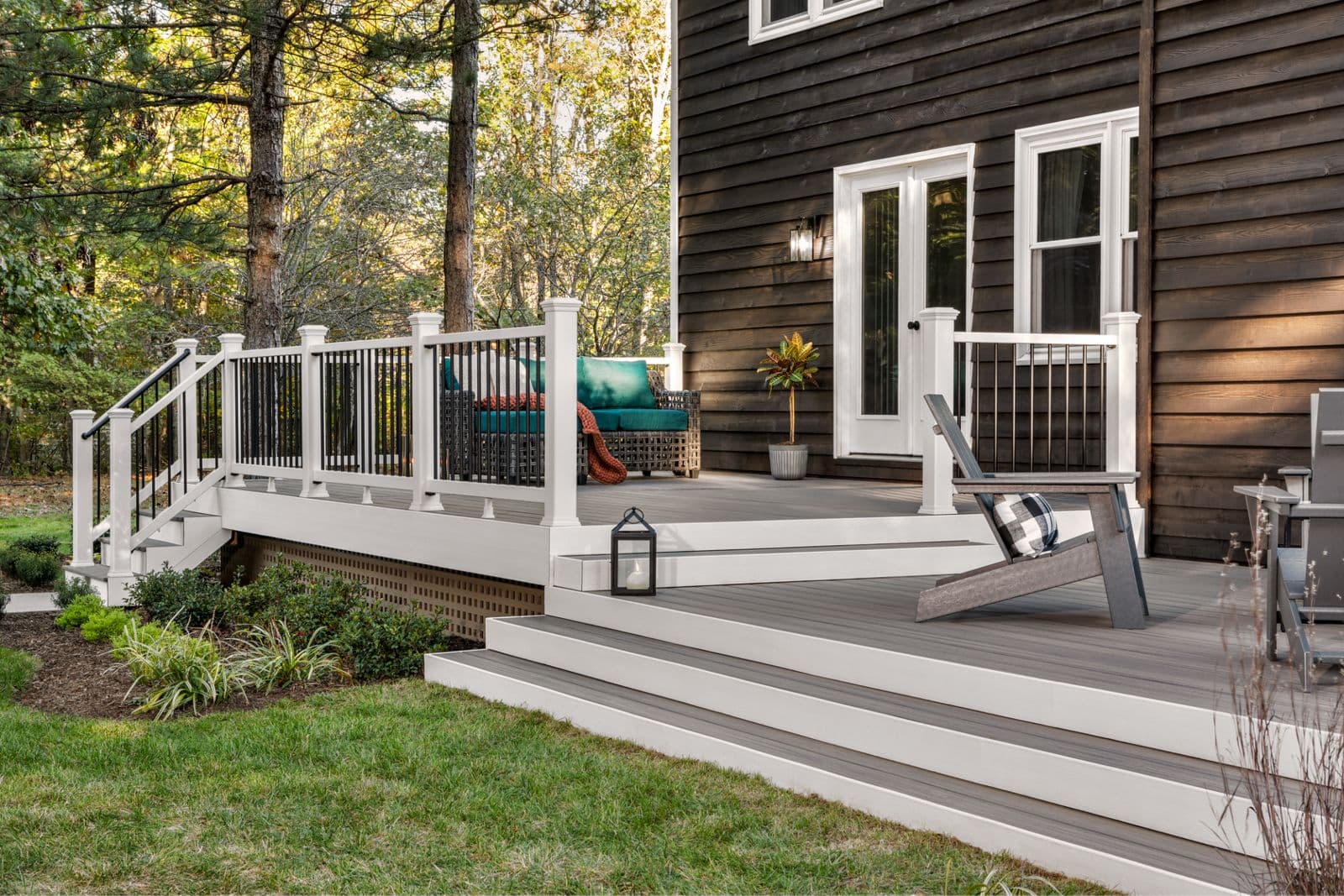
Selecting the Right Trex Collection for Your Gathering Space
Trex offers several collections, each with distinct aesthetics and features. For a backyard gathering space, consider how the deck will be used and the desired visual impact.
The Trex Enhance® Basics line offers traditional colors like Clam Shell, Beach Dune, and Saddle. These boards are lightweight and provide a solid foundation for a functional deck. Trex Enhance® Naturals expands on this with multi-tonal colors such as Foggy Wharf and Rocky Harbor, designed to mimic authentic wood grain, which can add a natural feel to your outdoor area.
For a mid-range option, Trex Select® Earth Tones provides hallmark high-performance shell technology in colors like Pebble Grey and Winchester Grey. If your project demands elevated aesthetics and the highest level of performance, the Trex Transcend® Earth Tones (Gravel Path, Rope Swing) and Trex Transcend® Tropical (Havana Gold, Island Mist, Tiki Torch) collections offer vibrant colors and a luxurious finish with robust three-sided shell protection. The choice of collection influences both the appearance and the specific maintenance considerations for your deck.
Consider the overall architectural style of your home and landscaping in Little Rock when choosing a collection. A more rustic home might pair well with the natural tones of Enhance Naturals, while a modern design could benefit from the sophisticated hues of Transcend Tropical.
Planning Dimensions and Layout for Social Interaction
Effective deck design for gathering spaces prioritizes flow and functionality. Begin by mapping out the intended activities: dining, lounging, grilling, or a combination. A common mistake is underestimating the space needed for furniture and movement.
For a dining area, allocate at least 10x10 feet for a table and chairs, allowing space to pull chairs out. A separate lounging zone might require a similar footprint. Consider a multi-level deck or distinct zones using different board orientations to define areas without physical barriers.
Trex boards are available in 12, 16, and 20-foot lengths, typically with a 1" x 5.5" profile in both grooved and square edge options. Planning your layout to maximize these lengths can help minimize waste and visible seams. For a 12x16-foot deck, using 16-foot boards for the longer dimension and 12-foot boards for the shorter can reduce cuts. A diagonal layout, while visually appealing, often requires more cuts and therefore more material.
When planning for Little Rock's climate, consider sun exposure. A south-facing deck might benefit from an integrated pergola or shaded areas for comfort during warmer months. Ensure adequate clearance for any existing structures or landscaping.
Coordinating Fascia and Edge Finishes
Fascia boards are crucial for a finished appearance, covering the rim joists and providing a clean edge to the deck. Trex offers matching fascia for all its decking lines, ensuring a cohesive look. These are typically thinner than deck boards but designed to color-match seamlessly.
For decks with visible edges, such as those that are elevated or have open staircases, the fascia becomes a prominent design element. Square-edge boards are typically used for picture-framing borders or as stair treads, while grooved boards are designed for hidden fastening systems. Ensure that your order includes enough matching fascia for all exposed perimeter joists and stair risers.
Consider how the deck edges will integrate with adjacent landscaping or patios. A clean fascia line can create a distinct boundary, while a flush transition might call for a different edging solution or careful grading of the surrounding ground.
Choosing Compatible Fastening Systems
The method of fastening significantly impacts both the aesthetics and long-term performance of your Trex deck. Trex decking supports both hidden clip systems and face screws.
Hidden fasteners are designed to create a smooth, unblemished deck surface, ideal for barefoot traffic in a gathering space. These clips fit into the grooved edges of the deck boards, securing them to the joists without visible screws. This method provides a clean look and consistent board spacing. It's important to use the manufacturer's recommended hidden fasteners to ensure compatibility and maintain the warranty.
Face-fastening involves screwing directly through the deck board into the joist. While this method is visible, it can be necessary for certain applications, such as the first and last boards, stair treads, or for securing square-edge boards used in borders. When face-fastening, use color-matched screws specifically designed for composite decking to minimize their appearance and prevent mushrooming of the material.
Always confirm the specific fastening requirements for the Trex collection you choose, as these can vary slightly. Proper fastening is critical for deck stability and to prevent board movement over time.
Maintenance and Longevity of Trex Decking
One of the primary advantages of Trex decking is its low-maintenance profile. Unlike traditional wood decks that require regular sanding, staining, or sealing, Trex composite decking primarily needs a soap-and-water wash.
The 95% recycled material composition, coupled with a three-sided protective capping, helps resist staining and fading. This means the color you choose for your Little Rock backyard deck is intended to remain consistent for years.
Routine cleaning involves removing debris and washing with a mild soap and water solution. Avoid harsh chemicals or abrasive cleaners, as these could potentially damage the capped surface. For specific cleaning instructions or to address tougher stains, always refer to the manufacturer's care guide. This minimal maintenance allows more time to enjoy your gathering space and less time on upkeep.
The low-maintenance aspect is a significant benefit for homeowners in Little Rock, reducing the ongoing effort and cost associated with deck ownership.
Before you order
- Confirm desired activities and allocate adequate space for each.
- Select a Trex collection (Enhance Basics, Enhance Naturals, Select Earth Tones, Transcend Earth Tones, or Transcend Tropical) that matches your aesthetic and performance needs.
- Measure the total deck area and sketch a layout to determine board lengths and quantities, minimizing cuts and seams.
- Identify all exposed perimeter joists and stair risers requiring matching fascia.
- Choose between hidden clip fasteners for a smooth surface or face screws for specific applications (or a combination).
- Plan for any necessary shade structures or ventilation, especially for sun-exposed areas.
- Review manufacturer's installation guidelines for proper board spacing and support requirements.
- Consider complementary products like Trex railing systems or outdoor lighting for a complete gathering space.
Confirm installation details, approved uses and warranty terms in the current instructions for the exact product and profile. Your installer should verify the substrate, structure and applicable project requirements.
This is a planning guide for projects in Little Rock, AR. Ask our team to confirm availability, delivery to your ZIP code and which branch can support your order.
Questions to help you decide
What are the primary differences between Trex collections?
The main differences lie in the finish depth, the range of available colors, and the aesthetic details. All Trex lines share a core made from 95% recycled materials and a low-maintenance shell. For example, Enhance Basics offers traditional colors, while Transcend Tropical features vibrant, multi-tonal options with a more luxurious finish and enhanced shell protection.
Can I use Trex decking for a multi-level deck design?
Yes, Trex decking is suitable for multi-level deck designs. When planning, consider how the different levels will connect, the placement of stairs, and how fascia boards will be used to finish the edges of each level. Careful planning of joist placement and support structures is essential for multi-level projects.
How do I calculate the amount of Trex decking I need?
To calculate the amount of Trex decking, first determine the total square footage of your deck. Then, factor in the dimensions of the boards (1" x 5.5" profile, 12, 16, or 20 ft lengths). It's often helpful to sketch a layout to visualize board placement and minimize waste. Always add a percentage (typically 5-10%) for cuts, waste, and future repairs. Don't forget to account for fascia boards separately.
Ready to Plan Your Trex Decking Project in Little Rock?
Request a material quote with your project dimensions, desired Trex profile, and ZIP code. We can confirm current availability and service options for your Little Rock, AR project.
Request a material quote →