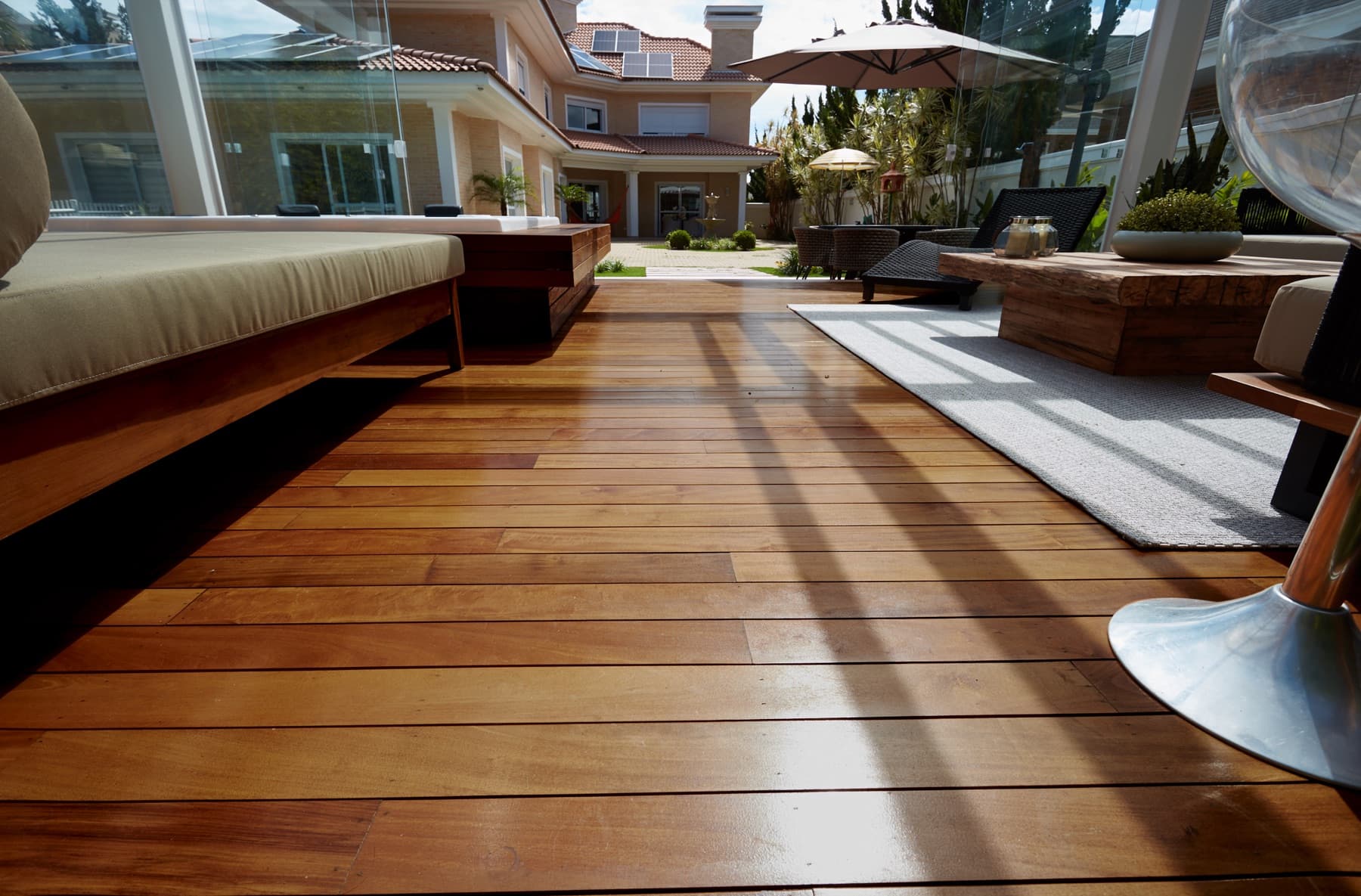
Evaluating Your Existing Deck Frame for Hardwood
The first step in any hardwood decking renovation is a comprehensive inspection of the existing deck frame. Hardwood, especially dense species like Ipe or Cumaru, is significantly heavier than many common decking materials. This weight difference necessitates a robust underlying structure.
Inspect all structural components: joists, beams, posts, and ledger boards. Look for any signs of rot, insect damage, or excessive deflection. Ensure all connections are secure and fasteners are corrosion-resistant. For decks exposed to the humid climate of Little Rock, AR, moisture damage can be a concern. If the frame shows any significant deterioration, it may require reinforcement or partial replacement to safely support the new hardwood decking. Consulting a structural engineer or a qualified contractor for this assessment is highly recommended.
Choosing the Right Hardwood Species for Little Rock Conditions
Lumber Plus offers a selection of Brazilian hardwood decking species, each with unique characteristics suitable for outdoor applications. For Little Rock's climate, which can experience hot, humid summers and occasional winter freezes, selecting a species known for its resilience to weather changes and pests is important.
Ipe, also known as Brazilian walnut, is a benchmark hardwood known for its exceptional durability and resistance to rot, insects, and mold. Ipe can last for decades with proper care, making it a premium choice for longevity. Its color ranges from reddish-brown to olive-brown.
Cumaru is another very durable tropical hardwood. Cumaru is a dependable choice for demanding builds and shares a Class A fire resistance rating.
Both Ipe and Cumaru are well-suited for coastal environments, demonstrating their ability to withstand significant environmental exposure. This makes them suitable for the varying conditions in Little Rock, AR, providing a durable and attractive surface.
Considering Board Profiles and Lengths
Hardwood decking is available in various profiles and lengths, which can influence both the aesthetics and the installation process of your renovation project. Common dimensions for Ipe and Cumaru can range from 1"x2" up to 6"x6", with lengths typically available from 3 to 24 feet. When planning your renovation, consider how these dimensions align with your existing frame's joist spacing and desired deck layout.
Using longer boards can minimize the number of seams, creating a more continuous look. However, longer boards may also be heavier and require more careful handling during installation. Shorter boards might be more practical for intricate patterns or smaller deck sections. Always confirm current profile and length availability before finalizing your design.
Understanding Installation Considerations for Hardwood
Due to the density and hardness of hardwood species like Ipe and Cumaru, specialized tools and techniques are often required for installation. Pre-drilling is typically necessary to prevent splitting when fastening boards. Hidden fastening systems are popular for a clean, fastener-free surface, but face-fastening with appropriate screws is also an option. Ensure the fasteners chosen are designed for hardwood and suitable for outdoor exposure in Little Rock's climate.
Proper ventilation underneath the deck is crucial for the longevity of any decking material, especially hardwood. Ensure there is adequate airflow to prevent moisture buildup, which can lead to warping or decay over time. This is particularly important in humid environments. Manufacturers often specify minimum spacing between boards to allow for drainage and air circulation.
Worked Example: Renovating a 12'x10' Deck with Ipe
Let's consider a hypothetical renovation of a 12-foot by 10-foot existing deck frame in Little Rock, AR.
We'll choose Ipe decking in a nominal 1x6 (actual dimensions typically closer to 3/4" x 5.5") profile. For a 12-foot length, we would need 12-foot boards. For the 10-foot width, we would need 10-foot boards. Rounding up, we'd plan for 27 boards for the length. For the 10-foot width, you'd need approximately (10 feet * 12 inches/foot) / 5.5 inches = 21.81 boards. Rounding up, we'd plan for 22 boards for the width. This would mean 27 boards at 10 feet long, and 22 boards at 12 feet long, for a total linear footage of (27 * 10) + (22 * 12) = 270 + 264 = 534 linear feet.
The number of boards needed would be (10 feet * 12 inches/foot) / 5.5 inches (actual width of board) = 21.81. Rounding up, you would need 22 boards, each 12 feet long. This totals 22 x 12 = 264 linear feet of Ipe. Always factor in extra for cuts and waste, typically 5-10%. For this project, a 10% waste factor would bring the total to approximately 290 linear feet.
This example illustrates that while the area is 120 square feet, the purchase quantity is based on linear footage of specific board lengths. Always account for cuts and potential waste.
Before you order
- Inspect existing deck frame for structural integrity, rot, and insect damage.
- Consult a structural engineer or contractor if existing frame condition is questionable.
- Determine if the existing frame can support the increased weight of hardwood decking.
- Select a hardwood species (e.g., Ipe, Cumaru) suitable for Little Rock's climate and your aesthetic preference.
- Confirm desired board profile and available lengths with your supplier.
- Plan for proper ventilation beneath the deck to prevent moisture issues.
- Choose appropriate fasteners (hidden or face-fastened) designed for hardwood and outdoor use.
- Account for a waste factor (typically 5-10%) when calculating linear footage needed.
- Budget for specialized tools and potentially professional installation due to hardwood density.
Confirm installation details, approved uses and warranty terms in the current instructions for the exact product and profile. Your installer should verify the substrate, structure and applicable project requirements.
This is a planning guide for projects in Little Rock, AR. Ask our team to confirm availability, delivery to your ZIP code and which branch can support your order.
Questions to help you decide
How do I know if my existing deck frame can support hardwood?
The best way is to have a qualified contractor or structural engineer inspect your frame. They can assess the condition of joists, beams, and connections and determine if reinforcements are needed to safely support the heavier hardwood decking.
What maintenance does hardwood decking require in Little Rock, AR?
Hardwood decking like Ipe or Cumaru is relatively low maintenance. A wash once a year is generally sufficient. If you wish to preserve the original rich brown color, an annual application of a UV-blocking oil is recommended. If left untreated, the wood will naturally weather to a silvery-gray patina with no structural difference.
Can I install hardwood decking myself?
While it is possible, installing dense hardwoods like Ipe often requires specialized tools and techniques, such as pre-drilling and specific fastening methods. Professional installation is often recommended to ensure proper technique and a lasting result, especially for renovation projects where existing conditions must be carefully managed.
Ready to Transform Your Deck with Hardwood?
Request a material quote with your project dimensions, desired hardwood profile, and ZIP code to confirm current availability and service options for your Little Rock, AR renovation.
Request a material quote →