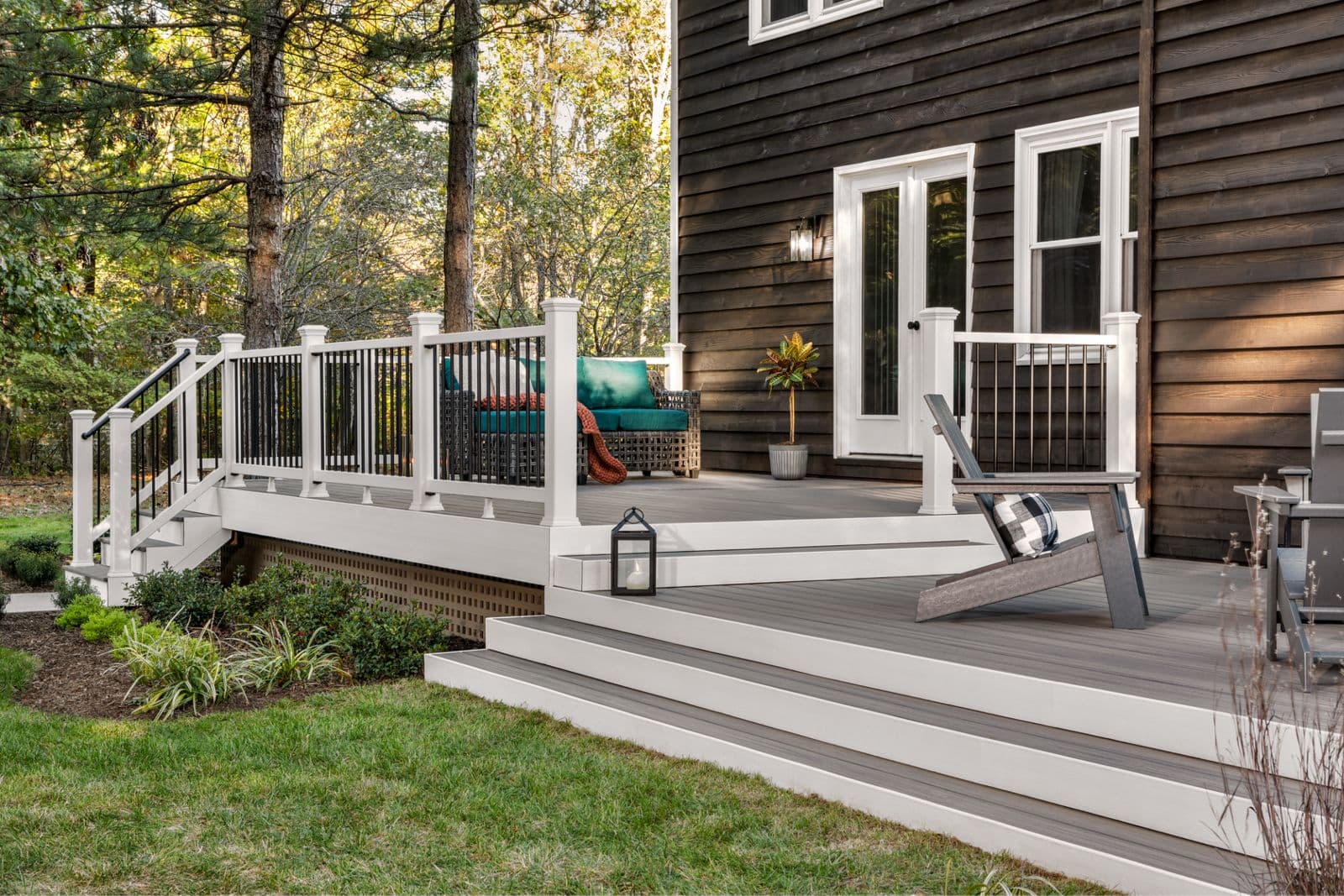
Choosing Your Trex Decking Collection
Trex offers several decking collections, each with distinct aesthetics and performance characteristics. All Trex lines feature a core made from 95% recycled materials and a protective shell for low maintenance. The key differences lie in the finish depth, color range, and warranty terms. Understanding these distinctions is the first step in selecting the right material for your gathering space.
The Trex Enhance® Basics line offers traditional colors like Clam Shell, Beach Dune, and Saddle. It's designed to be lightweight, similar to lumber, but without the extensive maintenance. Trex Enhance® Naturals focuses on an authentic wood-grain appearance with multi-tonal colors such as Foggy Wharf and Rocky Harbor. For a mid-range option, Trex Select® Earth Tones provides hallmark high-performance shell technology in nature-inspired hues like Pebble Grey and Winchester Grey. If you are seeking elevated aesthetics and the highest level of performance, the Trex Transcend® Earth Tones and Transcend® Tropical collections offer a broader palette and luxurious finishes, with options like Gravel Path, Havana Gold, and Lava Rock. Consider how each collection's color and texture will complement your home's exterior and existing landscaping.
Your choice of collection will influence the overall look and feel of your gathering area. For example, a multi-tonal board from the Enhance Naturals or Transcend Tropical lines might add visual depth and mimic the look of exotic hardwoods, while a solid color from Enhance Basics could create a more uniform and contemporary aesthetic. Ensure you review physical samples, as digital representations can vary.
Planning Board Dimensions and Layout
Trex decking boards are typically available in 1-inch by 5.5-inch profiles, with options for grooved or square edges. Standard lengths include 12, 16, and 20 feet. The choice of grooved or square-edge boards is critical for your fastening method, as grooved boards are designed for hidden clip systems, while square-edge boards are used for face-fastening or for the perimeter where fascia will be applied.
When planning your layout, consider how board lengths will minimize waste and the number of seams. Longer boards can create a more continuous look, especially for larger gathering spaces. For a deck that is 16 feet deep by 20 feet wide, using 20-foot boards for the width would eliminate seams across that dimension. If your deck dimensions don't align perfectly with standard board lengths, strategic placement of seams or a picture-frame border can create a polished finish. Diagonal layouts can add visual interest but may require more cuts and generate additional material waste.
The overall dimensions of your gathering space will dictate the quantity of boards needed. Always factor in a percentage for cuts, waste, and potential adjustments during installation. For a typical rectangular deck, calculating the total square footage and then dividing by the coverage of a single board (e.g., 5.5 inches wide by 12, 16, or 20 feet long) provides an initial estimate. However, always round up to ensure you have enough full boards, especially considering end cuts and any specific pattern requirements.
Coordinating Fascia and Edge Finishes
Fascia boards provide a finished edge around the perimeter of your deck, concealing the substructure and the ends of the deck boards. Trex offers matching fascia boards for each collection and color, ensuring a cohesive appearance. The fascia is typically a thinner board designed for vertical application.
The choice of fascia can significantly impact the visual appeal of your gathering space. You can opt for a fascia that perfectly matches your deck boards for a seamless look, or choose a contrasting color to create a defined border. For instance, if you select Trex Transcend Tropical in Island Mist, you might choose matching Island Mist fascia or a darker tone like Lava Rock for contrast. This decision should be made early in the planning process to ensure all components are ordered together.
Ensure that the fascia is properly supported and fastened according to manufacturer guidelines to prevent warping or detachment. Correct installation of fascia contributes to the longevity and aesthetic integrity of the entire deck structure, especially in areas where it might be exposed to foot traffic or accidental impacts.
Fastening Methods: Hidden Clips vs. Face Screws
The choice between these methods affects both the appearance and the installation process of your deck.
Hidden fastening systems use clips that fit into the grooves on the side of the deck boards, attaching them to the joists from underneath. This method results in a smooth, fastener-free deck surface, which many homeowners prefer for aesthetics and comfort. It also helps maintain consistent board spacing, which is crucial for drainage and ventilation. Trex hidden fasteners are designed for secure installation, contributing to a barefoot-safe surface without exposed screws.
Face-fastening involves screwing directly through the top surface of the deck board into the joist. This method is typically used for square-edge boards, especially at the perimeter of the deck where hidden fasteners may not be suitable, or for a more traditional look. When face-fastening, it is important to use color-matched screws and pre-drill pilot holes to prevent splitting and ensure a clean finish. Whichever method you choose, consult the specific Trex installation instructions to ensure proper technique and material compatibility.
Maintenance for Long-Term Enjoyment
One of the primary advantages of Trex composite decking is its low maintenance requirements. Unlike traditional wood decks that demand regular staining, sealing, or painting, Trex boards only require a soap-and-water wash to maintain their appearance and validate the warranty.
Regular cleaning helps remove dirt, pollen, and other debris that can accumulate on the deck surface, especially in a busy gathering space. For tougher stains, specific cleaning products recommended for composite decking can be used. Avoid abrasive cleaners or harsh chemicals that could damage the protective capping. Promptly address spills, particularly those from food or beverages, to prevent potential staining.
Proper ventilation beneath the deck is also important for long-term performance. Ensure that there is adequate airflow to prevent moisture buildup, which can affect the substructure. While Trex decking itself is resistant to rot and insect damage, the underlying frame, if made of wood, still requires protection. Following these simple maintenance practices will ensure your Trex deck remains a beautiful and functional gathering space for years.
Worked Example: A 16x12 Foot Trex Deck
Let's plan a hypothetical 16-foot by 12-foot rectangular deck for a backyard gathering space, using Trex Select® Earth Tones in Pebble Grey with a picture-frame border.
First, we'll assume a standard board width of 5.5 inches. For the main deck area, running boards along the 16-foot length will minimize seams. The 12-foot width will require 12 feet / (5.5 inches / 12 inches/foot) = approximately 26.18 boards. Rounding up, we'll need 27 boards to cover the width. If we select 16-foot long boards, we will need 27 x 16-foot boards for the main field. This totals 432 linear feet of decking.
For the picture-frame border, we'll use square-edge boards. This border will run along all four edges. The perimeter is (16 + 12) x 2 = 56 linear feet. If we use 16-foot square-edge boards, we'll need 4 boards (16+16+12+12 = 56; 56/16 = 3.5, so 4 boards). These will be cut to fit the exact perimeter dimensions, with mitered corners for a clean look. This also means we will need matching Pebble Grey fascia for the perimeter to cover the exposed rim joists and board ends.
Finally, we'll need hidden fasteners for the grooved main field boards. Each board will need clips at each joist. Always purchase a slight overage of fasteners.
Before you order
- Select your Trex collection based on desired aesthetic and budget (Enhance, Select, or Transcend).
- Choose a color that complements your home and outdoor environment.
- Determine board profile: grooved for hidden fasteners or square-edge for face-fastening and borders.
- Calculate the quantity of deck boards needed, accounting for cuts and waste.
- Plan for fascia boards that match or contrast with your main deck color.
- Decide on the fastening method: hidden clips for a smooth surface or face screws for specific areas.
- Consider the overall layout: straight, diagonal, or with a picture-frame border.
- Factor in ventilation requirements beneath the deck.
- Review manufacturer installation guidelines for board spacing and structural support.
- Confirm the availability of physical samples before making a final color decision.
Confirm installation details, approved uses and warranty terms in the current instructions for the exact product and profile. Your installer should verify the substrate, structure and applicable project requirements.
This is a planning guide for projects in Detroit, MI. Ask our team to confirm availability, delivery to your ZIP code and which branch can support your order.
Questions to help you decide
What is the primary difference between Trex collections?
The main differences between Trex collections like Enhance, Select, and Transcend lie in their finish depth, color range, and aesthetic details. All lines share a core of 95% recycled materials and a protective capping, providing low maintenance. Transcend offers the most premium finishes and color options, while Enhance is an entry-level option, and Select falls in the mid-range.
Can I mix different Trex colors or collections on one deck?
Yes, you can mix different Trex colors or even collections, though it's typically recommended to stick within a single collection for consistent board profiles and textures. Mixing colors can create unique design elements, such as a contrasting picture-frame border or inlaid patterns. Always ensure the chosen boards are compatible in terms of thickness and installation requirements, and review physical samples to confirm the aesthetic blend.
How do I clean my Trex deck to keep it looking new?
Trex decking is designed for low maintenance. Regular cleaning involves sweeping away debris and washing the surface with soap and water using a soft brush. For more stubborn dirt or spills, specific composite deck cleaners can be used. Avoid pressure washers set to high pressure, as this can potentially damage the board surface. Always follow the manufacturer's cleaning guidelines to maintain the warranty.
Ready to Plan Your Trex Decking Project?
Request a material quote today. Provide your project dimensions, desired Trex profile, and ZIP code to confirm current availability and service options for your Detroit, MI backyard gathering space.
Request a material quote →