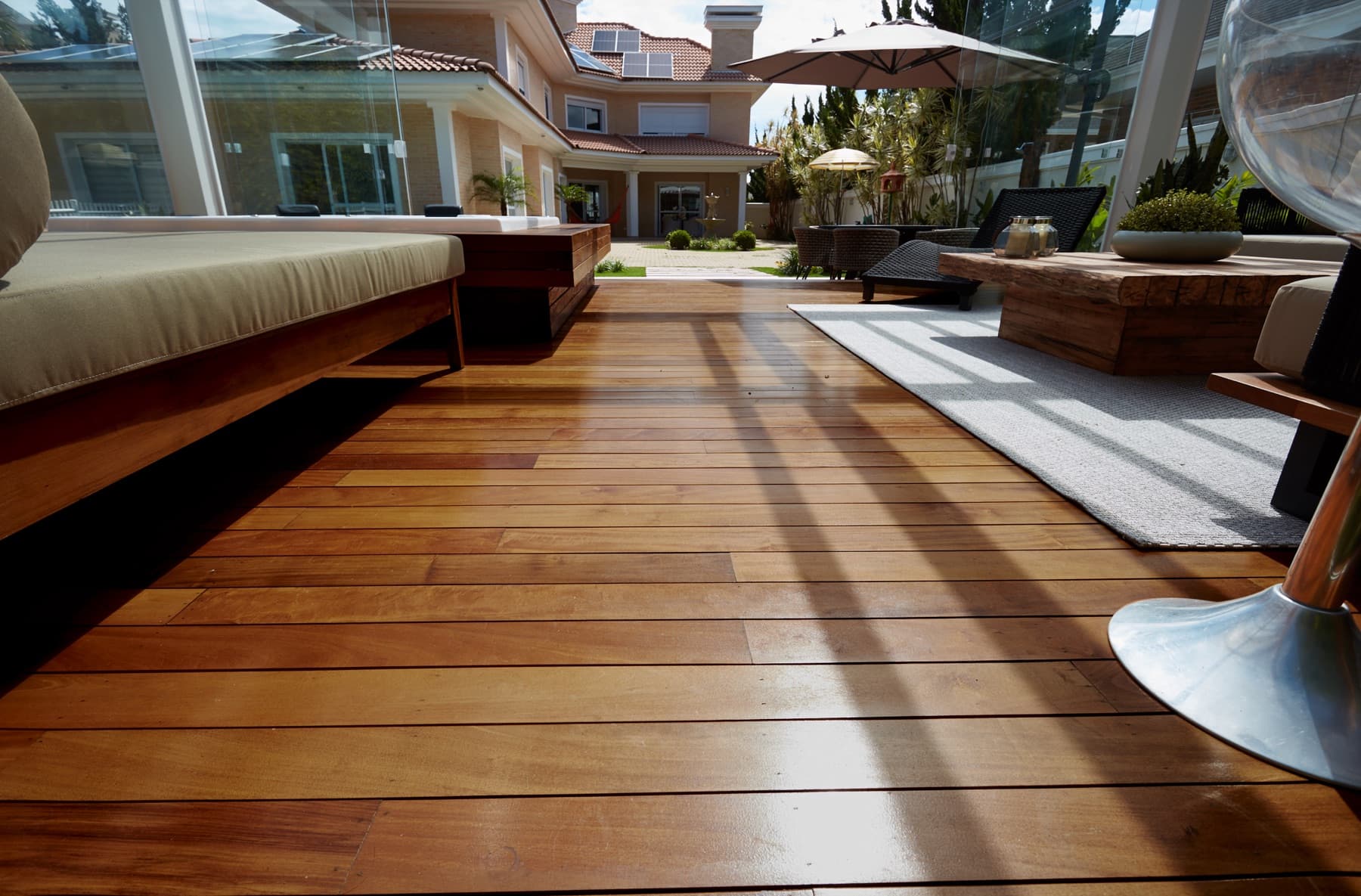
Assessing Your Existing Deck Frame for Hardwood Decking
Before selecting any new decking material, the first and most crucial step in a renovation is to thoroughly inspect your existing deck frame. Hardwood decking species like Ipe and Cumaru are known for their density and weight, which can be significantly greater than many traditional softwoods or composite materials. This increased weight necessitates a robust and structurally sound substructure.
Begin by examining all joists, beams, and ledger boards for signs of rot, insect damage, or excessive deflection. Pay close attention to connections, fasteners, and any areas where water might accumulate. Ensure that the joist spacing is appropriate for the hardwood decking you plan to install. While specific requirements vary by product, denser hardwoods often require tighter joist spacing to prevent movement and ensure proper support. If the existing frame shows significant wear, damage, or inadequate spacing, it may require repair, reinforcement, or even complete replacement before new hardwood decking can be installed.
Consider the height and stability of your current posts and footings. Over time, ground movement or settling can compromise these elements. Any instability here will affect the entire deck structure. A professional inspection by a qualified contractor can provide a detailed assessment and recommendations for necessary frame upgrades.
Choosing Your Hardwood Species: Ipe vs. Cumaru
For renovation projects, two popular hardwood decking species, Ipe and Cumaru, stand out for their durability and appearance. Understanding their characteristics is key to making an informed choice.
Ipe, also known as Brazilian walnut, is a dense and durable hardwood native to South America. It is characterized by its reddish-brown to olive-brown tones, offering a rich, luxurious appearance. Ipe is highly resistant to rot, insects, and mold, and it can last for many decades with proper care. It is often considered the benchmark for hardwood decking due to its exceptional strength and stability.
Cumaru is another very durable tropical hardwood, also from South America. It shares many of Ipe's desirable qualities, including resistance to termites and weather changes. Cumaru typically presents in a range of reddish-brown to golden-brown hues. While slightly less dense than Ipe, it still offers excellent stiffness, strength, and hardness, making it a robust option for outdoor applications. Cumaru is often seen as a compelling alternative to Ipe, providing similar performance characteristics at a different price point.
Both Ipe and Cumaru will naturally weather to a silvery-gray patina if left untreated. If you prefer to maintain their original rich colors, a UV-blocking sealer can be applied periodically. This choice impacts the long-term aesthetic and maintenance schedule for your renovated deck.
Considering Board Profiles and Lengths
Hardwood decking is available in various profiles and lengths, which can impact both the aesthetic and the installation process of your renovation. Common profiles include standard dimensional lumber, such as 1x4, 1x6, or 5/4x6, and occasionally larger dimensions up to 6x6 for specific applications.
The lengths of boards typically range from 3 to 24 feet. When planning for a renovation, consider how these lengths will work with your existing deck dimensions. Longer boards can minimize seams and create a more continuous look, but they may be more challenging to handle. Shorter boards might be more suitable for smaller or irregularly shaped decks, potentially reducing waste from cuts. Always account for some waste when calculating your material needs.
Availability of specific profiles and lengths can vary. It is important to confirm current stock with your supplier, especially for larger renovation projects that require consistent material. Custom milling options might also be available for unique project needs.
Installation Considerations for Hardwood Decking
Installing hardwood decking, especially dense species like Ipe and Cumaru, requires specific tools and techniques. Due to their hardness, pre-drilling pilot holes is generally necessary for fasteners to prevent splitting. Specialized fasteners, including hidden fastening systems or specific face-fastening screws, are often recommended to ensure a secure and durable installation.
Proper board spacing is critical for hardwood decking to allow for natural expansion and contraction with changes in humidity and temperature, as well as for drainage. Always follow the manufacturer's specific guidelines for spacing, as these can vary by species and profile. Adequate ventilation beneath the deck is also important to prevent moisture buildup and ensure the long-term stability of both the decking and the substructure.
While it is possible for experienced DIYers, professional installation is often recommended for hardwood decking due to the specialized skills and equipment required. A professional installer can ensure proper techniques are used, leading to a more successful and lasting renovation.
Hypothetical Renovation Example: Replacing a 12x16-foot Deck Surface
Let's consider a hypothetical renovation project in Detroit, MI, involving a 12-foot by 16-foot existing deck. The homeowner wants to replace a worn softwood deck surface with Ipe hardwood decking.
For a 12x16-foot deck, the total area is 192 square feet. If using 5/4x6 Ipe decking boards (actual width approximately 5.5 inches), we need to calculate the number of linear feet. To cover the 12-foot width with 5.5-inch boards, you would need approximately 26 boards (12 feet * 12 inches/foot / 5.5 inches/board = 26.18 boards). For the 16-foot length, this means 26 boards * 16 feet = 416 linear feet of decking. Always add a percentage for waste, typically 10-15%, especially when cutting around obstacles or for end cuts. So, 416 linear feet * 1.15 (15% waste) = 478.4 linear feet. Round up to ensure full board purchases.
Assuming Ipe is available in 16-foot lengths, you would purchase 26 boards, each 16 feet long. This calculation provides the material needed to cover the surface. Additionally, consider fascia boards for the perimeter, which would typically be 1x8 or 1x10 Ipe. For a 12x16-foot deck, this would require 12 + 12 + 16 + 16 = 56 linear feet of fascia. Again, add waste. This example is simplified; a real project requires precise measurements, consideration of board direction, and specific fastener calculations.
Before you order
- Inspect existing deck frame for rot, insect damage, and structural integrity.
- Confirm posts and footings are stable and can support increased weight.
- Choose between Ipe, Cumaru, or other hardwood species based on aesthetics, durability, and budget.
- Determine desired board profile and length, considering deck dimensions and minimizing waste.
- Plan for appropriate fasteners (hidden or face-fastening) and pre-drilling requirements.
- Ensure proper board spacing and under-deck ventilation are accounted for in the installation plan.
- Consider professional installation for optimal results due to hardwood density and specialized techniques.
- Decide on a maintenance plan: allow to silver or apply UV-blocking sealer to retain original color.
Confirm installation details, approved uses and warranty terms in the current instructions for the exact product and profile. Your installer should verify the substrate, structure and applicable project requirements.
This is a planning guide for projects in Detroit, MI. Ask our team to confirm availability, delivery to your ZIP code and which branch can support your order.
Questions to help you decide
How long does hardwood decking last in Detroit's climate?
With proper installation and care, Ipe decking can last up to 75 years, and Cumaru can last over 25 years. Their natural resistance to rot, insects, and weather changes makes them well-suited for varying climates, including those with cold winters and humid summers.
Does hardwood decking require special maintenance in Michigan?
Hardwood decking, particularly Ipe and Cumaru, is considered low maintenance. A wash once a year is generally sufficient. If you wish to preserve the original reddish-brown or olive-brown color, an annual application of a UV-blocking oil or sealer is recommended. Without it, the wood will naturally weather to a silvery-gray patina, which does not affect its structural integrity.
Can I install hardwood decking over an existing composite or softwood frame?
You can install hardwood decking over an existing frame, but a thorough inspection is critical. The frame must be structurally sound and capable of supporting the greater weight of hardwood. If the existing frame is not up to standard, it will need reinforcement or replacement. Consult with a professional to assess your specific frame's suitability.
Request a Quote for Your Hardwood Decking Renovation
Ready to transform your Detroit deck with durable hardwood? Request a material quote by providing your project dimensions, desired hardwood profile, and ZIP code. We'll help you confirm current availability and service options for your renovation.
Request a material quote →