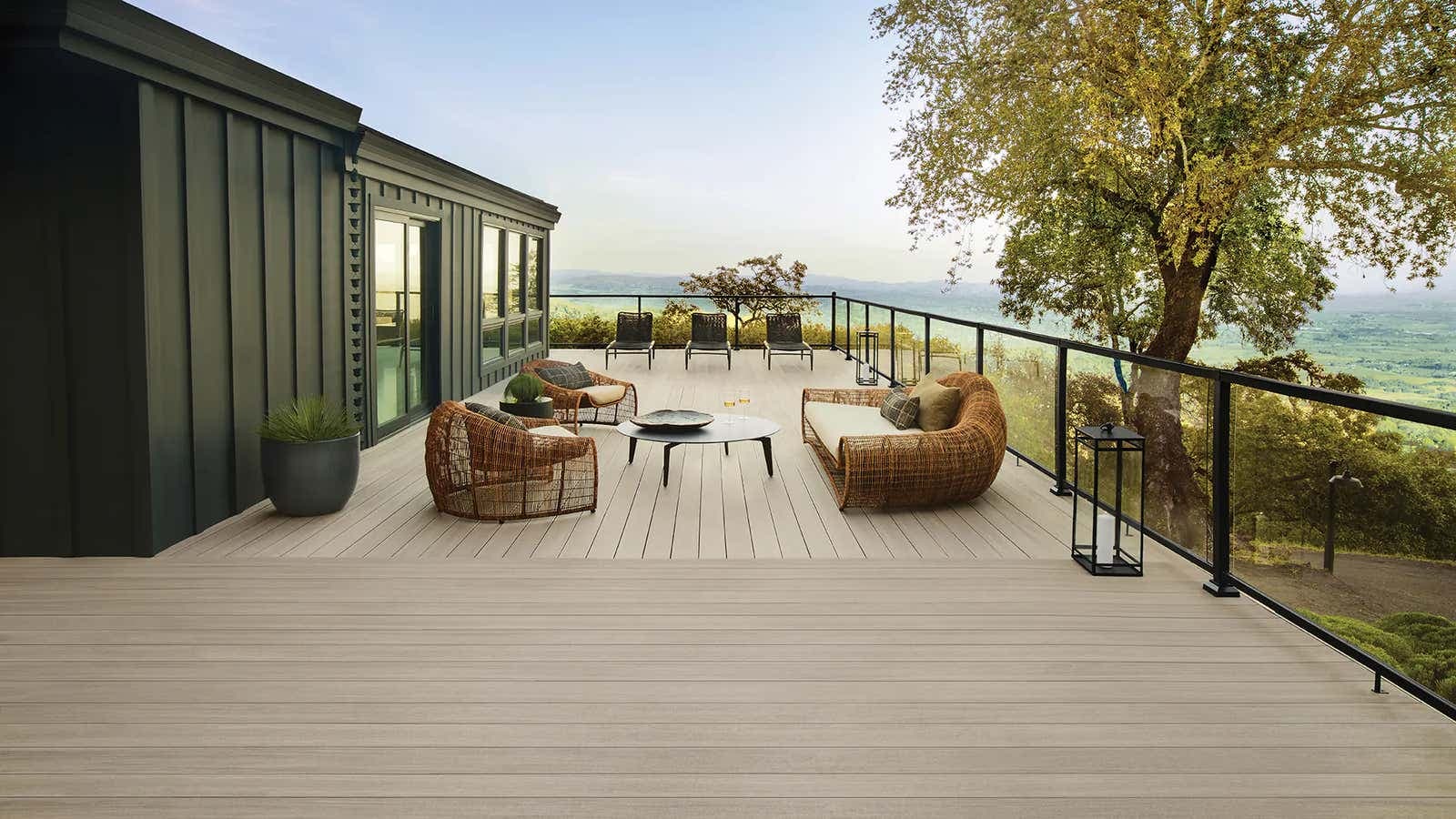
Understanding the Constraints of Compact Spaces
Compact outdoor spaces, common in many Detroit neighborhoods, present specific challenges. Limited square footage means every design choice has a magnified impact. Project access can be restricted, requiring materials that are manageable to transport and install. Ventilation might be more critical in enclosed or semi-enclosed areas, and structural support needs careful assessment for elevated balconies or rooftop decks. Furthermore, the goal is often to make the space feel larger and more open, which influences board choice and layout.
Selecting the Right Composite Decking Collection
When choosing composite decking for a compact space, consider collections from manufacturers like Trex, TimberTech, and Fiberon. These brands offer a range of profiles and finishes that can be suitable. Some collections feature capped shells, which provide a consistent look and are designed to resist fading and staining, a benefit in areas that might experience varied sun exposure. The color and grain consistency of composite boards can also contribute to a cohesive look in a small area, avoiding visual clutter. Reviewing maintenance and warranty options for each collection is also important, as low-maintenance materials are often preferred for smaller, frequently used spaces.
Specific collections may offer cooler-underfoot options, which can be advantageous for decks that receive significant sun exposure, even in a compact setting. The recycled content of some composite decking, such as Trex with up to 95% recycled material, can also be a factor for those prioritizing sustainable building choices. It is recommended to contact a local branch to confirm the current lines and colors available, as product offerings can vary.
Optimizing Space with Board Dimensions and Layout
For compact areas, the choice of board width and length can significantly affect the perception of space. Wider boards might make a small area feel more expansive, while narrower boards could create a busier look. Similarly, planning board lengths to minimize seams can contribute to a more continuous visual flow. A diagonal layout, for example, can sometimes make a small deck appear larger by drawing the eye across the longest dimension of the space.
Consider using picture-frame borders to define the perimeter of the deck, which can add a finished look without overwhelming the space. When ordering, it's important to account for cuts and potential waste, especially if you're working with a specific layout that requires many custom cuts. While composite decking is durable, proper planning ensures you purchase the correct quantity and minimize material overages.
Planning for Support and Ventilation in Tight Areas
Even in compact spaces, the underlying support structure for your composite deck is critical. Ensure the deck frame is appropriately designed for the load and the specific composite decking product. Proper ventilation beneath the deck is also crucial, especially in more enclosed or low-to-the-ground installations. Adequate airflow helps prevent moisture buildup, which can affect the longevity of both the decking and the substructure.
Manufacturer guidelines for board spacing must be strictly followed to allow for proper drainage and thermal expansion/contraction. These small gaps are essential for the long-term performance of the deck, particularly in areas with fluctuating temperatures. If your compact space is a balcony or rooftop, consult with a structural engineer to ensure the existing structure can support the added weight of the decking and any planned furnishings.
Worked Example: A 10' x 8' Balcony Deck in Detroit
Imagine you are planning to deck a 10-foot by 8-foot balcony in a downtown Detroit condominium, totaling 80 square feet. You've chosen a composite decking collection with boards that are 12 feet long and 5.5 inches wide. For this layout, you decide on a straight, parallel installation running the 10-foot length of the balcony to minimize cuts and create a sense of depth.
To calculate the number of boards needed: First, convert the board width to feet: 5.5 inches / 12 inches/foot = 0.4583 feet. The 8-foot width of the balcony will require 8 feet / 0.4583 feet/board = 17.45 boards. Since you cannot purchase partial boards, you'll need 18 boards to cover the width. Each board is 12 feet long, and your balcony is 10 feet long, meaning each 12-foot board can yield one 10-foot piece and one 2-foot offcut. Therefore, you would need to purchase 18 boards, each 12 feet long. The 2-foot offcuts can potentially be used for stair risers or other small trim pieces if applicable, but for the main deck surface, they are considered waste.
This calculation assumes no specific spacing between boards for simplicity. Always refer to the manufacturer's precise spacing requirements, which will affect the total number of boards. This example also highlights the efficiency of using longer boards to cover the length, minimizing end-to-end seams.
Before you order
- Measure your compact space precisely, noting any irregularities or obstructions.
- Assess project access for material delivery and installation.
- Research composite decking collections from Trex, TimberTech, Fiberon, and Norx, considering appearance, maintenance, and warranty.
- Confirm board dimensions (width and length) and plan your layout to maximize visual space and minimize waste.
- Verify structural support for your deck, especially for elevated or rooftop installations.
- Understand ventilation requirements for your chosen composite decking and ensure adequate airflow beneath the deck.
- Account for necessary board spacing as per manufacturer guidelines.
- Plan for any trim, fascia, or railing components that complement your chosen decking.
- Request a material quote with exact dimensions, desired profile, and your project ZIP code.
Confirm installation details, approved uses and warranty terms in the current instructions for the exact product and profile. Your installer should verify the substrate, structure and applicable project requirements.
This is a planning guide for projects in Detroit, MI. Ask our team to confirm availability, delivery to your ZIP code and which branch can support your order.
Questions to help you decide
Can composite decking be installed directly on concrete for a small patio?
While composite decking generally requires a substructure for proper ventilation and drainage, some systems are designed for low-clearance applications. It is crucial to consult the specific manufacturer's installation guide for the chosen product. Direct contact with concrete can trap moisture, potentially leading to issues. Ensure there's adequate airflow and a way for water to drain away.
What colors work best to make a compact deck feel larger?
Lighter colors can often make a small space feel more open and expansive, as they reflect light. However, darker colors can create a sense of intimacy and sophistication. The best choice depends on your overall design aesthetic and the surrounding environment. Consistent color and grain, typical of composite decking, can also contribute to a cohesive and less cluttered look in a compact area.
How do I ensure proper drainage on a small, enclosed balcony deck?
Proper drainage is essential for any deck, especially in enclosed spaces where water might accumulate. Ensure the deck structure has a slight slope away from any adjacent buildings. The gaps between composite decking boards, specified by the manufacturer, are crucial for allowing water to drain through. For very enclosed areas, consider an under-deck drainage system if feasible, or ensure the underlying surface has a clear path for water runoff.
Ready to Plan Your Compact Composite Decking Project?
Request a material quote with your project dimensions, exact profile, and ZIP code. We can help you confirm current availability and service options for composite decking from Trex, TimberTech, Fiberon, and Norx. Explore our full range of decking options to find the perfect fit for your Detroit, MI outdoor space: <a href="/decking">Decking</a>, <a href="/decking/hardwood">Hardwood Decking</a>, <a href="/decking/hardwood/ipe">Ipe Decking</a>, <a href="/decking/pvc">PVC Decking</a>.
Request a material quote →