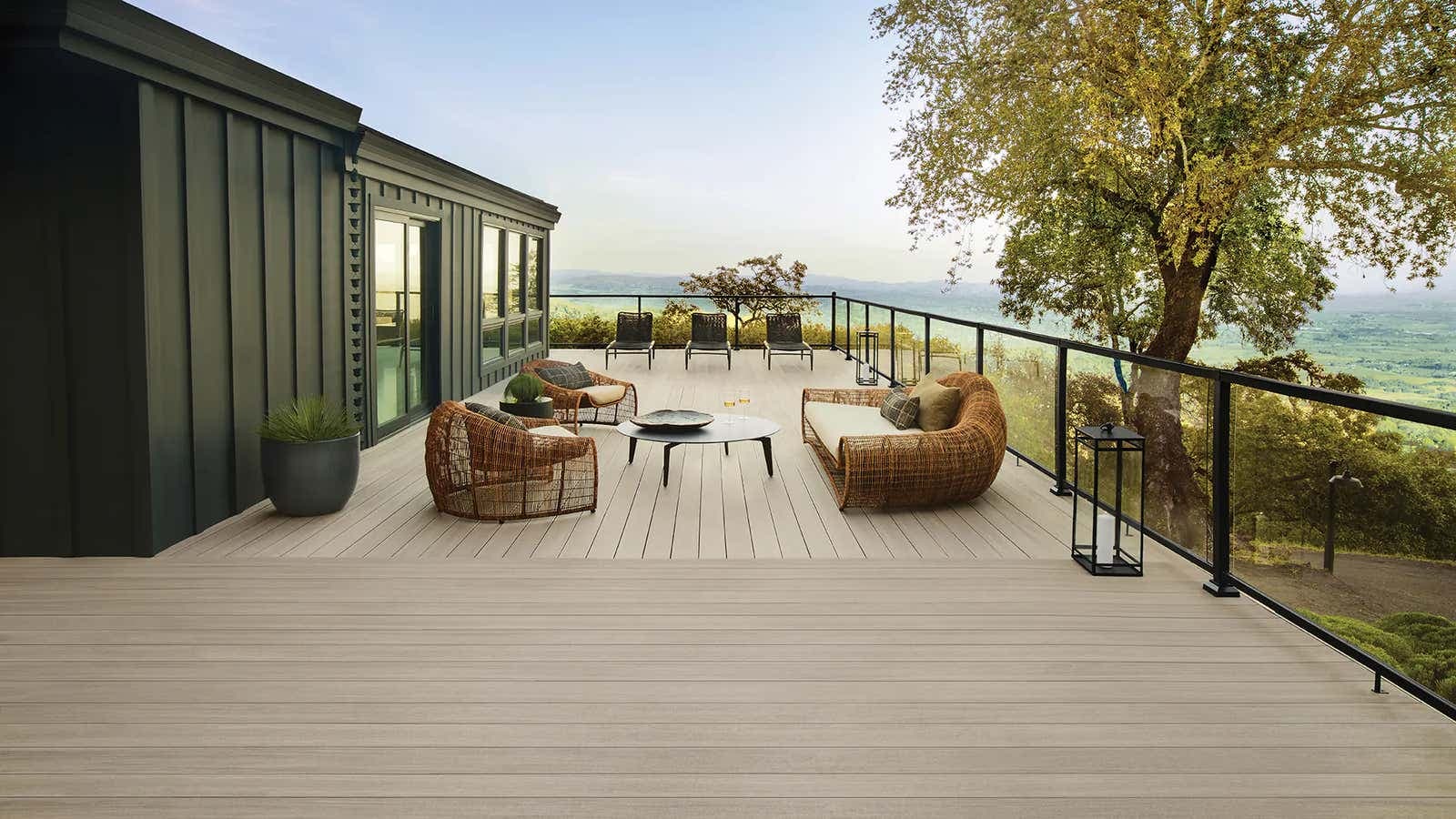
Understanding TimberTech Technologies for Winter
TimberTech offers two primary decking technologies: advanced PVC (Azek line) and capped composite (Pro and Edge lines). Each has distinct properties that influence its suitability and care requirements in winter climates.
TimberTech Azek decking is full polymer, meaning it contains zero wood fiber. This makes it impervious to moisture absorption, a significant advantage in environments where freeze-thaw cycles are common. The lack of wood fiber also contributes to its resistance to mold and mildew, which can be an issue when snow melts and refreezes or when moisture is present for extended periods. Azek PVC boards are also noted for staying cooler underfoot than standard composites, a characteristic that might be less critical in winter but indicates a different thermal behavior.
TimberTech Pro and Edge lines are capped composite decking. These boards feature a protective polymer cap on multiple sides (four-sided for Pro, three-sided for Edge) that encapsulates a wood-plastic composite core. The cap is designed to resist moisture, staining, and fading. While not entirely impervious like full PVC, the capping provides substantial protection against the elements, including snow and ice. The Pro line includes Mold Guard protection on every face.
Moisture Management and Drainage in Winter
Effective drainage is critical for any deck, but especially in winter. Standing water that freezes and thaws repeatedly can put stress on any decking material and substructure. Ensure your deck design incorporates proper grading and spacing to allow water to drain away from the deck surface and off the substructure.
For TimberTech decking, proper board spacing is essential for drainage. Adhering to the manufacturer's specified gaps between boards allows melting snow and ice to drain through, preventing pooling. This also promotes air circulation, which can help dry the deck surface more quickly after precipitation. Consult the specific installation guide for your chosen TimberTech line for exact spacing requirements.
Consider the substructure. Even if the decking itself is moisture-resistant, a wet, unventilated substructure can lead to issues with the framing over time. Good ventilation beneath the deck helps prevent moisture buildup, especially important when snow accumulates around or under the deck.
Snow Removal and De-Icing Practices
When clearing snow from TimberTech decks, use a plastic shovel. Metal shovels can potentially scratch the surface of both PVC and capped composite boards. For heavier snowfalls, consider a snow blower, but ensure it is set to its highest clearing height to avoid direct contact with the deck surface.
For de-icing, specific products are recommended for TimberTech decking. Calcium chloride is generally suitable for use on TimberTech products. However, avoid using rock salt (sodium chloride) or other abrasive de-icers, as these can potentially damage the deck surface and may leave behind a residue that is difficult to clean.
Always test any de-icing product in an inconspicuous area first to confirm compatibility. After the ice has melted, rinse the deck thoroughly with water to remove any de-icer residue. Leaving de-icing chemicals on the surface for extended periods is not recommended, as it could lead to discoloration or damage.
Planning for Ground-Contact and High-Moisture Areas
In winter conditions, certain areas of a deck may experience prolonged contact with snow or ice, or remain damp for extended periods. This is particularly relevant for decks built close to the ground, or those in shaded areas where snow melts slowly.
For ground-contact applications or areas consistently exposed to high moisture, TimberTech Azek PVC decking is the specified choice due to its zero moisture absorption. This makes it suitable for pool surrounds, hot tub areas, or sections of a deck that might be frequently wet from melting snow or ice without concern for the material itself absorbing moisture.
For capped composite lines, while the cap provides significant protection, ensuring adequate ventilation and drainage in high-moisture areas is even more crucial to prevent any potential issues with the core or substructure.
Worked Example: Decking a North-Facing Backyard Patio
Consider a 12-foot by 16-foot north-facing backyard patio in a region with heavy snowfall and frequent freeze-thaw cycles. The patio receives minimal direct sunlight in winter, leading to prolonged snow cover and slower drying times. The homeowner wants a durable, low-maintenance deck.
Given the persistent moisture and shade, TimberTech Azek PVC decking would be the recommended choice. Its full polymer composition ensures zero moisture absorption, making it highly resistant to the effects of continuous snow cover, ice, and freeze-thaw cycles. Let's assume the homeowner chooses Azek in 'Coastline' for a lighter appearance.
For a 12'x16' deck, using 12-foot boards (1" x 5.5" profile) running parallel to the 12-foot dimension: 16 feet / 5.5 inches (board width) = 34.9 boards. This rounds up to 35 boards. Since boards are 12 feet long, 35 boards are needed. If 20-foot boards were used, 12 feet / 5.5 inches = 26.18 boards, rounding to 27 boards. These would need to be cut to 12-foot lengths, with 8-foot offcuts. The quantity would be 27 boards. The more efficient choice for this layout is 12-foot length boards. Total square footage is 192 sq ft. The number of boards required (35 x 12 ft = 420 linear feet) must be accurately calculated for the chosen layout.
The substructure would be reviewed to ensure proper ventilation and drainage away from the house foundation. For snow removal, the homeowner would use a plastic shovel or a snow blower on a high setting. Calcium chloride would be on hand for de-icing, with instructions to rinse the deck thoroughly after application.
Before you order
- Assess winter conditions: Is there heavy snowfall, frequent freeze-thaw cycles, or prolonged moisture?
- Consider deck orientation: Does the deck receive minimal winter sun, leading to slower drying?
- Choose TimberTech line: Azek PVC for maximum moisture immunity; Pro/Edge capped composite for robust protection.
- Verify board spacing: Ensure proper gaps for drainage of melting snow and ice.
- Plan for ventilation: Confirm adequate airflow under the deck to prevent moisture buildup.
- Select snow removal tools: Use plastic shovels; set snow blowers to highest clearing height.
- Identify compatible de-icers: Confirm calcium chloride is acceptable; avoid rock salt and abrasives.
- Plan for rinsing: Ensure easy access to water for rinsing de-icer residue.
- Review ground contact: For areas with persistent ground contact or shade, prioritize Azek PVC.
- Consult installation guides: Always refer to the specific TimberTech installation instructions for your chosen product.
Confirm installation details, approved uses and warranty terms in the current instructions for the exact product and profile. Your installer should verify the substrate, structure and applicable project requirements.
Questions to help you decide
Can I use rock salt to de-ice my TimberTech deck?
No, it is generally recommended to avoid using rock salt (sodium chloride) or other abrasive de-icers on TimberTech decking. These can potentially damage the surface and leave residues. Calcium chloride-based de-icers are typically suitable, but always test in an inconspicuous area and rinse thoroughly after use.
Does TimberTech decking get slippery when wet or icy?
Like most outdoor surfaces, TimberTech decking can become slippery when wet, icy, or covered with snow. Proper drainage and regular cleaning can help. For icy conditions, use approved de-icers and ensure safe footing.
How do I maintain my TimberTech deck during winter?
Winter maintenance primarily involves careful snow removal with plastic shovels or raised snow blowers, and using approved de-icers like calcium chloride, followed by thorough rinsing. Ensure proper drainage to prevent standing water and promote drying. Avoid leaving de-icer chemicals on the surface for extended periods.
Plan Your Winter-Ready TimberTech Deck
Ready to select TimberTech decking for your project? Request a material quote with your project dimensions, exact profile, and ZIP code. We can confirm current availability and service options for your location.
Request a material quote →