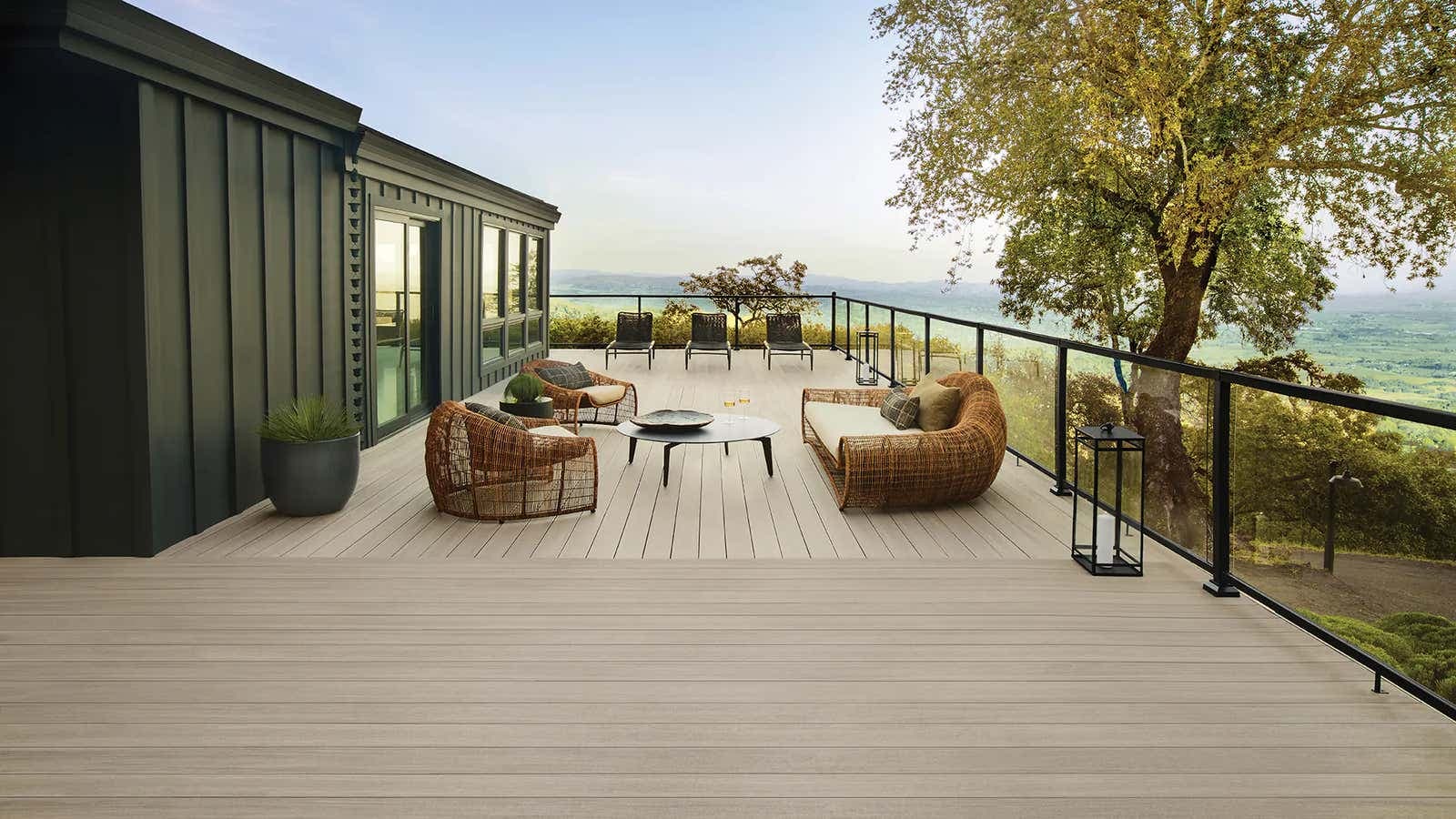
Why Physical Samples Are Essential
Digital images can be misleading. Screen calibration, ambient light during photography, and website compression can all alter how a color appears. A physical sample, however, provides an accurate representation of the product's color, sheen, and texture. This is especially true for TimberTech's multi-tonal streaking and cathedral grain patterns, which vary from board to board and are designed to mimic natural hardwood.
Beyond color, samples allow you to feel the texture of the board. Some TimberTech lines feature a low-sheen finish and realistic grain that aims to replicate the feel of natural wood. This tactile experience can be crucial for areas where people will walk barefoot, such as around a pool or on a main entertaining deck. The weight and rigidity of the sample can also give you a sense of the board's overall quality and how it might perform in your application. For example, Azek PVC boards are generally lighter than comparable composite options.
Evaluating Samples in Different Lighting Conditions
The appearance of any decking material changes dramatically under various lighting conditions. A color that looks perfect under bright midday sun might appear dull or too dark in the shade of a covered porch or under evening string lights. Take your TimberTech samples outside and observe them throughout the day.
Check them in direct sunlight, in shaded areas, and even at dusk. If your deck will have overhead lighting or landscape lighting, consider how these artificial light sources interact with the decking color and texture. For example, a board with a rich, dark hue like "Mahogany" (Azek) might look different in bright sun versus a dimly lit corner. Similarly, a lighter shade like "Coastline" (Azek) or "Sea Salt Gray" (Edge) could reflect light differently.
Coordinating with Adjacent Finishes
Your new TimberTech deck won't exist in isolation. It needs to complement your home's exterior, landscaping, and any existing outdoor furniture or features. Place your samples next to your house's siding, brick, stone, or paint colors. Consider how they look against a concrete patio, a wooden fence, or even the color of your pool coping.
For instance, if your home has warm, earthy tones, a TimberTech color like "Weathered Teak" (Azek) or "Tigerwood" (Pro) might blend harmoniously. If your home has cooler grays or blues, "Silver Maple" (Pro) or "Sea Salt Gray" (Edge) could be more suitable. Don't forget to consider the color of any railings, pergolas, or other structures that will be part of the deck area.
Understanding Product Lines and Profiles
TimberTech offers three main lines: Azek, Pro, and Edge. Each line has distinct characteristics. Azek is a full PVC product, known for its moisture resistance and cooler surface temperatures, making it a common choice for pool decks and docks. Pro and Edge are capped composite boards, offering different levels of durability and aesthetic complexity. Pro, for example, is a four-sided capped composite with Mold Guard protection, while Edge is a three-sided capped board.
Samples often highlight the board profile as well. TimberTech boards are typically available in 1" x 5.5" profiles, with options for grooved or square edges. Grooved boards are designed for hidden fastening systems, while square-edge boards are typically used for face-fastening or as perimeter boards. Confirming the specific profile of your sample ensures it matches your intended installation method.
The specific TimberTech line and color can also impact the warranty. These details are often noted on the sample label or accompanying product literature.
A Sample Selection Worked Example
Let's consider a hypothetical project: a 12-foot by 20-foot deck for a suburban home with light gray siding and dark gray trim. The homeowner wants a low-maintenance deck that complements the house and feels comfortable for bare feet, as it will be used for outdoor dining and lounging. They are also considering a small hot tub on one corner.
The homeowner requests samples of TimberTech Azek "Coastline" (a light gray), TimberTech Pro "Silver Maple" (a medium gray), and TimberTech Edge "Sea Salt Gray" (a lighter, more uniform gray). They place these samples on the ground where the deck will be built.
In the morning, "Coastline" appears bright and airy, reflecting the light beautifully. "Silver Maple" shows a subtle multi-tonal streaking that adds depth, while "Sea Salt Gray" is a clean, consistent lighter gray. By midday, as the sun is directly overhead, "Coastline" still feels bright, and the Azek material's cooler surface is noticeable. "Silver Maple" retains its depth, and "Sea Salt Gray" remains true to its color.
In the late afternoon, with shadows lengthening, "Coastline" takes on a slightly warmer tone. "Silver Maple" still offers visual interest, and "Sea Salt Gray" provides a good contrast with the dark gray trim of the house. The homeowner also places the samples next to a sample of their planned outdoor dining set (a dark charcoal metal) and notes how each decking color interacts. For the hot tub area, the Azek "Coastline" is preferred due to its zero moisture absorption and cooler underfoot claim, making it a practical choice for that specific use.
After observing the samples over a full day and considering the hot tub, the homeowner decides on TimberTech Azek in "Coastline" for the entire deck. The lighter color complements the house, the Azek technology is suitable for the hot tub, and the overall look aligns with their desire for a contemporary, comfortable outdoor living space. The homeowner also confirms that the specific Azek profile chosen is compatible with their desired hidden fastening system.
Before you order
- Have I viewed samples in various lighting conditions (sunlight, shade, evening)?
- Have I compared samples against my home's exterior colors and materials?
- Have I considered how the sample's texture feels for intended use (e.g., bare feet)?
- Does the sample label confirm the correct TimberTech line (Azek, Pro, Edge) and color?
- Does the sample profile (grooved/square) match my chosen fastening method?
- Have I checked the product literature for warranty information for the specific line?
- Are there any existing elements (pool, landscaping, furniture) that the samples need to complement?
Confirm installation details, approved uses and warranty terms in the current instructions for the exact product and profile. Your installer should verify the substrate, structure and applicable project requirements.
Questions to help you decide
How many samples should I request?
It is recommended to request samples of all TimberTech colors and lines you are seriously considering. This allows for direct comparison and evaluation in your specific project environment. Having at least two or three physical samples for comparison can be very helpful.
Can sample colors vary from the actual product?
While physical samples are the best representation, slight variations can occur between production batches. However, TimberTech's manufacturing processes aim for consistency. Multi-tonal streaking and grain patterns will naturally vary from board to board, which is part of their design to mimic natural wood.
What information should I look for on a sample label?
A sample label typically includes the TimberTech product line (e.g., Azek, Pro, Edge), the specific color name (e.g., "Mahogany," "Coastline"), and sometimes the board profile (e.g., grooved, square). It may also indicate the material type (PVC or capped composite) and key features. This information is crucial for ensuring you are evaluating the correct product for your project.
Ready to Plan Your TimberTech Deck?
Once you've narrowed down your choices using physical samples, request a material quote with your project dimensions, exact profile, and ZIP code. We can confirm current availability and service options for your TimberTech decking project.
Request a material quote →