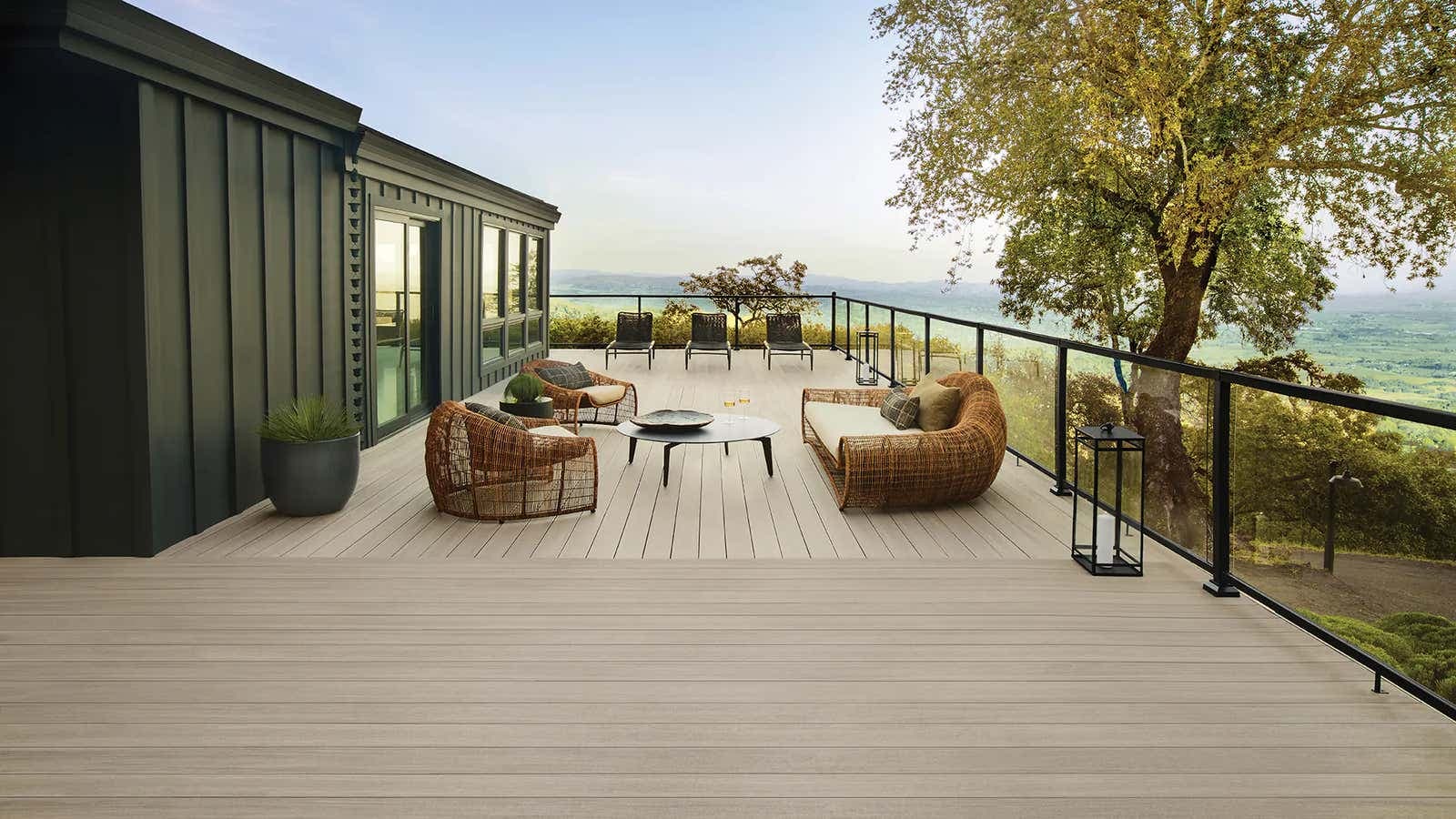
Understand TimberTech Decking Lines and Materials
TimberTech offers three distinct lines: Azek, Pro, and Edge, each with different material compositions and aesthetic characteristics. The Azek line is full PVC, meaning it contains zero wood fiber. This makes it impervious to moisture and often results in a cooler surface underfoot. The Pro and Edge lines are capped composite, offering a wood-look at different price points. Each line features multi-tonal streaking and cathedral grain patterns that vary from board to board, designed to mimic natural hardwood.
The material type can influence how color appears. PVC boards in the Azek line, for example, are known for their ability to stay cooler underfoot, a characteristic that can be particularly appealing for decks exposed to significant sun, or for pool surrounds. While color itself does not solely determine surface temperature, the underlying material properties of the Azek line contribute to this performance aspect. The Pro and Edge lines offer robust capped composite options with varying degrees of fade and stain resistance.
The Impact of Natural Light on Color Perception
Natural light dramatically alters how decking colors are perceived throughout the day and across seasons. A color that looks deep and rich under overcast skies might appear lighter and more vibrant in direct sunlight. Conversely, a light color might seem washed out in bright sun but reveal subtle undertones in softer light. Consider the primary orientation of your deck (north, south, east, or west) and the amount of direct sunlight it receives.
For a deck receiving intense, prolonged sunlight, especially in warmer climates, lighter colors may help reduce the perceived heat absorption compared to darker shades, though the material's composition (such as Azek PVC) plays a more significant role in actual surface temperature. For shaded areas, a lighter color might brighten the space, while a darker tone could create a cozy, intimate feel. Always observe physical samples in the actual project environment at different times of day.
Grain Patterns and Multi-Tonal Streaking
TimberTech decking is engineered with realistic grain patterns, including cathedral wood patterns, and often features multi-tonal streaking. This design aims to replicate the varied appearance of natural wood. The streaking means that a single board isn't a uniform solid color, but rather a blend of complementary tones. This variation helps to hide dust and minor scuffs, and contributes to a more organic look.
When choosing a color, consider how these multi-tonal elements will present over a large surface area. Some colors, like TimberTech Azek Mahogany or Pro Tigerwood, feature more pronounced streaking and tonal shifts, creating a dynamic surface. Others, like Azek Coastline or Edge Sea Salt Gray, might offer a more subdued multi-tonal effect. The overall impression will be a blend of these tones, not a single solid hue.
Board Profiles and Their Visual Contribution
TimberTech offers boards in both grooved and square profiles, typically 1" x 5.5". While the profile primarily dictates the fastening method (hidden clips for grooved, face-fastening or Cortex plugs for square), it can also subtly influence the visual continuity of your deck. Grooved boards, when installed with hidden fasteners, create a clean, uninterrupted surface where the color and grain are the primary visual elements.
Square-edge boards, often used for perimeter boards, stairs, or when face-fastening is preferred, can introduce visible fastener heads (if not using Cortex plugs). The choice of profile should align with your desired aesthetic. For a seamless, modern look that emphasizes the color and grain, grooved boards with hidden fasteners are often preferred. For a more traditional appearance, square-edge boards can be used.
Coordinating with Your Home's Exterior and Surroundings
Your deck is an extension of your home. Consider the existing colors and materials of your house exterior, trim, and landscaping. A deck color should complement, rather than clash with, these elements. For example, a home with cool gray siding might pair well with TimberTech Azek Coastline or Edge Sea Salt Gray. A home with warm earth tones could be enhanced by Azek Weathered Teak or Pro Dark Hickory.
Think about the overall atmosphere you want to create. Do you prefer a vibrant, contrasting deck, or one that blends harmoniously? Also, consider the surrounding natural elements – trees, shrubs, and hardscaping. A deck color can either stand out against these backdrops or integrate seamlessly. Use physical samples to hold against your home's siding and observe how they look under varying light conditions and against your existing landscape.
Before you order
- Obtain physical samples of your preferred TimberTech decking colors and lines (Azek, Pro, Edge).
- Observe samples on-site at different times of day (morning, noon, afternoon) to assess light interaction.
- Place samples against your home's exterior, trim, and existing landscaping to check coordination.
- Consider the deck's primary orientation (north, south, east, west) and the intensity of sun exposure.
- Evaluate how the multi-tonal streaking and grain patterns appear over a larger area.
- Determine if grooved (hidden fasteners) or square-edge (face-fastened) boards align with your aesthetic preference.
- Factor in the intended use of the deck (e.g., pool surround, dining area, lounge) and any specific material properties required (e.g., cooler underfoot for Azek PVC).
- Discuss options for fascia and trim boards to ensure a cohesive look with your chosen deck color.
Confirm installation details, approved uses and warranty terms in the current instructions for the exact product and profile. Your installer should verify the substrate, structure and applicable project requirements.
Questions to help you decide
How do I choose between the Azek, Pro, and Edge lines based on color and finish?
The Azek line (full PVC) offers premium finishes and is known for its cooler surface properties and moisture resistance, making it suitable for areas like pool decks. The Pro and Edge lines (capped composite) offer a range of wood-look aesthetics at different price points. While all lines feature realistic grain and multi-tonal colors, Azek often has a slightly different sheen and a broader palette of sophisticated tones. Your choice should balance aesthetic preference, functional needs (like moisture exposure), and budget.
Will darker TimberTech colors make my deck significantly hotter?
While darker colors generally absorb more heat, the material composition of TimberTech decking plays a more significant role in surface temperature. The Azek PVC line, for instance, is engineered to run up to 30 degrees cooler than standard composite, regardless of color, making it a suitable choice for sunny areas where barefoot comfort is a priority. For Pro and Edge composite lines, while colors are designed to resist fading, darker shades may feel warmer to the touch in direct sunlight compared to lighter ones. Always test physical samples in your specific environment.
How important are physical samples compared to online images?
Physical samples are crucial. Online images can vary significantly due to screen calibration, lighting conditions during photography, and color compression. TimberTech's multi-tonal streaking and realistic grain patterns are best appreciated in person. Holding a physical sample allows you to see how the color interacts with natural light on your property, against your home's exterior, and alongside other design elements, providing a far more accurate representation than any digital image.
Ready to Select Your TimberTech Decking?
Request a material quote with your project dimensions, exact profile, and ZIP code. Confirm current availability and service options for TimberTech Azek, Pro, or Edge decking colors and finishes.
Request a material quote →