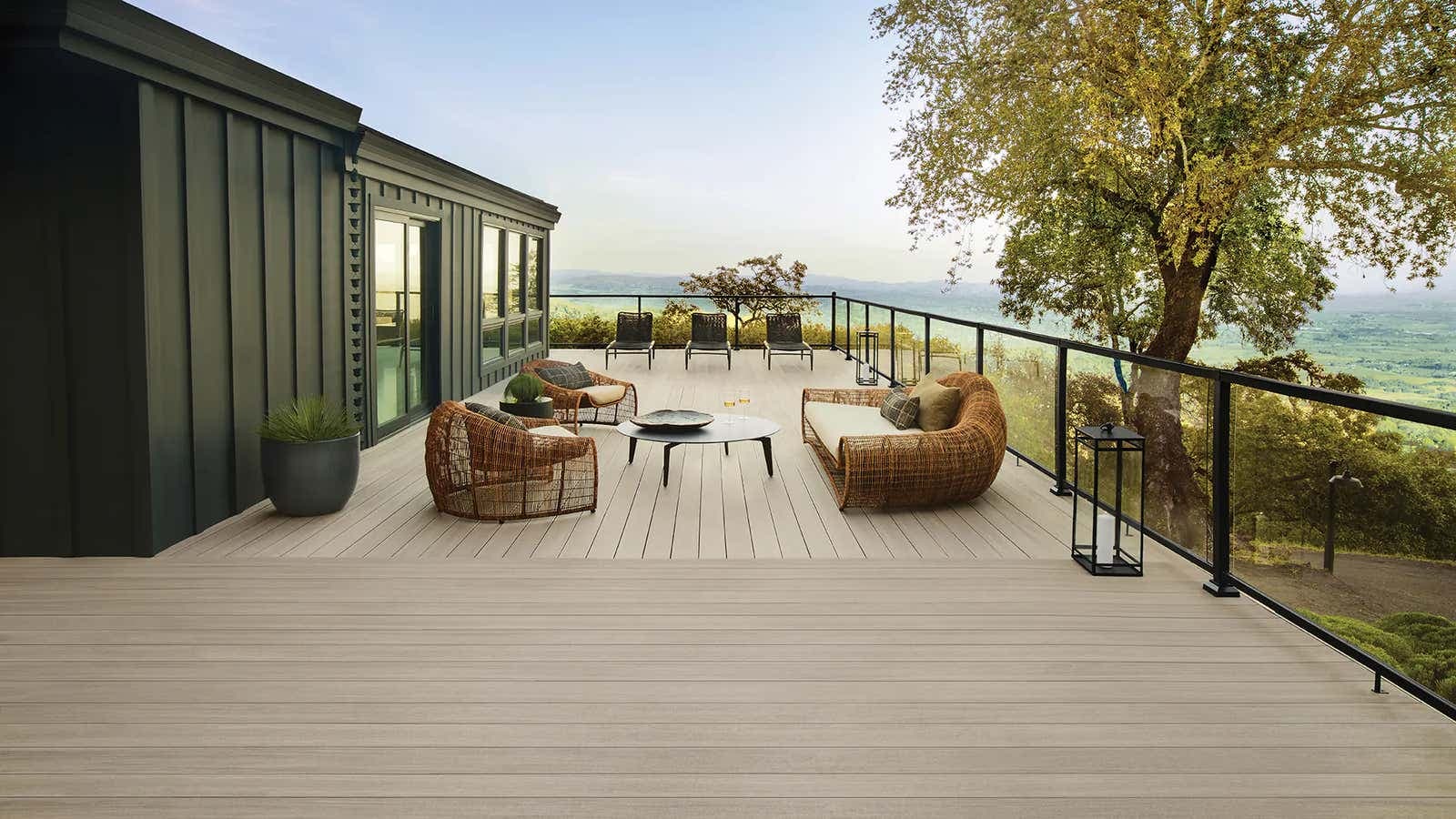
Understanding TimberTech Decking Board Dimensions
TimberTech decking boards are typically available in standard profiles and lengths. Common board profiles are 1 inch by 5.5 inches. These boards are available in lengths of 12, 16, and 20 feet. This consistency helps in planning and calculating material needs.
Choosing the appropriate board length is crucial for minimizing waste and reducing the number of butt joints on your deck surface. Longer boards are often preferred for larger decks to achieve a more seamless appearance, while shorter lengths can be more economical for smaller areas or specific design elements. Consider how these standard lengths align with your deck's overall dimensions and your chosen layout.
Measure Your Deck Area Accurately
Begin by drawing a detailed sketch of your deck layout, including any stairs, landings, or unique features. Measure the exact length and width of each section of your deck. For rectangular or square decks, multiply the length by the width to get the total square footage. For irregular shapes, break the area down into smaller, manageable geometric sections, calculate each, and then sum them.
When measuring, use a reliable tape measure and double-check all dimensions. Account for any existing structures that will remain, such as house walls, posts, or planters. Accuracy at this stage directly impacts the precision of your material order.
Calculating Decking Board Coverage
Once you have your total square footage, you can estimate the number of boards needed. A typical 1-inch by 5.5-inch board covers approximately 0.458 square feet per linear foot (5.5 inches / 12 inches per foot). So, a 12-foot board covers about 5.5 square feet, a 16-foot board covers about 7.3 square feet, and a 20-foot board covers about 9.17 square feet.
Divide your total deck area by the square footage covered by your chosen board length. Remember that this initial calculation does not account for waste due to cuts, diagonal layouts, or specific design choices. It serves as a baseline for your estimate.
Accounting for Waste and Cuts: A Worked Example
Waste is an unavoidable part of any construction project, and decking is no exception. A general rule of thumb is to add 5-10% to your total board count for waste. This percentage can increase for diagonal layouts (up to 15%), intricate designs, or projects with many cuts. Always round up your final board count to the nearest whole board.
Let's consider a hypothetical rectangular deck measuring 10 feet by 16 feet. The total area is 160 square feet. If you plan to use 16-foot TimberTech boards running parallel to the 16-foot dimension, each board is 16 feet long and 5.5 inches wide. The effective coverage per 16-foot board is approximately 7.3 square feet. Dividing 160 sq ft by 7.3 sq ft/board gives you approximately 21.9 boards. Rounding up, you'd need 22 boards for coverage. Adding a 10% waste factor (22 * 0.10 = 2.2), you would add 3 more boards, bringing the total to 25 boards. This allows for miscuts, trimming, and potential future repairs. For a diagonal layout, consider a higher waste factor.
Fasteners, Fascia, and Other Accessories
Beyond the decking boards themselves, you will need to calculate quantities for fasteners and fascia. TimberTech offers compatible hidden clip and Cortex plug fastening systems.
Fascia boards are used to trim the perimeter of the deck and are often available in matching colors and finishes. Measure the total perimeter of your deck where fascia will be applied. Divide this by the available fascia board lengths (e.g., 12-foot lengths) and add a waste factor. Don't forget to account for any stair risers or skirt boards that also require finishing materials. Consider complementary products like TimberTech Azek trim for a cohesive look.
For a complete project, remember to also plan for framing lumber, stair components, and any railing systems. These elements have their own quantity calculation methods.
Before you order
- Have you measured all deck dimensions accurately, including any irregular sections?
- Have you accounted for the typical width of TimberTech boards (5.5 inches) when calculating coverage?
- Is your chosen board length (12, 16, or 20 feet) optimized to minimize butt joints and waste?
- Have you added a waste factor (5-15% depending on layout complexity) to your total board count?
- Have you calculated the number of fasteners needed based on your chosen system and joist spacing?
- Have you measured the perimeter for fascia boards and accounted for cuts and waste?
- Are there any special features like stairs or picture frames that require additional materials?
- Have you considered ordering a few extra boards for future repairs or replacements, accounting for potential dye lot variations over time?
Confirm installation details, approved uses and warranty terms in the current instructions for the exact product and profile. Your installer should verify the substrate, structure and applicable project requirements.
Questions to help you decide
What is the typical waste factor for TimberTech decking projects?
A general waste factor of 5-10% is recommended for most TimberTech decking projects. For more complex layouts, such as diagonal installations or decks with many angles and cuts, increase this to 10-15% to ensure you have enough material.
How do I calculate the number of fasteners I need for TimberTech decking?
The number of fasteners depends on the system (hidden clips or face fasteners) and joist spacing. Hidden clips are typically placed at each joist. Consult the specific fastener product guide for precise coverage rates and installation instructions.
Should I order extra boards for future repairs?
Yes, it is advisable to order a few extra boards beyond your calculated quantity. This provides a buffer for miscuts during installation and ensures you have color-matched material for any potential repairs or replacements down the line. Dye lots can vary over time, making it challenging to find an exact match years later.
Ready to Plan Your TimberTech Decking Order?
Request a material quote with your project dimensions, desired TimberTech profile, and ZIP code. Our team can help confirm current availability and service options to get your project started.
Request a material quote →