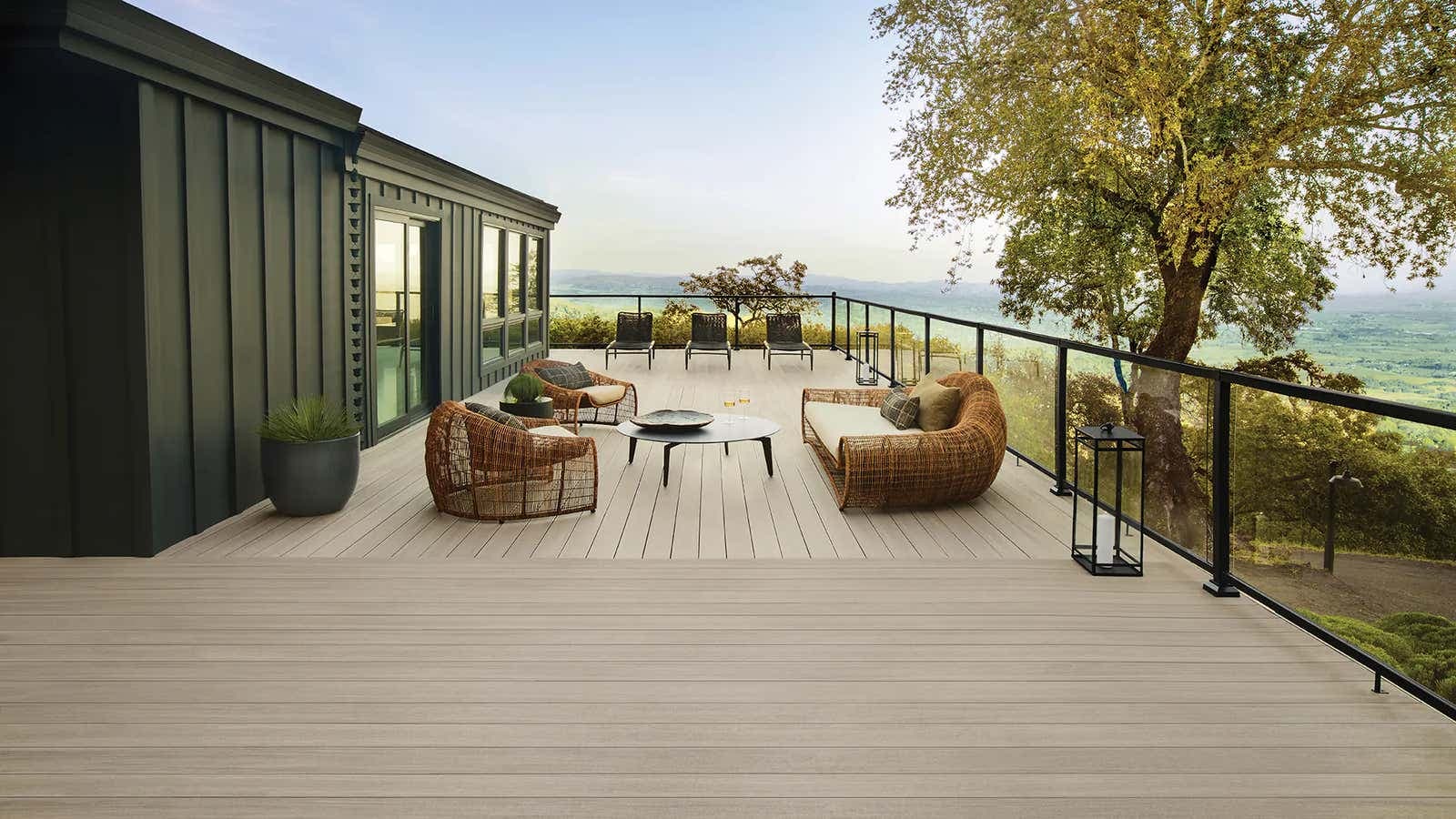
Why Board Spacing Matters for TimberTech Decking
Proper board spacing is not merely an aesthetic consideration; it's fundamental to the structural integrity and performance of your TimberTech deck. These gaps allow for natural expansion and contraction of the decking material due to temperature fluctuations. Without adequate space, boards can buckle or warp, while excessive gaps can create trip hazards and allow debris to accumulate.
Furthermore, correct spacing ensures proper water drainage, preventing standing water on the deck surface and promoting airflow, which helps keep the deck dry. This is especially important for areas prone to moisture, such as near pools or in humid climates. The specific material — whether TimberTech Azek PVC or a capped composite from the Pro or Edge lines — will have distinct expansion characteristics that dictate the required gap.
Understanding TimberTech Product Lines and Their Expansion Characteristics
TimberTech offers two primary decking technologies: advanced PVC (Azek) and capped composite (Pro and Edge). Each material behaves differently under varying temperatures, influencing the recommended board spacing.
TimberTech Azek decking, made from full polymer PVC, is designed to be highly stable and resistant to moisture absorption. While PVC boards are known for their dimensional stability, they still experience some thermal expansion and contraction. TimberTech Pro and Edge lines are capped composite boards, which combine wood fibers and plastic. These materials also expand and contract with temperature changes, and their specific composition and capping technology influence their behavior. Always refer to the specific installation guide for your chosen line, as recommendations can vary even within the composite or PVC families.
Fastening Systems and Their Impact on Spacing
The type of fastening system you choose for your TimberTech decking directly influences the board spacing. Hidden fastening systems, often clips that fit into grooved board edges, are designed to automatically set a consistent gap between boards. These clips are engineered to provide the correct spacing for the specific TimberTech product line they are designed for.
For square-edge boards, which are typically face-fastened, the installer must manually set the spacing. This requires careful measurement and often the use of spacers to maintain uniformity. Whether using hidden fasteners or face-fastening, always confirm that the chosen system is compatible with your specific TimberTech boards and adheres to the manufacturer's spacing guidelines.
Temperature at Installation: A Critical Factor
The ambient temperature at the time of installation is a crucial variable that affects board spacing. Decking materials expand when hot and contract when cold. If boards are installed too tightly on a hot day, they may buckle when temperatures drop. Conversely, if installed with too much space on a cold day, the gaps may become excessively wide in warm weather.
TimberTech installation guides provide specific spacing recommendations based on a range of installation temperatures. It is essential to measure the temperature at your job site and follow the corresponding guidelines precisely. This often means using different spacer sizes or adjusting the hidden fastener clips depending on the temperature range.
Worked Example: Calculating Spacing for a Hypothetical Deck
Let's consider a hypothetical deck project using TimberTech Azek Vintage Collection boards, a popular PVC option. The installation is scheduled for a day when the ambient temperature is expected to be around 70°F (21°C).
The hidden fasteners themselves are engineered to provide this exact spacing. For a picture frame border, the gap between the field boards and the border boards also needs to be specifically checked in the guide. Always consult the most current TimberTech installation guide for the exact product line to confirm all spacing requirements for your project.
These adjustments are critical for long-term deck performance.
Before you order
- Identify your specific TimberTech product line (Azek, Pro, or Edge).
- Locate the current TimberTech installation guide for your chosen product.
- Determine the type of fastening system you will use (hidden clips or face fasteners).
- Measure the ambient temperature at the time of installation.
- Consult the installation guide for side-to-side board spacing recommendations based on your product, fasteners, and installation temperature.
- Check the installation guide for end-to-end (butt joint) spacing recommendations.
- Verify any specific spacing requirements for fascia boards or picture frame borders.
- Ensure your chosen fasteners are compatible with your TimberTech boards and contribute to the correct spacing.
Confirm installation details, approved uses and warranty terms in the current instructions for the exact product and profile. Your installer should verify the substrate, structure and applicable project requirements.
Questions to help you decide
Can I use the same spacing for all TimberTech decking products?
No, board spacing can vary significantly between TimberTech Azek (PVC) and TimberTech Pro or Edge (capped composite) lines due to their different material compositions and thermal expansion properties. Always refer to the specific installation guide for your chosen product.
What happens if I don't follow the recommended spacing?
Incorrect spacing can lead to several problems, including buckling, warping, or excessive gaps between boards. This can compromise the deck's appearance, create trip hazards, hinder proper drainage, and potentially void your product warranty.
Do I need different spacing for the ends of the boards versus the sides?
Yes, typically, end-to-end (butt) joints require different spacing than side-to-side gaps. The manufacturer's installation guide will provide specific recommendations for both, often varying by product line and installation temperature.
Ready to Plan Your TimberTech Deck?
Request a material quote with your project dimensions, exact TimberTech profile, and ZIP code. We can help confirm current availability and service options for your project.
Request a material quote →