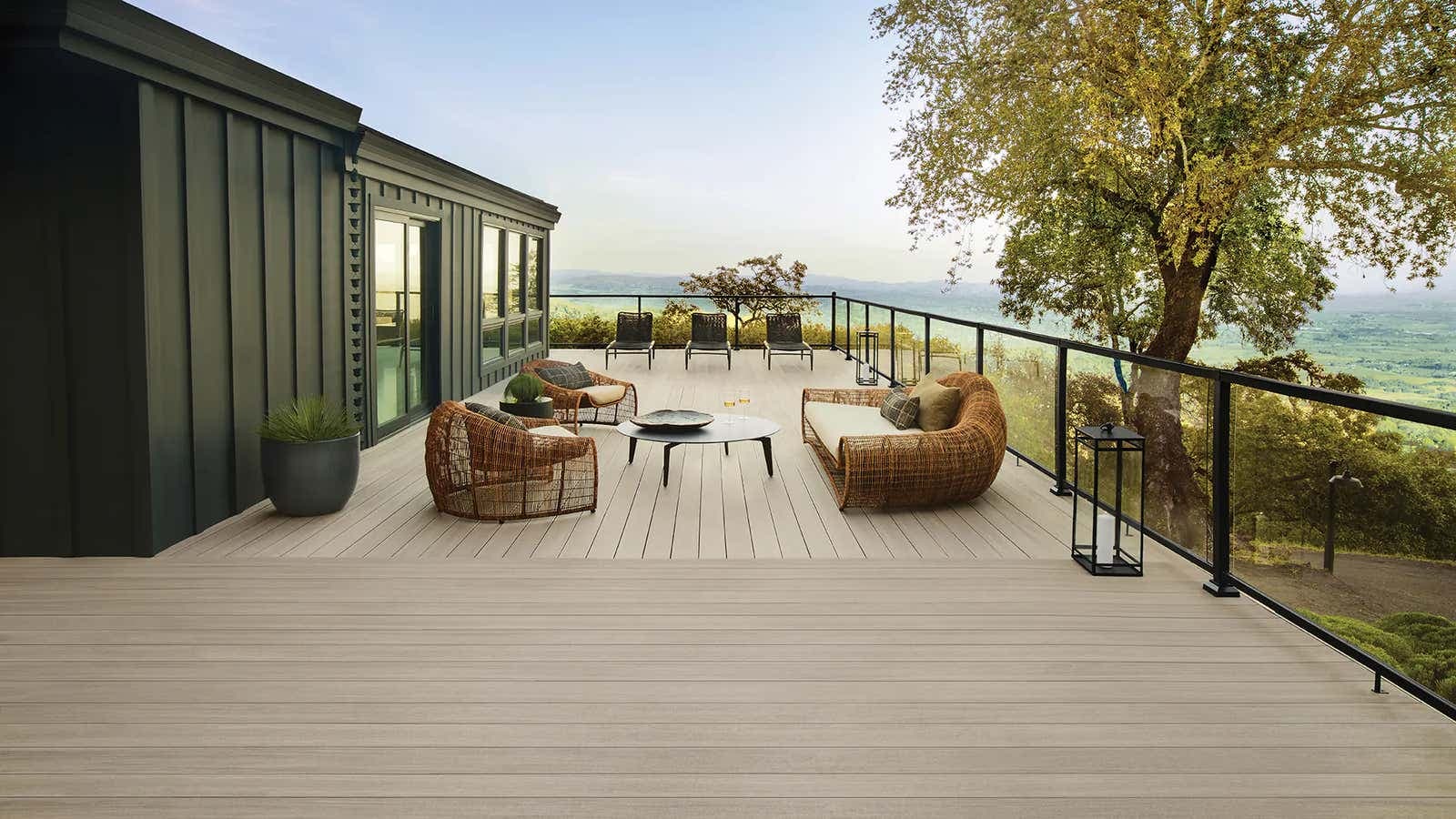
The Impact of Shade on Decking
Shade slows down the natural drying process of any deck surface. This extended moisture retention can create an environment where surface contaminants, such as pollen, leaves, and dirt, adhere more readily and potentially lead to the growth of mold or mildew if not properly managed. While TimberTech decking is designed to resist moisture and mold, proactive planning is key.
The primary concern for shaded decks is not the structural integrity of the TimberTech boards themselves, but rather the potential for aesthetic issues like surface discoloration from mold or mildew. Proper ventilation and a consistent cleaning regimen are essential to mitigate these effects.
Choosing the Right TimberTech Line for Shaded Sites
TimberTech offers different lines, each with distinct material compositions that respond differently to moisture. The Azek line, made from full PVC, contains zero wood fiber and is impervious to moisture. This makes Azek a strong candidate for shaded decks where moisture exposure is prolonged.
TimberTech Pro and Edge lines are capped composite boards. While they feature a protective cap engineered for resistance to mold and mildew, the full PVC Azek line offers the highest level of moisture immunity. For heavily shaded areas with persistent dampness, the Azek line provides a robust solution.
For example, the TimberTech Azek line, specifically the Vintage and Harvest collections, is noted for its full polymer composition, making it suitable for applications where water is a constant factor, such as pool surrounds or docks. This inherent moisture resistance translates well to shaded, damp deck environments.
You can explore the TimberTech Azek line here: /brands/timbertech
Ensuring Adequate Ventilation Under the Deck
Proper ventilation is critical for all deck types, but especially for shaded decks. Good airflow beneath the deck helps to dry out the substructure and the underside of the deck boards, preventing moisture buildup. This is important for both the longevity of your framing and the overall performance of your decking material.
Design considerations for ventilation include maintaining adequate spacing between deck boards, ensuring open perimeter skirting or lattice, and avoiding obstructions that could block airflow. For decks built close to the ground, this becomes even more important. Consult local building codes and TimberTech installation guidelines for specific joist spacing and ventilation requirements.
For optimal drying, consider the orientation of your deck relative to prevailing breezes. If possible, design the deck to encourage cross-ventilation. This can be achieved through strategic placement of deck stairs, open railings, or by incorporating decorative vents into solid skirting.
Planning for Routine Cleaning and Maintenance
Even with advanced materials like TimberTech, shaded decks benefit from more frequent cleaning to prevent the accumulation of organic matter and the potential for mold or mildew. A routine cleaning schedule can help maintain the deck's appearance.
Regularly sweep or blow off leaves, dirt, and other debris. For more thorough cleaning, use a TimberTech-approved deck cleaner and a soft-bristle brush. Always follow the manufacturer's instructions for cleaning products and methods. Avoid using harsh chemicals, abrasive cleaners, or pressure washers at high settings, as these can damage the deck surface.
For example, the TimberTech Pro line, with its four-sided capped composite and Mold Guard protection, is designed to withstand the demands of everyday use and can be effectively maintained with appropriate cleaning. The key is consistency in a shaded environment.
Consider these general cleaning steps: clear debris, rinse with water, apply a compatible deck cleaner, gently scrub, and rinse thoroughly. Always test any cleaning solution on an inconspicuous area first.
Hypothetical Shaded Deck Project: Material Takeoff Example
Let's consider a hypothetical 12-foot by 16-foot shaded deck. The homeowners desire a low-maintenance solution for an area heavily shaded by mature oak trees. They have opted for TimberTech Azek decking in the 'Coastline' color, a full PVC board, for its superior moisture resistance and cooler underfoot properties. The boards are 1 inch thick by 5.5 inches wide, available in 12, 16, and 20-foot lengths.
For a 12-foot by 16-foot deck, running boards parallel to the 12-foot dimension means using 12-foot boards. So, 35 boards of 12-foot length would be needed. If the boards are run parallel to the 16-foot dimension, 16-foot boards would be used, and approximately 26 boards (12 feet * 12 inches/foot / 5.5 inches/board = 26.1 boards) would be required. This example assumes minimal waste and standard spacing. Always account for cuts and potential waste by adding an extra 5-10% to your material order.
Proper ventilation will be ensured by leaving the sides of the deck open, rather than enclosing it with solid skirting, to allow for maximum airflow beneath the deck structure.
Before you order
- Assess the degree and duration of shade on your deck area.
- Evaluate existing ventilation paths under the deck and plan for enhancements if needed.
- Consider TimberTech Azek (full PVC) for maximum moisture resistance in heavily shaded conditions.
- Plan a regular cleaning schedule to prevent mold and mildew growth.
- Select appropriate cleaning products that are compatible with TimberTech decking.
- Confirm joist spacing and installation guidelines for your chosen TimberTech line.
- Account for potential waste when calculating board quantities for cuts.
Confirm installation details, approved uses and warranty terms in the current instructions for the exact product and profile. Your installer should verify the substrate, structure and applicable project requirements.
Questions to help you decide
Does TimberTech decking get mold or mildew in shaded areas?
While TimberTech decking is engineered with resistance to mold and mildew, any surface, including composite and PVC, can accumulate organic matter like pollen or dirt in shaded, damp environments. If left uncleaned, this organic matter can support mold or mildew growth. Regular cleaning and good ventilation are key to minimizing this.
How important is ventilation for a shaded TimberTech deck?
Ventilation is extremely important. Good airflow beneath and around the deck helps to dry the surface and substructure, reducing the conditions that lead to moisture buildup and potential mold or mildew. For shaded decks, where drying is naturally slower, maximizing ventilation is a critical planning step.
What is the best way to clean a shaded TimberTech deck?
For routine cleaning, sweep away debris, then use a TimberTech-approved deck cleaner with a soft-bristle brush. Rinse thoroughly with water. Always follow the specific cleaning instructions for your TimberTech product line and avoid harsh chemicals or high-pressure washing. Consistent cleaning is more effective than infrequent, intense cleaning.
Ready to Plan Your Shaded TimberTech Deck?
Request a material quote with your project dimensions, desired TimberTech profile, and ZIP code. We'll help confirm current availability and service options for your project.
Request a material quote →