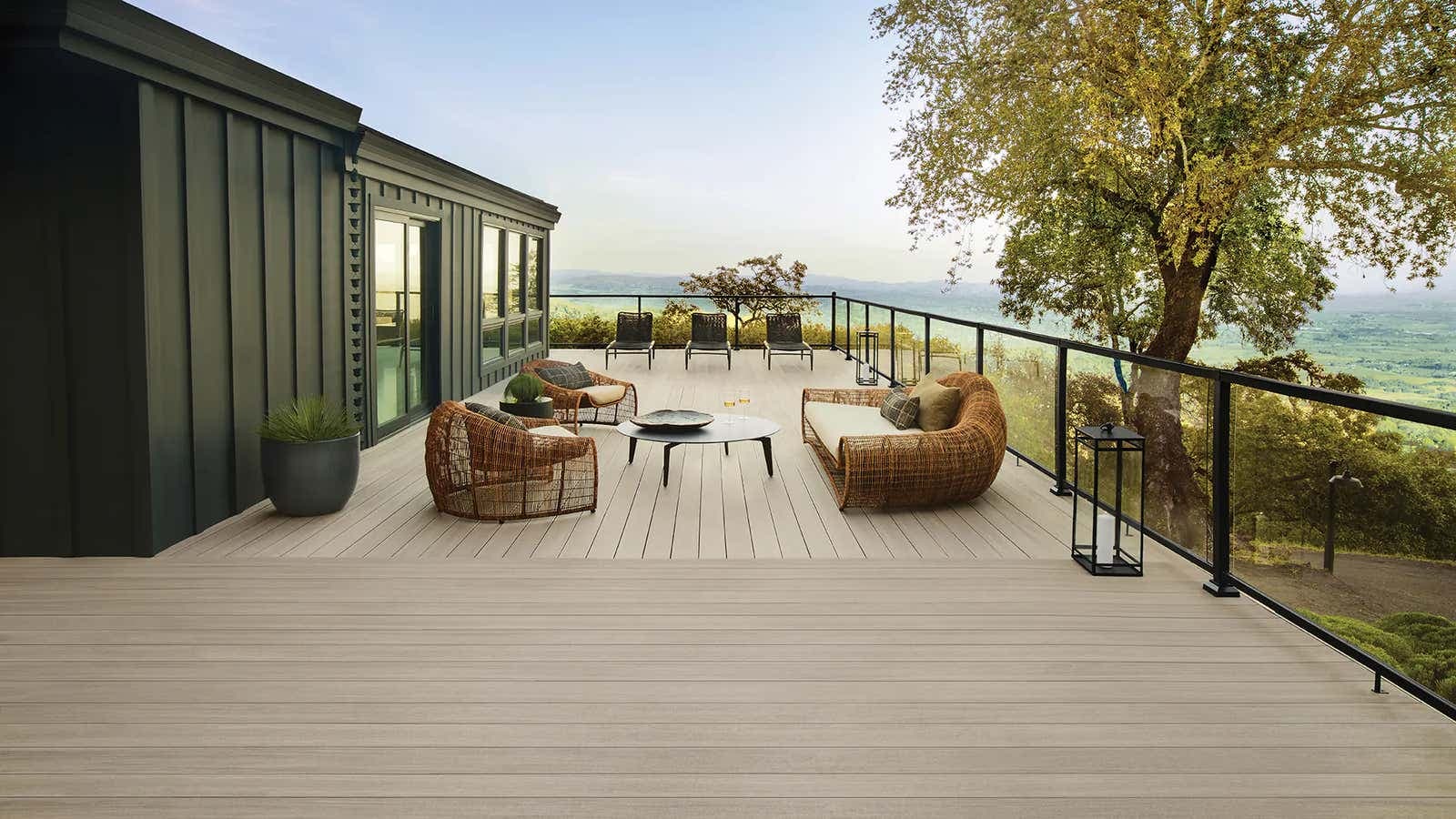
Why Product Identification is Critical for Repairs
A successful deck board replacement isn't just about finding 'a' TimberTech board. It's about finding 'the' TimberTech board that matches your existing deck. Different TimberTech lines, such as Azek, Pro, and Edge, use distinct materials and manufacturing processes. These differences affect not only appearance but also characteristics like weight, fastening requirements, and long-term weathering.
Color matching is particularly complex. While TimberTech offers specific colors like Mahogany, Weathered Teak, or Dark Hickory, even within the same color, there can be subtle variations between production runs or due to UV exposure and environmental aging. Using a board from a different line or an unmatched batch can result in a noticeable patchwork effect on your deck.
Furthermore, board profiles (grooved vs. square-edged) and dimensions must align for proper installation and a consistent look. Hidden fastening systems, for example, are designed for specific grooved board profiles. Attempting to force an incompatible board can lead to installation difficulties or compromise the deck's stability and appearance.
The goal of a repair is to make the new board disappear into the existing deck. This requires a diligent approach to product identification before placing an order.
Step 1: Locate Original Project Documentation
The most reliable way to identify your TimberTech decking is through original project documentation. This might include purchase receipts, order forms, warranty cards, or a contractor's project summary. These documents often specify the exact TimberTech line (e.g., Azek Vintage, Pro Legacy), color, board profile (e.g., grooved, square-edge), and dimensions (e.g., 1" x 5.5" x 16 ft).
If you worked with a contractor, they might have records of the materials used. Similarly, if you purchased directly, check your email archives or physical files for order confirmations. This information can save significant time and reduce the margin of error in your identification process.
Step 2: Examine the Existing Deck Boards
If documentation is unavailable, a detailed examination of your existing deck boards is the next best step. Look for clues on the underside or cut edges of boards, if accessible. Some decking products have identifying marks, although these may be subtle.
Consider the following visual characteristics:
**Material Type:** Does the board feel like solid plastic (PVC) or does it have a noticeable wood fiber component (composite)? TimberTech Azek is full PVC, while Pro and Edge are capped composite. PVC boards tend to be lighter and more uniform in cross-section.
**Board Profile:** Are the edges grooved for hidden fasteners, or are they square-edged, typically used with face fasteners or for perimeter boards? TimberTech offers both 1" x 5.5" grooved and square profiles.
**Surface Finish and Grain Pattern:** Observe the texture and grain. Is it a multi-tonal streaking with a cathedral wood pattern, designed for a realistic wood look? The level of detail and sheen can help distinguish between lines. For example, Azek is noted for its realistic grain and low sheen.
**Color:** While difficult to match perfectly without a sample, note the primary color and any streaking or variations. Compare it to known TimberTech colors like Mahogany, Weathered Teak, Coastline, Dark Hickory, Tigerwood, Silver Maple, Coconut Husk, or Sea Salt Gray.
**Age of the Deck:** Knowing approximately when the deck was installed can help narrow down the product lines available at that time, as product offerings evolve.
Step 3: Consult a Sample or Product Literature
Once you have gathered preliminary information, the next step is to compare your observations with current or historical TimberTech product literature and physical samples. If possible, obtain small samples of current TimberTech Azek, Pro, and Edge lines in colors that seem similar to your deck.
Hold these samples directly against your existing deck boards in various lighting conditions. Pay close attention to the grain pattern, color streaking, and overall sheen. Remember that your existing boards will have weathered and aged, so a perfect match might not be possible with new material. The goal is the closest possible match.
Lumber Plus stocks various TimberTech colors and profiles. Requesting physical samples can be invaluable for this comparison. You can also review the TimberTech brand page on our site for details on current lines and their characteristics, such as the full polymer composition of Azek or the four-sided capping of Pro. Visit our main TimberTech page here: [TimberTech](/brands/timbertech).
Consider also complementary products like fascia boards, which often use the same material and color. Reviewing these options can sometimes provide additional clues about your original decking choice: [Decking Fascia](/decking/fascia).
Worked Example: Identifying a Deck for Repair
Imagine you need to replace two damaged boards on a 12-foot by 16-foot deck. You don't have the original paperwork, but you remember the deck was installed approximately five years ago, and you chose a premium composite material for its low maintenance.
**Initial Examination:** You inspect a removed board. It's a solid 1" x 5.5" board with a grooved edge. You notice a subtle wood fiber texture on a cut end, confirming it's a composite, not full PVC. The surface has a multi-tonal brown appearance with distinct streaking, mimicking hardwood. The underside is also capped, suggesting a higher-end composite.
**Narrowing Down the Line:** Based on the age, composite material, grooved profile, and four-sided capping, you suspect it's a TimberTech Pro line (like Legacy or Terrain, common five years ago) rather than Azek (full PVC) or Edge (typically three-sided capped).
**Color Comparison:** You visit a Lumber Plus location and request samples for TimberTech Pro in 'Dark Hickory' and 'Tigerwood', as these seem closest to your deck's appearance. You take them home and compare them to your existing deck boards. In natural light, the 'Dark Hickory' sample, despite being new, shows the closest streaking pattern and overall hue to your aged deck, even accounting for some weathering.
**Confirming Details:** You confirm the need for 1" x 5.5" grooved boards. Since the deck is 16 feet long, and you need two boards, you plan to order two 16-foot lengths to avoid seams. (A 20-foot length would allow for future cuts, if available.)
This systematic approach, moving from general observations to specific comparisons, helps ensure you order the correct replacement material.
Before you order
- Do you have original purchase receipts or contractor invoices for your TimberTech decking?
- Can you visually determine if your deck boards are full PVC (Azek) or capped composite (Pro/Edge)?
- Are your existing boards grooved (for hidden fasteners) or square-edged (for face fastening)?
- What are the approximate dimensions (width and thickness) of your existing deck boards?
- What is the predominant color and grain pattern of your deck boards?
- Have you obtained physical samples of potential TimberTech replacement boards for direct comparison?
- Have you considered the impact of weathering and age on the color match?
- Do you know the required length of the replacement boards to minimize waste or seams?
- Have you confirmed current availability of the identified product line and color?
Confirm installation details, approved uses and warranty terms in the current instructions for the exact product and profile. Your installer should verify the substrate, structure and applicable project requirements.
Questions to help you decide
Can I mix different TimberTech lines (Azek, Pro, Edge) on my deck?
Mixing different TimberTech lines for replacement boards is not recommended for aesthetic reasons. Azek is full PVC, while Pro and Edge are capped composite. They have different material compositions, surface characteristics, and often vary in weight and how they age. While fastening systems may be similar, a mixed installation would likely result in noticeable differences in appearance, especially over time. For a seamless repair, stick to the original product line.
My deck color looks faded. How do I match it with new boards?
Deck boards naturally age and can show some color change due to UV exposure and environmental factors. When matching a faded deck, aim for the closest available new board color, understanding that a perfect match might be challenging. It's crucial to obtain physical samples of potential replacement colors and compare them directly to your existing deck in natural light. Sometimes, selecting a slightly lighter shade that will darken with age, or a slightly darker shade that will blend, can be effective. Consider if cleaning your existing deck could help reveal its original color more accurately before matching.
What if my exact TimberTech product line or color is discontinued?
If your specific TimberTech product line or color has been discontinued, you will need to find the closest possible current equivalent. This might involve looking at a newer line that has a similar aesthetic or material composition. In such cases, obtaining multiple samples and comparing them extensively to your existing deck is even more critical. Be prepared for a slight variation, and consider if replacing a larger section or strategically placing the new boards could help minimize the visual impact of the difference. Our team can help review current product options that are similar to older lines.
Ready to Repair Your TimberTech Deck?
Provide your project dimensions, the exact TimberTech profile and color you've identified, and your ZIP code to request a material quote. We can confirm current availability and service options for your replacement boards.
Request a material quote →